Friday, June 26, 2026
ADVT 
National

Five things to know about the Supreme Court's assisted dying ruling

Darpan News Desk The Canadian Press, 06 Feb, 2015 02:11 PM

    OTTAWA — The Supreme Court of Canada has unanimously overturned its own 1993 decision and struck down a ban on providing a doctor-assisted death to mentally competent but suffering and "irremediable" patients. Here are five things to know about the decision.

    ---

    In 1993, in the Sue Rodriguez case, the court ruled 5-4 that the ban on assisted suicide was a violation of the Charter of Rights and Freedoms, but was reasonable under Sec. 1 of the charter. The two cases, while similar on their face, actually pivoted on different points of constitutional law.

    ---

    In the latest case, a British Columbia judge said she was justified in revisiting Rodriguez and the Supreme Court agreed. "Trial courts may reconsider settled rulings of higher courts in two situations: (1) where a new legal issue is raised; and (2) where there is a change in the circumstances or evidence that fundamentally shifts the parameters of the debate. Here, both conditions were met."

    ---

    The high court pointed out that in 1993, assisted suicide was a rarity around the world, with some jurisdictions turning a blind eye to the practice while officially outlawing it. "By 2010, however, eight jurisdictions permitted some form of assisted dying: the Netherlands, Belgium, Luxembourg, Switzerland, Oregon, Washington, Montana and Colombia."

    ---

    In ruling that the blanket prohibition on assisted suicide is unconstitutional, the justices suspended the decision for a year to allow the federal government to draft legislation that recognizes the right of plainly consenting adults who are enduring intolerable suffering — physical or mental — to seek medical help to end their lives.

    ---

    The decision will be a political bomb in a Parliament already counting down to an October election. Tory MP Steven Fletcher, a quadriplegic who has two private bills on assisted dying before the Commons, says the government could easily take the issue off the election radar by acting before Parliament rises in June. Justice Minister Peter MacKay says only that the government will take its time.
    MORE National ARTICLES

    Police chiefs take no position on inquiry into murdered and missing women

    Police chiefs take no position on inquiry into murdered and missing women
    The head of the Canadian Association of Chiefs of Police says the organization has not been asked to endorse a public inquiry into missing and murdered aboriginal women and it has no position on the issue.

    Police chiefs take no position on inquiry into murdered and missing women

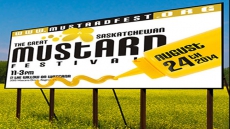
    Flavourful yellow condiment has its own festival in Saskatchewan capital

    Flavourful yellow condiment has its own festival in Saskatchewan capital
    A festival in the Saskatchewan capital on the weekend attracted all kinds of people curious to know if the culinary creations on offer cut the mustard.

    Flavourful yellow condiment has its own festival in Saskatchewan capital

    Man serving time for second degree murder escapes from B.C. prison

    Man serving time for second degree murder escapes from B.C. prison
    A 41-year-old convict serving time for the slaying of a Vancouver man is now on the run after escaping from a British Columbia prison.

    Man serving time for second degree murder escapes from B.C. prison

    Fewer hearings held by new social security tribunal; dismissal rate high

    Fewer hearings held by new social security tribunal; dismissal rate high
    In its first year of existence, the federal government's new social security tribunal concluded just 461 hearings on appeals from people denied Canada Pension Plan disability and old-age security benefits — and most of those appeals were dismissed.

    Fewer hearings held by new social security tribunal; dismissal rate high

    Saskatchewan premier backs public inquiry on missing, murdered aboriginal women

    Saskatchewan premier backs public inquiry on missing, murdered aboriginal women
    Saskatchewan Premier Brad Wall says he doesn't know how long any level of government can ignore something like the murder of a 15-year-old aboriginal girl before looking at ways to prevent such deaths.

    Saskatchewan premier backs public inquiry on missing, murdered aboriginal women

    Parole board gives more home visits to man convicted in Mayerthorpe RCMP deaths

    Parole board gives more home visits to man convicted in Mayerthorpe RCMP deaths
    A man convicted for his role in the shooting deaths of four Alberta Mounties is getting more unescorted, temporary absences from prison.

    Parole board gives more home visits to man convicted in Mayerthorpe RCMP deaths