A new report suggests the economic impact of the pandemic led to a massive increase in federal aid to Canada's oilpatch.
But the annual inventory of fossil fuel subsidies published by the International Institute for Sustainable Development also highlights that almost all of the direct aid was paid out in two programs to protect jobs and cut greenhouse gas emissions.
It raises further questions about how to define fossil fuel subsidies, an issue Canada has not solved despite promising to eliminate "inefficient" ones for more than a decade now.
"The problematic aspect is how do we make sure they're not supporting for future fossil fuel production," said Vanessa Corkal, a policy analyst at the IISD and author of the report.
The IISD report shows Canada spent at least $1.9 billion in direct aid to the traditional energy sector last year, up from $600 million in 2019.
“The benchmark for progressive action on climate is considerably higher than it was years ago, and any action the Canadian government takes should be equally ambitious.”
— Vanessa Corkal (@vcorkal) February 25, 2021
New @IISD_News report ➡ https://t.co/hPV7o80mB9@globalsubsidies https://t.co/DbGkIyFUMl
More than three-quarters of that — $1.5 billion — was to help companies restore abandoned oil wells in Alberta, Saskatchewan and British Columbia.
These are wells that were left with no owner, often when a company went bankrupt, but which continue to leak emissions, mostly methane. It's estimated there are more than 125,000 of them in Canada.
#RecoveryThroughReform requires that our policies be consistent with our goals. Let’s support a #GreenRecovery by phasing out inefficient fossil fuel subsidies by 2025. Find out more from @IISD_News ➡ https://t.co/UbDf29AMFA pic.twitter.com/1fqAhE86N2
— GSI (@globalsubsidies) February 25, 2021
Another $320 million was aid to Newfoundland and Labrador's offshore oil industry, which was hit hard last year by the pandemic and the oil price collapse in the spring.
Corkal said initially the oil recovery fund for the province was pitched in a way that would require it to show an environmental impact, but it's not clear that's happening. Most of that funding has yet to be committed.
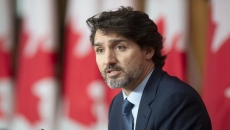
Canada first promised to eliminate inefficient fossil fuel subsidies as part of a G20 commitment in 2009, and Prime Minister Justin Trudeau more recently set a target date of 2025 to do it.
There is no set definition yet for what inefficient means. Environment Minister Jonathan Wilkinson says that in his view, programs that are good for the environment don't count.
"Fossil fuel subsidies are those that are largely dedicated to either enhanced fossil fuel production or extraction," he said in an interview with The Canadian Press Thursday.
Wilkinson said he thinks most of the measures listed in the new report aren't subsidies, including the funds to properly decommission abandoned wells.
"That, in my mind, is not a fossil fuel subsidy," he said. "If you want to call it a fossil fuel subsidy then it's not an inefficient fossil fuel subsidy. Those are things that are about environmental remediation. They're about ensuring you're putting people back to work while doing good things for the environment."
Corkal said any kind of financial support to companies that produce fossil fuels could ultimately help those companies invest to produce more oil and gas. She said that just makes no sense when the government is trying to reduce that production by putting a price on the pollution they create when burned.
The report likened having subsidies and a carbon price to "trying to bail water out of a leaky boat."
The G20 fossil fuel subsidy promise has led to multiple countries partnering up to do peer reviews of each other's subsidies. The United States and China, Germany and Mexico, and Italy and Indonesia all completed their reports in 18 to 24 months.
Canada and Argentina agreed to a joint review in June 2018, but it's still not finished.
Wilkinson would not say when it might be done.
Corkal said it's impossible to phase out anything until there's a full picture of what exists.
Environment groups welcomed the orphaned oil well program last spring, believing it to be a better way to help the sector than subsidizing oil production. But Corkal said taxpayers shouldn't be on the hook for cleaning up orphaned wells permanently.
"Even if a subsidy has clear emissions reductions benefits, it's ultimately still reducing the cost of business for fossil fuel producers," she said.
President Joe Biden made eliminating fossil fuel subsidies in the United States an immediate priority. On his first full day in office he directed all federal agencies to identify any direct federal spending on fossil fuels, and to eliminate any such spending from the budget next year.