Shortly after COVID-19 reached Canada, the meaning of "essential work" began to crystalize as people like nurses and grocery store clerks remained on the job at great risk to themselves and their families.
Health workers held the hands of the dying when their loved ones couldn't be there, while others provided access to vital goods and kept supplies moving across borders that were otherwise closed.
In a landslide vote, front-line workers have been named the 2020 Newsmaker of the Year in a survey of news editors across the country by The Canadian Press.
"The front-line workers risked their lives from the start, not knowing what we know now about COVID," said Jodi Isenberg, the Toronto Star's senior editor, Life and Entertainment, in casting her ballot.
"They gave up more than anyone in this fight, left their families, sometimes were the last face someone at death's door would see. They deserve all the praise we can bestow on them."
"Most of us did our part by staying home; these front-line workers did their parts by stepping up," said Dawn Walton, CTV Calgary managing editor.
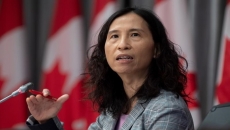
Historically, the Newsmaker of the Year has most often been a politician or an athlete. But with COVID-19 dominating the news cycle, front-line workers were followed in votes this year by three public health leaders: Dr. Theresa Tam, Canada's chief public health officer; Dr. Horacio Arruda, Quebec's director of public health; and Dr. Bonnie Henry, B.C.'s provincial health officer.
The pandemic highlighted not only the essential role of front-line workers but also some of the gaps in support for them. From staffing shortages in long-term care homes that amplified the devastation of the disease to pushes for national sick pay and child-care programs, COVID-19 has been a catalyst for change.
Paul Meinema, national president at United Food and Commercial Workers Canada, said its members, from grocery store workers to food processors, have spent much of the pandemic worried about their safety.
They've always played an essential role but have never had such public acknowledgment of their value, he said.
"Many people went to the grocery store each week and never really considered the person who was putting the food on the shelf and checking them out or making sure there was fresh meat and produce on the counter," Meinema said.
"COVID has exposed the importance of this work."
That work has been recognized through temporary measures like pandemic pay that the union believes should be made permanent.
"I think it raised awareness in society generally and I think we're hopeful for a continued societal change recognizing the importance of these jobs,'" Meinema said.
The pandemic has also highlighted some behind-the-scenes workers who have often gone unnoticed.
Enzo Caprio, who oversees 15 testing labs in the Montreal and Abitibi-Temiscamingue areas as clinical administrative director for the Optilab-McGill University Health Centre, said the pandemic has shone new light on his staff.
"I think people are starting to realize how critical it is what we do," he said.
While some essential workers felt a reprieve as case counts slowed during the summer, Caprio said that never happened in the labs, where testing continued at a rapid pace.
In a matter of months, the labs underwent transformations that would normally take years to increase their COVID-19 testing capacity. They've completed 430,000 tests since March, he said.
"Since March, I myself have been doing 13 hours every day. My staff has not stopped," he said. "They have voluntarily done this because they understand how important it is what we do."
Sophie Gabiniewicz, a registered nurse in the intensive care unit at St. Paul's Hospital in Vancouver, said it has been one of the hardest years in her 25 year career.
The public recognition of the risks and sacrifices taken by health workers has been a boost, beginning with the nightly clanging of pots and pans that has united isolated households in gratitude.
"I could hear the roar come through as a wave one day as I was coming into work and thought, Wow that's for me. They're doing that for me," she said.
"It gave me a really happy nice shiver tingle."
Although the vaccine represents hope on the horizon, many of the same workers are now in the thick of a second wave.
"I just hope that people are still thinking about us," said Gabiniewicz. "We're going to get through this all together."
The clang of pots and pans at 7 p.m. each night may have died down but Canadians' gratitude for essential workers has not.
"In an absolutely terrible year, the public was reminded how our everyday heroes are not professional athletes, musicians or even politicians, they are our front-line workers," wrote James Miller, managing editor of the Penticton Herald.
"It was remarkable how they put their lives on the line daily."
Tim Switzer, managing editor of the Regina Leader-Post, similarly noted that while other officials often became the public faces of the COVID-19 fight, it has been the front-line workers fighting on the ground who have made the difference.
"If there is anything good to come out of a pandemic — and that's a big if — maybe it will be that everyone takes many of those workers less for granted.