

Federal politicians of all stripes say they don't want the coming budget vote to trigger a Christmas election — but nobody's ruling it out, meaning voters might soon have to resist the temptation to drop a lump of coal in a ballot box.
Government House leader Steven MacKinnon said recently the government did not yet have the votes to pass the budget being tabled Tuesday afternoon, which comes up for a vote later this month.
MacKinnon has called on Opposition Leader Pierre Poilievre to not be "grinchy" and to get his MPs to back the budget.
Poilievre said during question period Monday that if the government tables an "affordable" budget, it can avoid an early election.
"The prime minister says Canadians who can't afford to eat, heat or house themselves need to make more, quote, 'sacrifices,'" Poilievre said.
"The choice for us is simple. If the budget brings down the cost of living, we'll support it. If it brings up the cost of living, just like every other Liberal budget, we will vote no."
Poilievre has previously said that Prime Minister Mark Carney must keep the deficit under $42 billion, cut income taxes and eliminate the industrial carbon price to win Conservative support.
In response, MacKinnon said the budget will be affordable and build opportunities for "all Canadians."
The budget vote, like all government spending bills, is a confidence matter. This means the government collapses if the budget bill fails to pass, triggering a snap election.
The Liberals are three seats shy of a majority government, so they need either a handful of opposition votes or a sufficient number of abstentions to pass the bill.
Interim NDP leader Don Davies told CBC News over the weekend that the members of his caucus have not ruled out abstaining from the budget vote, but they want to see the document before making a decision.
"We're not speculating at all on how we're going to vote. We're going to wait and see the budget. If it's good for working people, we'll support it. If it's not, we won't," Davies said on his way into question period Monday.
Christine Normandin, the Bloc Québécois House leader, said in French during question period Monday that the public is not impressed by the government citing the threat of an early election to press the opposition into supporting the budget.
She said the Liberals should instead work more closely with the opposition parties because Canadians elected a minority government in April.
Bloc Leader Yves-François Blanchet has said his party is unlikely to support the budget unless its demands are met. Those demands include increasing old-age security payments and boosting health transfers to the provinces.
Carney met privately with opposition leaders in recent weeks to talk about the government's priorities heading into the budget.
Fred DeLorey, Conservative campaign manager for the 2021 election, told The Canadian Press that there still could be negotiations and amendments made to the budget in order to win enough opposition support.
He added, however, that he doesn't believe the Carney government will last much longer because the current friction between the parties guarantees an early election.
"The NDP have everything to gain from an election and they'll have a hard time voting for a budget that's been called an austerity budget," DeLorey said. "The Conservatives, their base, the new voter coalition that they've assembled, I don't think they tolerate any other members voting for or abstaining on this budget.
"The government needs to figure out how they're going to get those votes, and again, we're in this situation where every vote over the next few weeks or months could come down to the government falling."
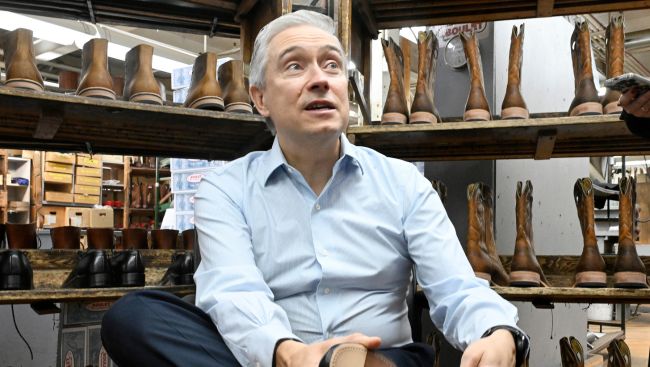
Finance Minister François-Philippe Champagne said Monday morning that the budget will have something for every Canadian and contain "no surprises."
The government has cited several priorities in the budget document, including increasing spending on capital projects, cutting the cost of government operations, increasing military spending and funding a national school food program.
DeLorey said that while the size of the deficit is expected to grow, Canadians can swallow that pill if it's accompanied by a plan to grow the economy.
He said he expects the main question Canadians will ask of the budget is how it helps Canada survive a trade war with the U.S.
"How are we diversifying our economy and trying to continue and work (the U.S.) relationship? But also look for new relationships and get products moving and get things built?" he said. "I think that's the big thing on Canadians' minds is getting things built and getting our products to market."
Picture Courtesy: THE CANADIAN PRESS/Jacques Boissinot


