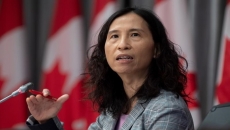
OTTAWA - Canada's ailing health systems need some drastic intervention from federal and provincial governments if there is any hope of reviving them post-pandemic, an emergency summit of nearly 40 health-worker organizations concluded at an emergency meeting Wednesday.
Health workers have now endured two difficult years of pandemic conditions, leading to serious burnout across nearly all sectors of the health-care system.
"The real shared experience across health-care workers and professionals is that the level of burnout is to a point now where it's really starting to threaten the sustainability of the system," said Canadian Medical Association president Dr. Katharine Smart.
The summit, hosted by the Canadian Medical Association and the Canadian Nurses Association, was struck to chart a new course for health care in the face of widespread attrition.
Personal service workers and nurses have coped with professionals leaving their jobs in droves or retiring early, while the CMA says doctors report that they plan to work fewer hours to deal with the fatigue.
As the rest of the country starts to talk about the possibility of post-pandemic recovery, health workers say for them there is no end in sight. Now that cases of COVID-19 have dropped, they still have to tackle the serious backlogs that grew while non-emergent care was put on hold during the peaks of the pandemic waves.
The CMA says that hospitals are still over capacity, even as fewer COVID-19 patients need hospital care. That's because beds are filling up with people who couldn't get care during the pandemic, she said.
Provincial governments have recognized the problem and called for more money from the federal government to keep pace with the rising demands on their systems.
While health organizations seem to agree more long-term funding is needed, they also say money alone can only bandage the problem.
"You're just endlessly funding a system that's broken," Smart said in an interview after the meeting Wednesday.
Smart said the system is now so depleted, there needs to be greater unity between provincial systems to keep things running.
That's why the health-worker associations say have called for radical change and for the federal government to take on a greater role.
While health falls under provincial jurisdiction, the summit agreed on the need for a national strategy to get a handle on what kind of professionals are missing from Canada's health systems and how many are needed.
The associations have also made calls for national licensing of health professionals so that they can move from province to province to where they are most needed.
As for fixing the problem long-term, Smart said governments need to rethink the way care is delivered. For example, access to primary care might be improved by allowing physicians to work in integrated teams with specialists, she said. That way, patients whose needs are increasingly more complex would be better served and the job would be more appealing to physicians.
The House of Commons health committee has already begun to hear similar recommendations as part of its study on Canada's health workforce.
"The status quo is clearly no longer an option. Failing to act now will lead to lower-quality care, longer wait times and worse health outcomes," HealthCareCan president Paul-Émile Cloutier told the committee in February.
HealthCareCan is an association of health-care organizations and Canadian hospitals.
Governments have been receptive to the ideas and keen to hold committees and take meetings, but so far there has been no substantial action taken, Smart said.
She said she'll be looking hopefully toward the federal budget this spring for signs of movement.
"I think the worst thing that can happen is that health-care professionals give up hope that the government is really going to work alongside us to transform the system, because I think when that happens, that's when you're going to see even more attrition," Smart said.
"I also think that we need to be honest about the fact that if we don't start to actually see some of these changes happen, our health-care system is deeply under threat."