Wednesday, June 10, 2026
ADVT 
National

Human activities linked to orca deaths: study

Darpan News Desk The Canadian Press, 02 Dec, 2020 09:59 PM
  • Human activities linked to orca deaths: study

A long-running study of more than 50 dead killer whales in the Pacific Ocean concludes human activities pose deadly threats to the orcas.

Killer whale deaths from Alaska to British Columbia, south to California and west to Hawaii linked to human activities were found in every age class from calves to adults, said the study published Wednesday in the open access journal Plos One.

The findings indicate that understanding and being aware of each threat is vital for the management and conservation of orca populations, said Stephen Raverty, a B.C. scientist and the report's lead author.

Some of the direct causes of orca deaths were attributed to blunt force trauma from collisions with ships or cuts from the propellers of vessels, while indirect causes were related to ingested fish hooks, various human-caused pollutants and malnutrition, Raverty said in an interview.

"In one case in Alaska, a young animal swallowed a hook that perforated the back of the throat and resulted in bacteria entering the body and the animal died of a blood-borne bacteria infection," he said.

In another necropsy conducted on an older orca, a triple-barbed fishing hook was found in the animal's colon, but it did not appear to impact its health, Raverty said.

Raverty, who's a veterinary pathologist at the B.C. Agriculture Ministry and a marine mammal researcher, said the study also provides a baseline understanding of orca health necessary for future research.

"There have been a variety of indirect things that have been demonstrated to impact killer whale health and what we're saying is this is more direct evidence of human activities that impact the overall well-being of these animals," he said.

The study involved necropsies on the remains of 53 killer whales foundfrom the North Pacific to Hawaii from 2004 to 2013. It also examined the data from 35 other orca deaths from 2001 to 2017, said Raverty.

The study was able to confirm the cause of death in 22 of the 53 orcas, and "death related to human interaction was found in every age class."

It said necropsies showed evidence of 15 infectious agents and 28 pathogens with the potential to affect orca health, but "non-infectious health concerns include impacts from accumulated persistent pollutants, human interactions including vessel collisions, interaction with fishing gear, the effects of noise and consequences of reduced prey availability."

Raverty said the study's results should support federal government efforts to reduce and slow down shipping traffic and noise pollution to protect threatened orca populations, including the West Coast's southern residents that now number 73 members.

The federal government recently expanded orders for B.C. whale-watching vessels, requiring them to stay 400 metres away from orcas on their viewing voyages.

"You think of these animals as being very agile and being able to avoid impact with vessels, but that doesn't appear to necessarily be the case," Raverty said. "Whether it's just the vessel's speed or there's increased shipping traffic or these vessels are going into some fairly narrow channels where whales may not be able to avoid or evade these vessels, these might be some of the conditions that are occurring."

MORE National ARTICLES

Horgan tells workers stay home if sick after COVID-19 outbreak at chicken plant

Horgan tells workers stay home if sick after COVID-19 outbreak at chicken plant
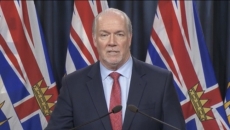
B.C. Premier John Horgan says people who are sick must stay away from work after an outbreak of COVID-19 at a chicken processing plant in Vancouver. Horgan said Wednesday workers should not go to work when they are sick because they fear losing wages, and that he was planning a meeting with Labour Minister Harry Bains and WorkSafe BC officials to discuss sick pay provisions.

Horgan tells workers stay home if sick after COVID-19 outbreak at chicken plant

Search for missing B.C. woman prompts homicide fears, second death

Search for missing B.C. woman prompts homicide fears, second death
Police are releasing more details about a British Columbia woman they fear may be the victim of a homicide. Metro Vancouver's Integrated Homicide Investigation Team says 45-year-old April Parisian was last heard from on March 28 and was declared missing earlier this month.

Search for missing B.C. woman prompts homicide fears, second death

Reports of hate crimes are up in Vancouver: police

Reports of hate crimes are up in Vancouver: police
An assault on a 92-year-old Asian man with dementia in Vancouver is being investigated as a hate crime and police say they have recently noticed an increase in reports of hate-motivated incidents. Vancouver police say the man has "severe dementia" and wandered into a convenience store on March 13 when another man yelled racist remarks that included comments about COVID-19.    

Reports of hate crimes are up in Vancouver: police

More signs COVID-19 is slowing in Canada; students to get federal help

More signs COVID-19 is slowing in Canada; students to get federal help
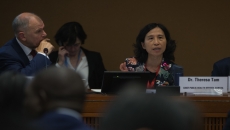
Chief Public Health Officer Dr. Theresa Tam said Canada was making progress in slowing the epidemic but warned against letting down its guard. The focus, Tam said, must be placed on stopping outbreaks in places like seniors homes and in other places where vulnerable populations live together in close quarters. How exactly Canada gets on the road to normalization will largely depend on the provinces, Prime Minister Justin Trudeau said on Wednesday. However, the closure of the Canada-U.S. border will stay in place until May 21st at least, he said.

More signs COVID-19 is slowing in Canada; students to get federal help

Prime Minister Justin Trudeau defends not creating universal COVID-19 benefit, announces student aid

Prime Minister Justin Trudeau defends not creating universal COVID-19 benefit, announces student aid
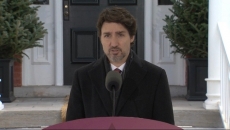
As he announced yet another emergency financial aid package Wednesday — this one aimed at students — Prime Minister Justin Trudeau defended his decision not to create a universal benefit that would ensure no Canadians affected by COVID-19 fall through the cracks. His focus for specific help Wednesday was students, announcing a $9-billion suite of programs for students whose education and job prospects are disrupted by the novel coronavirus.  Trudeau says his government's approach has been to try to target its emergency financial assistance in stages to those who need it most, rather than to everyone at once, including those who don't need it.      

Prime Minister Justin Trudeau defends not creating universal COVID-19 benefit, announces student aid

What BC is doing to fight COVID-19

What BC is doing to fight COVID-19
B.C. declared a provincial state of emergency on March 18, a day after announcing a public health emergency, and it has been extended to April 28. The measure gives the province authority to take any action necessary to protect people and communities, including charging people who ignore public health orders.

What BC is doing to fight COVID-19