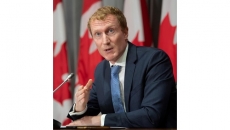
Hundreds of Canadian citizens, permanent residents and family members remain in Afghanistan, Foreign Affairs Minister Marc Garneau revealed Tuesday as the federal government announced plans to resettle 5,000 Afghans previously brought out of the country by the United States.
“The main thing that we needed to figure out was how many Canadian nationals or permanent residents and family members were able to get out on some of our allies’ flights,” Garneau said during a virtual news conference.
“And now that we have had a chance to look at the manifests from those other countries, we estimate that at the moment there are roughly 1,250 either Canadian citizens or permanent residents or family members that are in Afghanistan.”
Spoke w/@MohamedBinZayed this morning. I shared my deep appreciation on behalf of 🇨🇦 for the important role UAE played in the evacuation efforts in Afghanistan. We committed to work together in the promotion of regional dialogue & in securing safe passage for vulnerable Afghans.
— Marc Garneau (@MarcGarneau) August 31, 2021
The comment followed the withdrawal of all American troops from Afghanistan on Monday, ending a 20-year war that cost billions of dollars and tens of thousands of lives, including those of more than 150 Canadian soldiers and civilians.
With the U.S. and most Western countries now out of the country, the fate of those left behind remains uncertain. That includes the people identified by Garneau as well as hundreds of Afghans who previously worked with Canada and their families.
Neither Garneau nor Immigration Minister Marco Mendicino, who was appearing alongside the foreign affairs minister, had clear answers.
Canada and other allies are pushing the Taliban to allow anyone with valid travel documents to leave Afghanistan, Garneau said, with hopes the Kabul airport will soon reopen under civilian control.
While the Taliban have already made such a commitment, “we will judge them by their actions, not their words,” Garneau said.
“Afghans with travel documents to other countries must be allowed to move safely and freely out of the country without interference. Canada and its allies are firm on this point.”
The end of U.S. and allied evacuation flights from Kabul has left Canadian veterans, refugee advocates and others considering next steps to protect hundreds of former interpreters and local staff as well as their families who remain stranded in the country.
That includes whether to start having people make the risky trek to neighbouring Pakistan where they will at least be safe from the Taliban and hopefully be able to make it to Canada.
People are being warned against making the risky trip to the border with Pakistan because of the security situation while efforts are underway to reopen the Kabul airport, Garneau said. But he added that efforts are underway to help anyone who does manage to get out of Afghanistan.
“We have, at the moment an undertaking to be in contact with the countries that are neighbouring Afghanistan,” he said.
“We are going to be talking with Pakistan to tell them that if anybody does arrive at that border or other neighbouring countries, we would like them to facilitate their entry. And, of course, our embassies and consulates are waiting to process them to get them to Canada.”
The Liberal government has been repeatedly criticized for not acting fast enough to save Afghans who helped Canada during its military mission there. A special immigration program announced last month has been plagued by bureaucratic and technical problems.
Mendicino defended the government’s response to date and says Canadian immigration officials are continuing to process applications as quickly as possible in the hopes people will be able to leave, even as he touted the government’s plan to accept 5,000 Afghans evacuated by the U.S.
Afghan translators for the @globeandmail and @CanadianForces have arrived in Kyiv following an operation by Ukrainian soldiers in Kabul. IRCC has issued emergency visas to resettle them here. We’ll remain agile in doing so. Thank you @ZelenskyyUa and 🇺🇦. https://t.co/ht3WihPRnE
— Marco Mendicino (@marcomendicino) August 30, 2021
Those Afghans are currently in third countries like Qatar, and are part of the 20,000 Afghan refugees that the government has promised to resettle. Those refugees are separate from the former interpreters and family members that are eligible for special visas.