Indigenous language speakers and political leaders say they were disappointed to learn a landmark Indigenous languages office is under investigation after the federal government received anonymous complaints.
The Canadian Heritage department has ordered a financial audit of transactions and activities at the Office of the Commissioner of Indigenous Languages, The Canadian Press reported earlier this week.
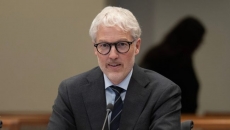
The department has not elaborated on the specific allegations made against the office, an arm's-length body that was set up five years ago in response to a recommendation by the Truth and Reconciliation Commission. The department has said it has contracted an independent third-party firm to conduct the audit and has notified Commissioner Ronald Ignace.
One Indigenous language speaker said part of the problem with organizations like the commissioner's office is that they're accountable to the federal government, not to Indigenous people.
"At the end of the day, they're authorized through the federal government," said Dawnis Kennedy, an assistant professor in criminal justice at the University of Winnipeg who is from Roseau River Anishinabe First Nation.
"The whole system that they're impacted by has been set up precisely not to be accountable to Indigenous people, to Indigenous cultures, to Indigenous languages. I think that's problematic."
The Truth and Reconciliation Commission, which examined the history and legacy of residential schools, called for an Indigenous languages commissioner in its 2015 final report.
Passage of the Indigenous Languages Act in 2019 paved the way two years later for the Office of the Commissioner of Indigenous Languages.
It received its funding through Canadian Heritage. Part of the office's mandate is to support the efforts of Indigenous Peoples to reclaim, revitalize, maintain and strengthen their languages.
Canadian Heritage provided the office with a $51.6 million, multi-year funding agreement when it opened in 2021. The department later entered into a five-year funding deal with the office from 2024-29 worth $16.3 million.
It also provided a 10-year grant running until 2034 worth $172.3 million. The grant is meant to support research, operations and studies on Indigenous languages.
Kennedy said funding decisions should be made on the condition they have the backing of grassroots Indigenous leadership to ensure the money is actually supporting revitalization efforts and the training of first- and second-language speakers.
"If it's language money, that's sacred money, and we should be putting it out in front of everybody and saying, 'OK, this is the whole animal.' And we cut it up together, and everybody sees who gets what, and everybody knows where it went," she said.
Kennedy said she also worries news coverage of alleged misspending will give an opening to the federal government to cut much-needed funding for Indigenous languages programming.
The office has come under fire for spending $10 million over two years to organize and hold WAVES 2025, a four-day languages summit held in Ottawa last year.
More than 2,000 people from about 20 countries attended.
Commissioner Ronald Ignace has said he is proud of the work done to establish the office. His office cited as its successes the conference and a one-hour documentary it produced featuring Indigenous artists performing in their mother tongues.
The office is not able to fund language initiatives or infrastructure. It can support innovative projects and the use of new technologies in Indigenous language education and revitalization.
Canadian Heritage officials were questioned at the House of Commons committee on public accounts Monday about the costs. They said the commission operates at arms-length and they are not privy to day-to-day spending decisions.
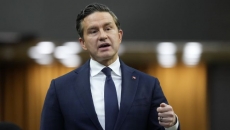
Conservative MP Billy Morin called the allegations disappointing.
"Our languages are at the threat of extinction, much like a lot of other things like our identity, and I don't see how this helps in any way," the former chief of Enoch Cree Nation told The Canadian Press.
“In fact, it’s detrimental to keeping our languages going because it enforces cynicism against First Nations people and the misconception out there that a lot of Indigenous leaders and organizations are corrupt with their money.”
He said he wants the federal government to do a better job of tracking spending and outcomes and take guidance from the grassroots about what their communities need.
"The buck stops with the government," he said.
The president of the Manitoba Métis Federation said he has been disappointed by the lack of “relationship-building” efforts by the commission over the past five years.
“How are we working together for the future of preservation for the languages we’re trying to protect? I would have loved to have dialogues like that with that body or that entity, but that never happened,” David Chartrand said in an interview.
The federation represents more than 60,000 Red River Métis. Michif, a Métis language that originated in a combination of Cree, Ojibway and French, is the second most commonly spoken Indigenous language among Métis, after Cree. Data from Statistics Canada suggests that in 2021, 1,485 Métis reported being able to hold a conversation in Michif.
The federation funds projects to revitalize and protect the Michif language and is hosting a Michif language summit in August.
When the WAVES conference took place, Chartrand said the office did not consult the federation on which Michif speakers and elders would be best equipped to attend.
He said his government opted to send their own representatives and paid a “substantial” amount to do so, but would not provide a dollar figure.
Learning the cost of the four-day conference was $10 million was a “very serious eye-opener,” said Chartrand.
He said he is eager to see what the financial audit brings up.
Chartrand said he still supports an Indigenous languages office but it must follow a policy of inclusion, not exclusion.
“I believe they were trying their best but clearly I think the sail came off the ship and it went in a different direction,” he said.
“I hope the next five years is something that will really show that it can work, it will work, and if you bring people together, solutions are there.”
Picture Courtesy: THE CANADIAN PRESS/Adrian Wyld