Ottawa teenager Nora Sharmarke was only ten when her journalist father, Canadian Al Iman Sharmarke, was killed over his coverage of Islamic extremism in his native country of Somalia.
For Sharmarke, the targeted attack Wednesday against the journalists of Charlie Hebdo magazine in Paris hits close to home. The aspiring nurse said she understands the motivation of such reporters to take the risks they do — her father's final words were that his attackers would not silence him.
"It's absolutely astonishing that the people who committed these crimes claim to do it in the name of the religion that I follow, that my father followed. It's disgusting," said Sharmarke, 17.
"He lived and died for freedom of expression, just to see this happening is devastating."
Al-Shabaab member Hassan Hanafi Haji was arrested last summer in connection with Sharmarke's murder and that of several other reporters fighting for free expression in Somalia.
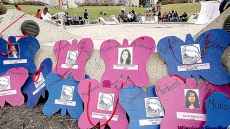
Al Iman Sharmarke is just one of several Canadian journalists who have faced threats and violence over the years, at home and abroad.
Former Journal de Montreal reporter Michel Auger, who covered the crime beat including Quebec's biker gangs, survived being shot six times outside the newspaper's offices in 2000.
Tara Singh Hayer, founder of the Indo-Canadian Times, was assassinated in Surrey, B.C. in 1998. He had been an outspoken critic of Sikh separatist extremism, and had been trying to help bring to justice the terrorists behind the 1985 Air India bombing.
"You can't allow this to discourage you because journalists do a very important job to keep our democracy alive," son and MLA Dave Hayer told the Vancouver Sun this week. "We have to encourage and support our journalists all over in all different types of media."
Vancouver Sun reporter Kim Bolan, who has also investigated Sikh extremism, received faced numerous threats as she delved into the Air India file, as did the CBC's Terry Milewski.
"I didn't want to bend to that, because obviously if more journalists would get threatened, it would be a successful strategy," said Bolan, who still receives threats as a crime reporter covering Vancouver's gang scene.
"I felt obligated to carry on."
Bolan reports some threats to authorities, and she's had different levels of police protection over the years. But she says it's often difficult in today's era of social media to suss out which ones to be afraid of — an issue she thinks newsrooms should be actively discussing.
The veteran reporter also worries about an attitude that views journalists as responsible for the danger they encounter — a notion that has crept into discussion over Charlie Hebdo and its provocative cartoons.
"I also think that sometimes police tend to dismiss threats that journalists receive because we're the kind of people that are walking into trouble — 'Well, you can mitigate the problem if you just walk away from trouble,' but we do have the constitutional right to do our jobs."
Nora Sharmarke in Ottawa says that although her father, and so many other journalists last decade, were killed for their work, he was right about not being silenced.
Al Iman Sharmarke had started up a media network called HornAfrik and hosted a radio show. His family now helps to train journalists who want to work there.
"Now today in Somalia there are broadcasting corporations all around, and that wasn't the case when he started HornAfrik," she said.
"He had the first radio station in Somalia, broadcasting across Somalia. What he did really lived on."