
Saturday, June 20, 2026
ADVT 
National

Last spring forward for B.C. as it moves to permanent daylight time

Darpan News Desk The Canadian Press, 02 Mar, 2026 03:55 PM
  • Last spring forward for B.C. as it moves to permanent daylight time

British Columbia's major southern population centres will be facing winter sunrises around 9 a.m. — and around 9:30 a.m. in the north — after the decision to adopt year-round daylight time, springing forward by one hour this Sunday for the last time.

Premier David Eby said Monday the decision is about making life easier for families, reducing disruptions for businesses and supporting a stable, thriving economy.

"British Columbians have been clear that seasonal time changes do not work for them,” Eby said. 

B.C.'s transition to the Pacific time zone — as opposed to the current Pacific standard and Pacific daylight zones — will put it in the same time zone as the Yukon. It will match Alberta from November to March.

The province will align with California, Washington, and Oregon from March to November, but be an hour ahead outside those months.

The change means that on the shortest day of the year, Dec. 21, the sun will not rise in Victoria until 9:03 a.m. In Prince George, the winter solstice sunrise will be at 9:28 a.m.

Eby says people and businesses will have eight months to prepare for the elimination of the next time change, which had been set for Nov. 1.

He said he’s hopeful B.C.’s American neighbours will join the province in ending the disruptive time changes. 

Attorney General Niki Sharma said they've heard from an overwhelming majority of people in B.C. who want to end the back-and-forth of seasonal time changes.

“This shift offers more stability, supports public well-being and reduces twice-yearly, unnecessary disruptions to the routines of parents, shift workers, small businesses, pet owners and so many more," Sharma said. 

She said she looks forward to enjoying an extra hour of sunlight after work and school for many winters to come. 

The pending change fulfils a promise first made in 2019, when Eby, then attorney general, tabled legislation to make daylight time permanent to end the practice of changing clocks twice a year.

But B.C. conditioned that change on Washington State, Oregon and California also making the switch, which has not happened because the relevant legislation remains in Congressional limbo.

"The situation on the ground has changed since 2019," Eby said, when asked about government's decision to move ahead without waiting on the U.S. states.

"We are able to be a little bit more selfish in our decisions for what is best for British Columbians. It's clear that British Columbians know what is best for them. They want to have that extra hour of sunlight at the end of the day."

Parts of the business community, however, are criticizing the change. 

Bridgitte Anderson, president and CEO of the Greater Vancouver Board of Trade, said government's "unilateral change" marks an "unwelcome distraction that will make it more difficult to attract and retain businesses" in British Columbia.

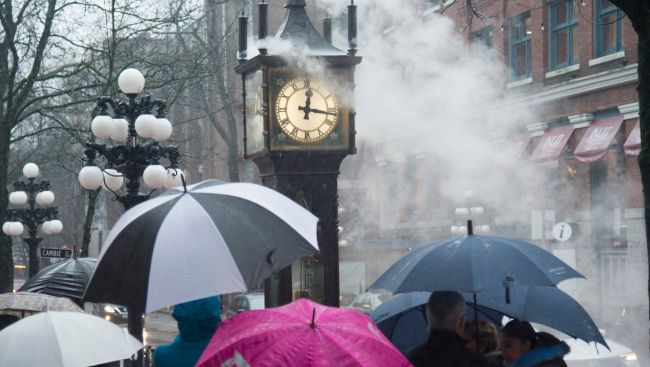
Picture Courtesy: THE CANADIAN PRESS/Jonathan Hayward

MORE National ARTICLES

Ottawa provides $20M for B.C.'s forest sector amid softwood duties, trade war

Ottawa provides $20M for B.C.'s forest sector amid softwood duties, trade war
The federal government is providing about $20 million in funding to support British Columbia's forestry sector, part of Ottawa's effort to bolster the economy amid the Canada-U. S. trade war. Energy Minister Jonathan Wilkinson says it's more important than ever to support the sector, which is subject to American duties on softwood lumber and now faces the additional threat of steep tariffs from U.S. President Donald Trump.

Ottawa provides $20M for B.C.'s forest sector amid softwood duties, trade war

Commercial truck hits B.C. highway overpass, losing lumber load and snarling traffic

Commercial truck hits B.C. highway overpass, losing lumber load and snarling traffic
British Columbia's Highway Patrol says another commercial truck has hit an overpass in Metro Vancouver, causing no visible damage, but snarling traffic on Wednesday. Police say a load of lumber the tractor trailer was hauling along Highway 99 hit the Blundell Road overpass.

Commercial truck hits B.C. highway overpass, losing lumber load and snarling traffic

Consumers could find 'meaningful savings' as carbon price ends: Desjardins

Consumers could find 'meaningful savings' as carbon price ends: Desjardins
Canadians can expect to feel the absence of the consumer carbon price at the pumps immediately but it may take longer to notice a difference in the price of other goods, a new report released Wednesday suggests. The analysis by Desjardins Economics comes less than a week after Prime Minister Mark Carney and his new Liberal cabinet ordered that the consumer levy be set to zero on April 1.

Consumers could find 'meaningful savings' as carbon price ends: Desjardins

End of consumer carbon tax leaves $1.5-billion hole in B.C. budget

End of consumer carbon tax leaves $1.5-billion hole in B.C. budget
The budget released earlier this month shows the province was forecasting revenue of just over $2.5 billion from the tax in the 2024-25 fiscal year, while the estimated cost of the climate action tax credit was $995 million.

End of consumer carbon tax leaves $1.5-billion hole in B.C. budget

Ottawa caps non-sufficient funds fees at $10 starting March 2026

Ottawa caps non-sufficient funds fees at $10 starting March 2026
Ottawa has put in place new rules limiting the fees banks can levy on customers who don't have enough in their accounts to cover a cheque or other pre-authorized charges. The updates, included in an order-in-council last week, cap non-sufficient funds fees at $10 for personal deposit accounts, prohibit charging more than one NSF fee in a period of two business days, and prohibit charging an NSF fee when an account shortfall is under $10.

Ottawa caps non-sufficient funds fees at $10 starting March 2026

Federal government promises $2.55B in low-cost loans to build Toronto rental homes

Federal government promises $2.55B in low-cost loans to build Toronto rental homes
The federal government is promising billions in low-cost financing to help build thousands of rental homes in Toronto, including more than a thousand affordable units. Ottawa says it will provide $2.55 billion in financing through its Apartment Construction Loan Program, to be administered by the Canada Mortgage and Housing Corporation.

Federal government promises $2.55B in low-cost loans to build Toronto rental homes