
Saturday, June 20, 2026
ADVT 
National

Last spring forward for B.C. as it moves to permanent daylight time

Darpan News Desk The Canadian Press, 02 Mar, 2026 03:55 PM
  • Last spring forward for B.C. as it moves to permanent daylight time

British Columbia's major southern population centres will be facing winter sunrises around 9 a.m. — and around 9:30 a.m. in the north — after the decision to adopt year-round daylight time, springing forward by one hour this Sunday for the last time.

Premier David Eby said Monday the decision is about making life easier for families, reducing disruptions for businesses and supporting a stable, thriving economy.

"British Columbians have been clear that seasonal time changes do not work for them,” Eby said. 

B.C.'s transition to the Pacific time zone — as opposed to the current Pacific standard and Pacific daylight zones — will put it in the same time zone as the Yukon. It will match Alberta from November to March.

The province will align with California, Washington, and Oregon from March to November, but be an hour ahead outside those months.

The change means that on the shortest day of the year, Dec. 21, the sun will not rise in Victoria until 9:03 a.m. In Prince George, the winter solstice sunrise will be at 9:28 a.m.

Eby says people and businesses will have eight months to prepare for the elimination of the next time change, which had been set for Nov. 1.

He said he’s hopeful B.C.’s American neighbours will join the province in ending the disruptive time changes. 

Attorney General Niki Sharma said they've heard from an overwhelming majority of people in B.C. who want to end the back-and-forth of seasonal time changes.

“This shift offers more stability, supports public well-being and reduces twice-yearly, unnecessary disruptions to the routines of parents, shift workers, small businesses, pet owners and so many more," Sharma said. 

She said she looks forward to enjoying an extra hour of sunlight after work and school for many winters to come. 

The pending change fulfils a promise first made in 2019, when Eby, then attorney general, tabled legislation to make daylight time permanent to end the practice of changing clocks twice a year.

But B.C. conditioned that change on Washington State, Oregon and California also making the switch, which has not happened because the relevant legislation remains in Congressional limbo.

"The situation on the ground has changed since 2019," Eby said, when asked about government's decision to move ahead without waiting on the U.S. states.

"We are able to be a little bit more selfish in our decisions for what is best for British Columbians. It's clear that British Columbians know what is best for them. They want to have that extra hour of sunlight at the end of the day."

Parts of the business community, however, are criticizing the change. 

Bridgitte Anderson, president and CEO of the Greater Vancouver Board of Trade, said government's "unilateral change" marks an "unwelcome distraction that will make it more difficult to attract and retain businesses" in British Columbia.

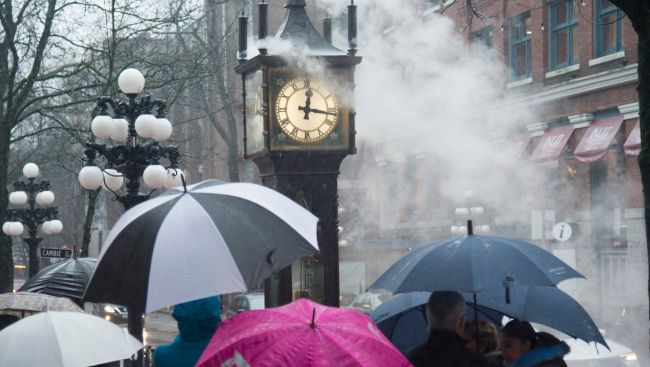
Picture Courtesy: THE CANADIAN PRESS/Jonathan Hayward

MORE National ARTICLES

Former prime minister Brian Mulroney to be featured on Canada Post stamp

Former prime minister Brian Mulroney to be featured on Canada Post stamp
Former prime minister Brian Mulroney will be featured on a stamp as part of Canada Post's 2025 lineup. Mulroney, who died last year, served as prime minister from 1984 to 1993.

Former prime minister Brian Mulroney to be featured on Canada Post stamp

Carney, Macron launch new bilteral partnership on intelligence and security

Carney, Macron launch new bilteral partnership on intelligence and security
Carney and Macron discussed a new bilateral partnership on intelligence and security, focused on enhancing cybersecurity and sharing intelligence on "significant threats," the Prime Minister's Office said in a statement about the conversation.

Carney, Macron launch new bilteral partnership on intelligence and security

B.C. hydro rates to increase in 2025, 2026 but remain among lowest in North America

B.C. hydro rates to increase in 2025, 2026 but remain among lowest in North America
Adrian Dix says the government will be submitting a "rate stability direction" to the B.C. Utilities Commission for approval of a BC Hydro rate increase of 3.75 per cent on April 1 and for the same bump next year.

B.C. hydro rates to increase in 2025, 2026 but remain among lowest in North America

Quebec aluminum towns aren’t feeling the sting of 25 per cent U.S. tariffs

Quebec aluminum towns aren’t feeling the sting of 25 per cent U.S. tariffs
Layoffs aren't expected at Aluminerie Alouette in Sept-Îles, Que., a major aluminum producer with some 950 employees, says the town's mayor, Denis Miousse. The company, which describes itself as the biggest aluminum smelter on the continent, can find new export markets if demand weakens in the U.S.

Quebec aluminum towns aren’t feeling the sting of 25 per cent U.S. tariffs

Carney’s move to kill carbon price now official but debate over it not dead

Carney’s move to kill carbon price now official but debate over it not dead
Prime Minister Mark Carney's move Friday to end the consumer carbon price has done little to put the long-standing political battle to rest. Rather, Carney's theatrical document signing led to another heated debate about whether the paper he signed was even a real thing.

Carney’s move to kill carbon price now official but debate over it not dead

Poilievre says he'll repeal carbon price law, including the industrial charge

Poilievre says he'll repeal carbon price law, including the industrial charge
Conservative Leader Pierre Poilievre says that he will repeal the entire carbon price law if elected, including on businesses and the industrial charge. On Friday, Prime Minister Mark Carney began the process to end the consumer carbon price on things like gasoline. 

Poilievre says he'll repeal carbon price law, including the industrial charge