Sunday, June 21, 2026
ADVT 
National

Last spring forward for B.C. as it moves to permanent daylight time

Darpan News Desk The Canadian Press, 02 Mar, 2026 03:55 PM
  • Last spring forward for B.C. as it moves to permanent daylight time

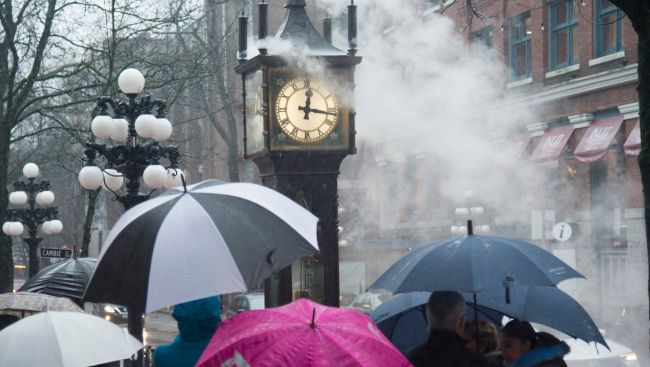
British Columbia's major southern population centres will be facing winter sunrises around 9 a.m. — and around 9:30 a.m. in the north — after the decision to adopt year-round daylight time, springing forward by one hour this Sunday for the last time.

Premier David Eby said Monday the decision is about making life easier for families, reducing disruptions for businesses and supporting a stable, thriving economy.

"British Columbians have been clear that seasonal time changes do not work for them,” Eby said. 

B.C.'s transition to the Pacific time zone — as opposed to the current Pacific standard and Pacific daylight zones — will put it in the same time zone as the Yukon. It will match Alberta from November to March.

The province will align with California, Washington, and Oregon from March to November, but be an hour ahead outside those months.

The change means that on the shortest day of the year, Dec. 21, the sun will not rise in Victoria until 9:03 a.m. In Prince George, the winter solstice sunrise will be at 9:28 a.m.

Eby says people and businesses will have eight months to prepare for the elimination of the next time change, which had been set for Nov. 1.

He said he’s hopeful B.C.’s American neighbours will join the province in ending the disruptive time changes. 

Attorney General Niki Sharma said they've heard from an overwhelming majority of people in B.C. who want to end the back-and-forth of seasonal time changes.

“This shift offers more stability, supports public well-being and reduces twice-yearly, unnecessary disruptions to the routines of parents, shift workers, small businesses, pet owners and so many more," Sharma said. 

She said she looks forward to enjoying an extra hour of sunlight after work and school for many winters to come. 

The pending change fulfils a promise first made in 2019, when Eby, then attorney general, tabled legislation to make daylight time permanent to end the practice of changing clocks twice a year.

But B.C. conditioned that change on Washington State, Oregon and California also making the switch, which has not happened because the relevant legislation remains in Congressional limbo.

"The situation on the ground has changed since 2019," Eby said, when asked about government's decision to move ahead without waiting on the U.S. states.

"We are able to be a little bit more selfish in our decisions for what is best for British Columbians. It's clear that British Columbians know what is best for them. They want to have that extra hour of sunlight at the end of the day."

Parts of the business community, however, are criticizing the change. 

Bridgitte Anderson, president and CEO of the Greater Vancouver Board of Trade, said government's "unilateral change" marks an "unwelcome distraction that will make it more difficult to attract and retain businesses" in British Columbia.

Picture Courtesy: THE CANADIAN PRESS/Jonathan Hayward

MORE National ARTICLES

Slower B.C. real estate sales blamed on U.S. tariff uncertainty, association says

Slower B.C. real estate sales blamed on U.S. tariff uncertainty, association says
The British Columbia Real Estate Association says tariff uncertainty has slowed housing activity.  A board report says there were 4,947 residential sales in the province last month, down 9.7 per cent from the same time last year. 

Slower B.C. real estate sales blamed on U.S. tariff uncertainty, association says

Explainer: What's a recession and why is rising anxiety about it roiling markets?

Explainer: What's a recession and why is rising anxiety about it roiling markets?
Stock markets are plunging, consumers and businesses have started to sour on the economy, and economists are marking down their estimates for growth this year, with some even seeing rising odds of a recession. The tech-heavy Nasdaq stock index slipped into a correction last week, defined as a 10% drop from its most recent peak. The broader S&P 500 neared that level Tuesday.

Explainer: What's a recession and why is rising anxiety about it roiling markets?

Poilievre wants to impose 50 per cent metal tariffs on U.S. after latest Trump threat

Poilievre wants to impose 50 per cent metal tariffs on U.S. after latest Trump threat
Trump says he will double the steel and aluminum tariffs he promised to deploy on Canadian products tomorrow — to 50 per cent — in response to Ontario's 25 per cent surcharge on electricity exports to the U.S. Trump originally vowed to impose 25 per cent tariffs on all steel and aluminum imports.

Poilievre wants to impose 50 per cent metal tariffs on U.S. after latest Trump threat

Confused about tariff deadlines? Here's what we know right now

Confused about tariff deadlines? Here's what we know right now
The trade war between the U.S. and Canada took another turn Tuesday as U.S. President Donald Trump vowed to double the tariff on steel and aluminum imports coming from Canada in response to Ontario's surcharge on electricity exports. Trump said 50 per cent tariffs will be placed on Canadian steel and aluminum starting Wednesday, up from the 25 per cent tariffs that had been expected to apply to those materials.

Confused about tariff deadlines? Here's what we know right now

PM-designate Carney demands respect from U.S. as Trump doubles tariffs

PM-designate Carney demands respect from U.S. as Trump doubles tariffs
Prime minister-designate Mark Carney says he will keep Canadian retaliatory tariffs in place until "Americans show us respect" and commit to free trade again. Carney is reacting after U.S. President Donald Trump moved today to double incoming tariffs on Canadian steel and aluminum, which Carney calls an attack on Canadian workers and businesses.

PM-designate Carney demands respect from U.S. as Trump doubles tariffs

Doctors thrust into COVID-19 celebrity reflect on backlash, threats and Thank You letters

Doctors thrust into COVID-19 celebrity reflect on backlash, threats and Thank You letters
Doctors who were thrust into national fame when COVID-19 hit five years ago say they try to focus on positive feedback from the public rather than the angry backlash and threats of violence they faced. British Columbia public health chief Dr. Bonnie Henry still has a security detail to this day because of threats against her and her family from people angry about lockdowns or opposed to COVID vaccination. 

Doctors thrust into COVID-19 celebrity reflect on backlash, threats and Thank You letters