Sunday, June 21, 2026
ADVT 
National

Last spring forward for B.C. as it moves to permanent daylight time

Darpan News Desk The Canadian Press, 02 Mar, 2026 03:55 PM
  • Last spring forward for B.C. as it moves to permanent daylight time

British Columbia's major southern population centres will be facing winter sunrises around 9 a.m. — and around 9:30 a.m. in the north — after the decision to adopt year-round daylight time, springing forward by one hour this Sunday for the last time.

Premier David Eby said Monday the decision is about making life easier for families, reducing disruptions for businesses and supporting a stable, thriving economy.

"British Columbians have been clear that seasonal time changes do not work for them,” Eby said. 

B.C.'s transition to the Pacific time zone — as opposed to the current Pacific standard and Pacific daylight zones — will put it in the same time zone as the Yukon. It will match Alberta from November to March.

The province will align with California, Washington, and Oregon from March to November, but be an hour ahead outside those months.

The change means that on the shortest day of the year, Dec. 21, the sun will not rise in Victoria until 9:03 a.m. In Prince George, the winter solstice sunrise will be at 9:28 a.m.

Eby says people and businesses will have eight months to prepare for the elimination of the next time change, which had been set for Nov. 1.

He said he’s hopeful B.C.’s American neighbours will join the province in ending the disruptive time changes. 

Attorney General Niki Sharma said they've heard from an overwhelming majority of people in B.C. who want to end the back-and-forth of seasonal time changes.

“This shift offers more stability, supports public well-being and reduces twice-yearly, unnecessary disruptions to the routines of parents, shift workers, small businesses, pet owners and so many more," Sharma said. 

She said she looks forward to enjoying an extra hour of sunlight after work and school for many winters to come. 

The pending change fulfils a promise first made in 2019, when Eby, then attorney general, tabled legislation to make daylight time permanent to end the practice of changing clocks twice a year.

But B.C. conditioned that change on Washington State, Oregon and California also making the switch, which has not happened because the relevant legislation remains in Congressional limbo.

"The situation on the ground has changed since 2019," Eby said, when asked about government's decision to move ahead without waiting on the U.S. states.

"We are able to be a little bit more selfish in our decisions for what is best for British Columbians. It's clear that British Columbians know what is best for them. They want to have that extra hour of sunlight at the end of the day."

Parts of the business community, however, are criticizing the change. 

Bridgitte Anderson, president and CEO of the Greater Vancouver Board of Trade, said government's "unilateral change" marks an "unwelcome distraction that will make it more difficult to attract and retain businesses" in British Columbia.

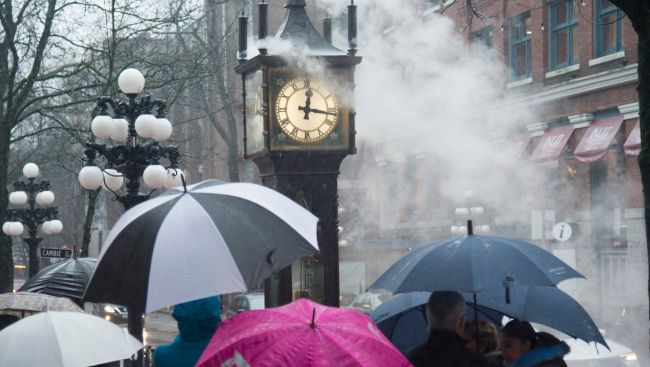
Picture Courtesy: THE CANADIAN PRESS/Jonathan Hayward

MORE National ARTICLES

Canadians should expect AI-enabled foreign meddling in election: cybersecurity centre

Canadians should expect AI-enabled foreign meddling in election: cybersecurity centre
In a new report, the Canadian Centre for Cyber Security says it expects individuals affiliated with the Chinese government will continue to target diaspora communities, pushing narratives favourable to Beijing's interests on social media platforms. Cybercriminals are also likely to take advantage of election-related opportunities to perpetrate scams, says the centre, which is an arm of Canada's cyberspy agency, the Communications Security Establishment. 

Canadians should expect AI-enabled foreign meddling in election: cybersecurity centre

B.C. to get about $3.7 billion in tobacco lawsuit settlement

B.C. to get about $3.7 billion in tobacco lawsuit settlement
British Columbia Attorney General Niki Sharma says B.C.'s share of a landmark settlement for health damages from the big tobacco firms will be about $3.7 billion. It's part of a $32.5-billion Canadian settlement between JTI-Macdonald Corp., Rothmans, Benson & Hedges and Imperial Tobacco Canada Ltd. and their creditors after more than five years of negotiations.

B.C. to get about $3.7 billion in tobacco lawsuit settlement

B.C. poised to toll U.S. trucks driving to Alaska through province in tariff response

B.C. poised to toll U.S. trucks driving to Alaska through province in tariff response
British Columbia will introduce legislation in the coming days that would give it the ability to levy fees on commercial trucks travelling from the United States through the province to Alaska, Premier David Eby said.  The move against Alaska-bound trucks is part of a series of responses the province is planning after the "unprecedented attack" from the United States that put a 25 per cent tariff on many Canadian goods.

B.C. poised to toll U.S. trucks driving to Alaska through province in tariff response

Canada halts second tariff wave after Trump announces pause

Canada halts second tariff wave after Trump announces pause
Finance Minister Dominic LeBlanc says Canada has suspended a second wave of retaliatory tariffs after U.S. President Donald Trump signed an executive order to pause some duties.

Canada halts second tariff wave after Trump announces pause

Former Canadian Olympic athlete added to FBI's 10 most wanted fugitives list

Former Canadian Olympic athlete added to FBI's 10 most wanted fugitives list
Ryan James Wedding is wanted for allegedly leading an organized crime group that moved large shipments of cocaine from Colombia through Mexico and California to Canada and other locations in the United States.

Former Canadian Olympic athlete added to FBI's 10 most wanted fugitives list

Shots over the bow: Why provinces are using liquor leverage in trade war with U.S.

Shots over the bow: Why provinces are using liquor leverage in trade war with U.S.
What they all have in common is the "currently unavailable" designation, having been yanked from sale by British Columbia's government in retaliation for U.S. President Donald Trump's tariffs on Canadian imports. Calling time on U.S. alcohol has been a popular move among Canadian provincial and territorial governments looking for ways to fight back in the trade war. 

Shots over the bow: Why provinces are using liquor leverage in trade war with U.S.