
Friday, June 19, 2026
ADVT 
National

Liberals move to make pardons more accessible

Darpan News Desk The Canadian Press, 19 Apr, 2021 11:45 PM
  • Liberals move to make pardons more accessible

The Liberal government says it is moving ahead with long-simmering plans to make it easier and less expensive to obtain a criminal pardon.

Proposals outlined in the federal budget Monday could undo measures introduced by Stephen Harper's Conservatives that made people wait longer and pay more to obtain a pardon.

Under the Conservative changes, lesser offenders — those with a summary conviction — must wait five years instead of three before they can apply.

Offenders who have served a sentence for a more serious crime — an indictable offence — must wait 10 years instead of five.

In addition, the cost of applying quadrupled to $631 from $150 to ensure full cost recovery.

The Conservatives said taxpayers should not subsidize the cost of pardons.

The changes came after The Canadian Press revealed that former hockey coach Graham James, a convicted sex abuser, had obtained a pardon.

Critics objected to the moves, which included renaming the pardon a "record suspension," as punitive hurdles for people trying to turn their lives around.

Five years ago, the Liberal government began reviewing the waiting period, fee and new name with a view to considering fairness, proportionality and the role that expunging a criminal record plays in rehabilitation.

In response to a federal consultation, a large majority of participants said the $631 fee, which has since climbed to more than $657, posed a substantial hurdle for people trying to turn their lives around.

Most respondents also felt the application process was long and complicated.

But the Trudeau government did not act on the findings.

The new Liberal budget proposes to provide $88.2 million over five years, starting this fiscal year, with $13 million ongoing, to the Parole Board of Canada, the RCMP and Public Safety Canada.

It says the funding would reduce application fees, create an online application portal and support community organizations that help people navigate the pardon application process.

The government also says it plans to amend the Criminal Records Act to make pardons more accessible to those who have served their sentences and are living law-abiding lives.

"A pardon increases access to jobs, education, stable housing, and makes communities safer by helping to end the cycle of crime," the budget plan says.

"However, fees and difficult-to-navigate processes pose unnecessary barriers to pardons, particularly among marginalized groups."
MORE National ARTICLES

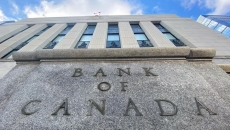
The Bank of Canada announced that it is holding its interest rate target at 0.25 per cent

The Bank of Canada announced that it is holding its interest rate target at 0.25 per cent
The Bank of Canada is warning that the downturn tied to COVID-19 will be the worst on record and that the economic recovery will depend on the effectiveness of current measures to bring the pandemic under control. The bank announced that it is keeping its key interest rate target on hold at 0.25 per cent, saying that it is effectively as low as it can go to combat the economic impacts of COVID-19.

The Bank of Canada announced that it is holding its interest rate target at 0.25 per cent

Liberals ease access to emergency COVID-19 benefit, plan to top-up wages

The federal government is making changes to its COVID-19 programs to send emergency aid to seasonal workers without jobs and those whose hours have been drastically cut but who still have some income. The changes will also allow people who are making up to $1,000 a month to qualify for the Canada Emergency Response Benefit, as well as those whose employment insurance benefits have run out since the start of the calendar year.    

Liberals ease access to emergency COVID-19 benefit, plan to top-up wages

Canada focused on fighting COVID-19 Trudeau steers clear of WHO controversy

Prime Minister Justin Trudeau refused Wednesday to join the escalating global debate about the World Health Organization's handling of the COVID-19 crisis, insisting Canada remains focused on working with experts around the world to combat the pandemic. Trudeau repeatedly batted back questions about Donald Trump's plan to halt funding to the UN agency and review what the U.S. president says was a failure to properly assess the threat posed by the novel coronavirus back in January.

Canada focused on fighting COVID-19 Trudeau steers clear of WHO controversy

With strong control measures, the federal public health agency projects that 11,000 to 22,000 Canadians could die of COVID-19 in the coming months

Canada could see the end of the first wave of the COVID-19 epidemic before autumn, according to federal projections, but only if strong physical distancing measures are strictly maintained the whole time. Even in that best-case scenario, the federal public health agency projects that a total of 4,400 to 44,000 Canadians could die of COVID-19 in the coming months.    

With strong control measures, the federal public health agency projects that 11,000 to 22,000 Canadians could die of COVID-19 in the coming months

Canada lost more than a million jobs in March, but April may be even worse

The Canadian economy lost an unprecedented one million jobs in March — the worst recorded single-month change — as the COVID-19 crisis began to take hold, lifting the unemployment rate to 7.8 per cent, Statistics Canada reported Thursday. The loss is eight times worse than the previous one-month record, yet economists warned it will likely be even worse in April, when the impact of physical distancing practices and other measures became clearer and millions of Canadians began receiving emergency federal aid.

Canada lost more than a million jobs in March, but April may be even worse

The latest numbers on COVID-19 in Canada

Total number of cases broken down by province and the total number right across the country. 

The latest numbers on COVID-19 in Canada