Mary Simon, an Inuk leader and former diplomat, described her appointment as Canada's next governor general — the first Indigenous person to serve in the role — as a “step forward on the long path to reconciliation.”
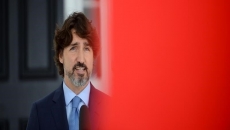
Prime Minister Justin Trudeau introduced Simon as the next person to serve in the viceregal role during a news conference Tuesday at the Canadian Museum of History in Gatineau, Que., in which the theme of healing long-standing divides figured prominently.
“It is only by building bridges, bringing between people in the North and South, just like in the East and West, that we can truly move forward,” Trudeau said during his opening remarks.
“Mary Simon has done that throughout her life. I know she will help continue paving that path ahead. And we will all be stronger for it. Today after 154 years, our country takes a historic step. I cannot think of a better person to meet the moment.”
Queen Elizabeth has approved the appointment, he added.
This morning, I announced our country’s next Governor General: Mary Simon. Ms. Simon has long been an advocate for Canadian Inuit and Indigenous peoples, and I know she’ll serve all Canadians with the same dedication and integrity. https://t.co/9bAhm1Egsc pic.twitter.com/XIGQmbedrx
— Justin Trudeau (@JustinTrudeau) July 6, 2021
Simon’s appointment fills a vacancy left by Julie Payette’s sudden resignation in January after an external review found the former astronaut had presided over a toxic work environment at the governor general’s residence, Rideau Hall.
It also comes at a critical moment for Canada’s relationship with Indigenous Peoples after the discovery of what are believed to be unmarked graves near former residential school sites, and amid widespread speculation Trudeau is preparing to call an election this summer or fall.
Simon, who was born in Kangiqsualujjuaq, in the Nunavik region of northern Quebec, is a well-known advocate for Inuit culture and rights and was the former president of Inuit Tapiriit Kanatami, a national advocacy organization for Inuit.
She also served as Canada's ambassador to Denmark and the Canadian ambassador for circumpolar affairs.
Reflecting her Inuk background, Simon made her first public remarks as governor general-designate in Inuktitut before switching to English, thanking Trudeau for the "historic opportunity” to be Canada's first Indigenous governor general.
“I can confidently say that my appointment is a historic and is inspirational moment for Canada and an important step forward on the long path towards reconciliation,” she said while reflecting on having grown up with an Inuk mother and a father from Southern Canada.
“This is a moment that I hope all Canadians feel part of because my appointment reflects our collective progress towards building a more inclusive, just an equitable society.”
She also sought to confront one potential controversy: the fact she is not fluent in French.
“Based on my experience growing up in Quebec, I was denied the chance to learn French during my time in the federal government day schools,” she said.
“I am deeply committed to continuing my French-language studies and plan to conduct the business of the governor general in both of Canada's official languages as well as Inuktitut, one of many Indigenous languages spoken across the country.”
Simon’s appointment caps a nearly six-month search for a new governor general after Payette resigned in January following a scathing independent report on the work environment at Rideau Hall during her tenure.
Even before her resignation, the Liberals were accused of not properly vetting Payette, who was dogged by suggestions she wasn’t the right fit for the largely symbolic but nonetheless high-profile job that involves representing the Queen in Canada.
Following Payette’s resignation, the Liberal government re-established an advisory panel to help select her successor. The approach was like the one used by the previous Conservative government, which the Liberals dropped when they picked the former astronaut.
Trudeau revealed that the panel co-chaired by Intergovernmental Affairs Minister Dominic LeBlanc and Janice Charette, the clerk of the Privy Council, considered close to 100 different names before compiling a shortlist of candidates.
The list included Canadians with the ability to both serve and lead the country “with an approach that is anchored in humility and thoughtfulness in everything they do,” he said. “Mary Simon embodied all those qualities of leadership and service.”
For her part, Simon pledged to not only work on healing the many divides between people and regions across Canada, but also to “setting and maintaining the highest standard of work ethics in all aspects of my duty.”
One of those duties could soon include dissolving Parliament to trigger an election upon the prime minister’s request, which many believe could happen before the summer is out.
Both Trudeau and Simon said they have not discussed the issue.
“Today is the first day of my appointment,” Simon said. “And I have not talked to the prime minister about the election.”
Conservative Leader Erin O’Toole was among those who welcomed Simon’s appointment.
“This is an important day for both our country as a whole and particularly Indigenous Peoples," O'Toole said in a statement.
"The role of governor general is important in unifying our country and bringing Canadians together. I wish her well in this role.”
Pita Aatami, president of the Makivik Corporation, which represents Inuit in Quebec's northern Nunavik region, also praised her appointment.
“This is a new chapter in Canada’s relationship with Inuit, First Nations, and Métis," Aatami said in a statement.
"Having an Indigenous person as the Crown’s representative in Canada sends a strong message to the nation, and to the international community. This comes at an important time in our history as we collectively work towards reconciliation.”
Bloc Québécois Leader Yves-François Blanchet, however, took to Twitter to say the choice of governor general belongs to the prime minister and the "Queen of England" and that the role is not representative, elected or legitimate.
Le choix de la gouverneure générale appartient au premier ministre et à la reine d’Angleterre. Ce n’est une fonction ni représentative, ni élue, ni légitime. J’espère que cette nomination facilitera l’admission par la Couronne et le Canada des sévices subis par les Autochtones.
— Yves-F. Blanchet 🎗⚜️ (@yfblanchet) July 6, 2021
"I hope that this appointment will facilitate an admission by the Crown and Canada of the abuse suffered by Indigenous people," he wrote in French.