Saturday, June 20, 2026
ADVT 
National

New border measures to begin Feb. 22

Darpan News Desk The Canadian Press, 12 Feb, 2021 05:58 PM
  • New border measures to begin Feb. 22

Tighter border controls will come into effect Feb. 22, the prime minister said Friday, not to punish travellers but to try to keep everyone safe.

Forcing new arrivals into a mandatory three-day hotel quarantine — at their own expense — and requiring a COVID-19 test when they get here is meant to help ward off new and more transmissible variants of COVID-19, Prime Minister Justin Trudeau said.

Nobody wants a third wave to start, Trudeau said at a news conference outside his Rideau Cottage home.

"Our goal is not to punish people," he said in French.

"Our goal is to protect and to discourage any non-essential travel."

The government had announced the plan for the new border controls last month but how they will work, who might be exempted and how they will be enforced was laid out Friday.

All those coming into Canada for non-essential reasons were already required to quarantine for 14 days and since early January, air travellers have had to show proof of a negative COVID-19 test before boarding their Canada-bound flights.

That requirement is also set to be applied at the land border as of Monday. Beginning Feb. 22, those arriving via the land border must also take another COVID-19 test at the end of their quarantine.

The forced quarantine in a government-approved hotel for air travellers could be followed by a stay in a government-approved isolation facility should they test positive for COVID-19.

Those who test negative can continue on to their previously arranged quarantine location.

The cost of the hotel stay, including the COVID-19 test, transportation and meals, could be as much as $2,000, the government had previously said.

Travellers will be able to book their government-authorized stay starting Feb. 18.

Right now, all travellers, with some exceptions for essential workers, must isolate for 14 days upon arrival, no matter if they came into the country via land or air.

But here is what's known for now:

Air travel

— All incoming travellers must provide proof of negative COVID-19 PCR tests (the kind typically taken with a deep nasal swab) done within 72 hours of boarding their aircraft.

— As of Feb. 22, upon arrival, each traveller will be required to take another test at the airport.

— From there, they must go to government-approved hotels for up to 72 hours, at their own cost, to await the results. Hotels are to begin accepting reservations Feb. 18.

— If that test is negative, a traveller can leave the hotel and continue on to finish quarantine at home or another approved location. They will have to take another test at the end of their time in quarantine and will be given that test to take with them.

— If the arrival test comes back positive, the traveller will be transferred to government isolation facility.

Land border

— As of Feb. 15, each traveller arriving at the land border, with exceptions for essential travellers, will be required to provide proof of a negative COVID-19 PCR test taken in the U.S. within 72 hours, or proof of a positive test result between 14 and 90 days before arrival — long enough ago for the illness to have passed, but not so long that immunity might have waned.

— As of Feb. 22, travellers will also be required to take COVID-19 tests upon arrival. Certain border points will be able to test on-site; if that's not an option, travellers will be given a kit to take home. They'll have to do a followup test 10 days later.


MORE National ARTICLES

Crisis lines face volunteer, cash crunch even as COVID-19 drives surge in calls

Crisis lines face volunteer, cash crunch even as COVID-19 drives surge in calls
Despite a surge in demand due to COVID-19, many distress centres across Canada are dangerously close to folding thanks to major declines in both volunteers and revenue. Stephanie MacKendrick, CEO of Crisis Services Canada, which runs the only national suicide-specific helpline in Canada, says her organization relies on a network of approximately 100 community distress centres across the country to field calls from people.

Crisis lines face volunteer, cash crunch even as COVID-19 drives surge in calls

Conservatives gear up to grill government in modified return of House of Commons propose and oppose: Tories

Conservatives gear up to grill government in modified return of House of Commons propose and oppose: Tories
Conservative Leader Andrew Scheer laid out Monday the numerous lines of inquiry his party intends to follow this week as a modified version of a House of Commons sitting gets underway. They include the state of the nation's emergency supply stockpile, the mishmash of federal economic benefit programs that allow some to fall through the cracks and to what extent the minority Liberals are backstopping provincial efforts to reopen their economies, Scheer said.

Conservatives gear up to grill government in modified return of House of Commons propose and oppose: Tories

Learning to live with COVID-19 requires permanent fixes to vulnerable settings

Learning to live with COVID-19 requires permanent fixes to vulnerable settings
Canada's chief public health officer warned Monday there is still a lot we don't know about the virus that causes COVID-19, but said stopping this pandemic or preventing a future one will require more than just physical distancing and handwashing. Dr. Theresa Tam said we simply do not know yet whether someone who has had COVID-19 will be immune from getting it again, or how long that immunity will last.

Learning to live with COVID-19 requires permanent fixes to vulnerable settings

B.C. university creates institute to take microscope-telescope view of pandemic

B.C. university creates institute to take microscope-telescope view of pandemic
The COVID-19 pandemic has placed the world at a tipping point that's challenging social, political, economic and environmental structures, says the director of a new academic research institute at British Columbia's Royal Roads University. Dr. Thomas Homer-Dixon said Monday the pandemic is an event with the power to cause those structures to fall like dominos or shift radically to new paths.

B.C. university creates institute to take microscope-telescope view of pandemic

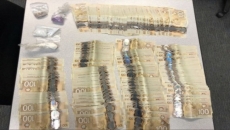
Drugs and cash seized from a Whalley area residence in Surrey

Drugs and cash seized from a Whalley area residence in Surrey
Illicit drugs and cash have been seized from a residence in the Whalley area following an investigation by the Surrey RCMP. The investigation began on March 5th, 2020 by the Surrey RCMP Community Response Unit (CRU). CRU observed suspicious activity consistent with drug trafficking at a residence in the 11400 block of 124 street.     

Drugs and cash seized from a Whalley area residence in Surrey

Police say B.C. woman whose disappearance sparked wide search found dead in Burnaby

Police say B.C. woman whose disappearance sparked wide search found dead in Burnaby
The body of a missing British Columbia woman has been found two months after she disappeared. A statement from New Westminster police says the body believed to be that of Nirla Sharma was discovered Sunday along the Fraser River between New Westminster and Burnaby. The woman's disappearance from her New Westminster home sparked a major search in late February.

Police say B.C. woman whose disappearance sparked wide search found dead in Burnaby