Saturday, December 20, 2025
ADVT 
National

Numbers of large wild Atlantic salmon dipped to near historic lows in 2019

Darpan News Desk The Canadian Press, 25 Jun, 2020 06:02 PM
  • Numbers of large wild Atlantic salmon dipped to near historic lows in 2019

A group advocating for the conservation of wild Atlantic salmon says the number of adult salmon returning to North America rivers fell to near historic lows last year.

The Atlantic Salmon Federation's annual "State of Wild Atlantic Salmon Report" released today indicates returns for large salmon were the third lowest in the past five decades.

The federation says there has been a "continuing a downward trend that threatens the sustainability of the species."

The group's scientists estimate 103,900 large salmon returned to the 86 rivers studied in 2019, down from estimates of about 131,800 the year before.

The vast majority of large salmon in North America return to three regions: Labrador, Quebec and the southern Gulf of St. Lawrence.

A large salmon is defined by the federation as adult Atlantic salmon that have spent two or more years at sea and have spawned at least twice.

Meanwhile, there were about 332,000 grilse — adult salmon that have spent one winter at sea — that returned to their native rivers, which is the eighth lowest level in the past five decades.

In recent decades, the harvest of salmon has been significantly reduced through a series of conservation measures, helping to stabilize some populations, but the species has recently been declining again.

Bill Taylor, the president of the federation, says the salmon are struggling to adapt to warming rivers and pressure from human development that continues to alter waterways and landscapes.

"It will take provincial and federal governments working side-by-side with First Nations organizations, watershed groups and non-governmental organizations on priority projects to make a change," he said.

Indigenous harvesters take 57 per cent of the allowed catch of the salmon, while recreational fisheries take 40 per cent, a local Labrador food fishery takes two per cent and residents of St-Pierre-Miquelon take one per cent.

These groups caught a total of 127 metric tonnes of the species last year.

The federation says that throughout North America, freshwater habitat has been degraded by dams, industrial forestry, large-scale agriculture and invasive species, making rivers less resilient to climate change.

"The combined effect is that fewer juvenile salmon parr are living to become smolt, and fewer smolt are making it successfully to their ocean feeding grounds," said Taylor.

The federation and its partners in Greenland and Iceland have agreed to reduce harvests at sea.

However, the group says much remains to be done in rivers in Canada and the United States.

The federation also says it's time for the federal Fisheries Department to follow up on its wild Atlantic salmon conservation policy and "to go further by supporting a new model for conservation that includes the provinces, Indigenous groups, and non-governmental organizations."


MORE National ARTICLES

Huge job losses in B.C. indicate a 'hard road ahead': finance minister

Huge job losses in B.C. indicate a 'hard road ahead': finance minister
British Columbia Finance Minister Carole James says she doesn't want to sugar coat what will be a hard road ahead as labour force figures show the province lost a quarter of a million jobs in April. Combined with jobless figures in March, almost 400,000 people were unemployed.

Huge job losses in B.C. indicate a 'hard road ahead': finance minister

Canadians trust doctors, scientists and government more since pandemic began

Canadians trust doctors, scientists and government more since pandemic began
A new survey suggests the COVID-19 pandemic has given Canadians almost absolute trust in doctors. The Proof Strategies annual trust index is usually completed in January but when Canada went into a nationwide lockdown to slow the spread of the novel coronavirus the public-relations firm decided to ask the same questions again in early May.    

Canadians trust doctors, scientists and government more since pandemic began

Greyhound Canada to shut down temporarily all bus routes as ridership plunges

Greyhound Canada to shut down temporarily all bus routes as ridership plunges
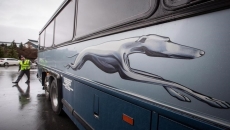
Greyhound Canada is temporarily slamming the brakes on all of its bus routes and services as ridership plummets amid the COVID-19 pandemic. The transportation company says starting May 13 it will halt all routes until passenger demand recovers. 

Greyhound Canada to shut down temporarily all bus routes as ridership plunges

Canadian Forces still unsure how to raise helicopter that crashed

Canadian Forces still unsure how to raise helicopter that crashed
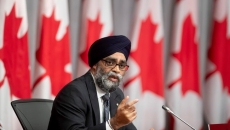
The Canadian military is still determining how to raise the wreckage of a military helicopter that crashed into the Mediterranean Sea last week, Defence Minister Harjit Sajjan said Thursday. The crash killed six members of the Canadian Forces, though the remains of only one, Sub-Lt. Abbigail Cowbrough, have been recovered.

Canadian Forces still unsure how to raise helicopter that crashed

Feds to partly cover 'top ups' for front-line workers on minimum wage

Feds to partly cover 'top ups' for front-line workers on minimum wage
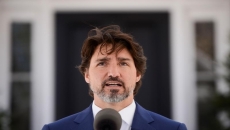
Prime Minister Justin Trudeau says the federal government, provinces and territories will spend $4 billion to increase the wages of essential workers in the COVID-19 pandemic. He says the details are still to be finalized with some provinces.  

Feds to partly cover 'top ups' for front-line workers on minimum wage

The federal government has made another multimillion-dollar investment into the development of the F-35 stealth fighter despite no guarantee it will buy the aircraft.

The federal government has made another multimillion-dollar investment into the development of the F-35 stealth fighter despite no guarantee it will buy the aircraft.
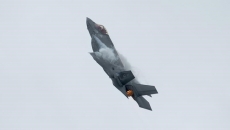
The federal government has extended the $19-billion competition to replace Canada's aging CF-18s by another month because of COVID-19 — one week after it made another multimillion-dollar investment into the development of the F-35 stealth fighter jet.

The federal government has made another multimillion-dollar investment into the development of the F-35 stealth fighter despite no guarantee it will buy the aircraft.