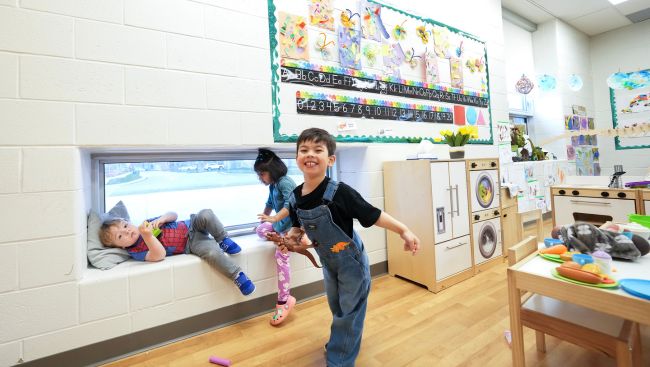
The federal government is giving provinces and territories an additional $5.4 billion over two years for the national $10-a-day child-care program, money the minister is framing as stabilizing the program.
The program that started rolling out across the country in 2021 set ambitious targets for reducing the fees parents pay and creating hundreds of thousands of new spaces by this year, but those targets have not yet been met in many jurisdictions.
Jobs and Families Minister Patty Hajdu said Friday in an interview that she has heard the provinces' calls for more federal money, as many struggle to reduce fees, add spaces and recruit and retain enough early childhood educators in the face of rising costs and demand.
"Certainly, money has been part of the challenge," Hajdu said ahead of a meeting with provincial and territorial ministers.
"We've already invested $58 billion to affordable child care across the country. This additional $5.4 billion is to reflect the additional cost pressures that provinces have been indicating, and that money that will be injected is flexible, so they can use it in the ways that will address their own specific pressures."
While many provinces and territories have lowered the child-care fees parents pay to an average of $10 a day, five have not, and Ontario alone, where fees are at an average of $19 a day, has said it would need an additional $2 billion per year to get to $10.
Universal child-care advocates were disappointed earlier this year when the government's spring economic update did not show any new investments, saying that without more funding the program would be at risk.
“It is well-established that when families can’t find affordable and reliable child care, mothers are forced out of the paid labour force or significantly reduce their work hours," Child Care Now executive director Morna Ballantyne said in a statement at the time.
"This puts a brake on the economy, and undermines income security."
Hajdu said the government recognizes affordable child care as a driver of the economy, and the new money is about ensuring progress that has already been made, such as on lowered fees, and access to new spaces is not lost.
"It is definitely about the protection of what we've gained, and what we've gained is very significant," she said. "On average, families are saving about $11,000 per year, per child. That's a giant savings across the country."
The lowered fees have been driving up demand and therefore wait lists in many regions. The initial set of agreements aimed to create 250,000 new spaces by this past March and the current number of new spaces is about 173,500, the government said.
Many provinces signed on to five-year extensions to the child-care agreements ahead of last year's federal election, but some including Alberta and Ontario agreed to one-year extensions, and the new funding may help bolster those negotiations.
The new money will come with some terms of additional data sharing, Hajdu said, to help better understand where the gaps remain.
"I think that data is critical in terms of understanding what those specific barriers are, what the fee structures look like, what the access looks like, what the operational realities are all across the country," she said.