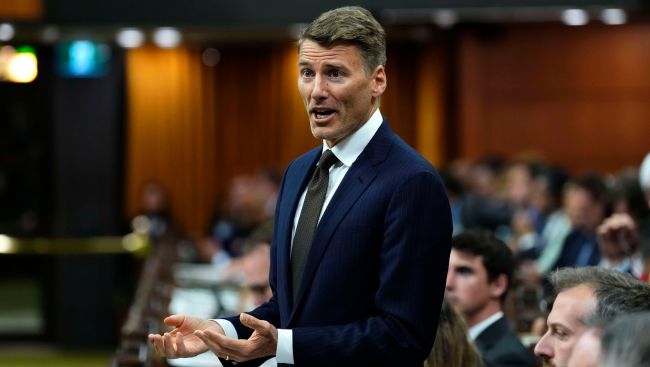
Claiming the city is falling short on its promise to ramp up density, federal Housing Minister Gregor Robertson is threatening to pull some of Toronto's housing funding.
In a letter to Toronto Mayor Olivia Chow dated Monday, Robertson wrote that he's disappointed by a recent decision to limit where builders can put up to six housing units on a lot.
Last month, Toronto city council compromised with a plan that would see some city wards sign up to the sixplex framework, while others would have the choice to opt in later.
Robertson argued that decision went against Toronto's agreement with the federal government under the Housing Accelerator Fund — a tool Ottawa uses to encourage cities to rapidly build more housing.
"I encourage the City of Toronto to revisit the measures they could implement to address the housing crisis and to restore the ambitious scope of this agreement," Robertson wrote in the letter, now a part of submissions to the city council's upcoming meeting agenda.
Toronto signed a deal with the feds in late 2023 that would see the city build nearly 12,000 new units over three years and receive $471 million in federal funding.
The deal calls on city staff to report back to council "on opportunities to permit more low-rise, multi-unit housing development through as-of-right zoning by-laws in neighbourhoods across Toronto, including … permissions for residential buildings with up to six dwelling units."
In his letter, Robertson warned Toronto could lose some of its housing funding if the city fails to meet the goals of the original agreement.
He said he wants to find a solution to the impasse by December 20.
"As previous stated, I will underscore the possibility of reduced funding if the City of Toronto does not present solutions that ensures the spirit of the agreement is met," Robertson wrote.
In a previous letter to Chow dated March 11, then-housing minister Nate Erskine-Smith warned Toronto could lose up to 25 per cent of its funding if the city falls behind on boosting housing density.
Claiming the city is falling short on its promise to ramp up density, federal Housing Minister Gregor Robertson is threatening to pull some of Toronto's housing funding.
In a letter to Toronto Mayor Olivia Chow dated Monday, Robertson wrote that he's disappointed by a recent decision to limit where builders can put up to six housing units on a lot.
Last month, Toronto city council compromised with a plan that would see some city wards sign up to the sixplex framework, while others would have the choice to opt in later.
Robertson argued that decision went against Toronto's agreement with the federal government under the Housing Accelerator Fund — a tool Ottawa uses to encourage cities to rapidly build more housing.
"I encourage the City of Toronto to revisit the measures they could implement to address the housing crisis and to restore the ambitious scope of this agreement," Robertson wrote in the letter, now a part of submissions to the city council's upcoming meeting agenda.
Toronto signed a deal with the feds in late 2023 that would see the city build nearly 12,000 new units over three years and receive $471 million in federal funding.
The deal calls on city staff to report back to council "on opportunities to permit more low-rise, multi-unit housing development through as-of-right zoning by-laws in neighbourhoods across Toronto, including … permissions for residential buildings with up to six dwelling units."
In his letter, Robertson warned Toronto could lose some of its housing funding if the city fails to meet the goals of the original agreement.
He said he wants to find a solution to the impasse by December 20.
"As previous stated, I will underscore the possibility of reduced funding if the City of Toronto does not present solutions that ensures the spirit of the agreement is met," Robertson wrote.
In a previous letter to Chow dated March 11, then-housing minister Nate Erskine-Smith warned Toronto could lose up to 25 per cent of its funding if the city falls behind on boosting housing density.
Picture Courtesy: THE CANADIAN PRESS/Justin Tang