Monday, June 15, 2026
ADVT 
National

Permanent fishway to be built at Fraser landslide

Darpan News Desk The Canadian Press, 09 Dec, 2020 09:39 PM
  • Permanent fishway to be built at Fraser landslide

Fisheries and Oceans Canada says it has awarded a contract that would see a permanent fishway built to help fish migrate past a massive landslide on a remote stretch of British Columbia's Fraser River.

Minister Bernadette Jordan says the landslide response team has been in crisis modesince the discovery of the slide, whose volume she described as equivalent to a building 33 storeys high by 17 storeys wide.

The slide created a five-metre waterfall and prompted a range of efforts to help salmon migrate to spawning areas, including transporting fish by truck and helicopter, building a nature-like fishway and even using a pneumatic pump dubbed the "salmon cannon."

But Fisheries and Oceans says record-breaking high water levels in the Fraser River this year affected the migration of salmon that are already facing threats including habitat degradation and warming ocean waters.

The department says an analysis in July determined that a permanent fishway is the only reliable, long-term solution for getting fish past the slide site.

Ottawa has awarded Burnaby-based Peter Kiewit Sons a contract worth $176.3 million to design and build a fishway that's expected to be operational by the start of the 2022 Fraser River salmon migration.

The Fisheries Department says more than 160,000 salmon migrated past the slide and close to 10,000 were moved by the pump system and trucks this year, while 60,000 were helped over in 2019 and 245,000 swam past on their own.

It's believed the massive landslide north of Lillooet occurred in late 2018, but it wasn't discovered until June 2019, after fish had already begun arriving.

The decision to install a permanent fishway comes as the Committee on the Status of Endangered Wildlife in Canada assessed seven more southern B.C. Chinook salmon populations as threatened or endangered, adding to 12 that it has already classified under those categories.

The committee is recommending that chinook in the Lower Fraser River be listed as endangered on Canada's species at risk registry, meaning the species faces imminent extinction or extirpation from that area.

Chinook are a key food source for the endangered southern resident killer whales that frequent the Salish Sea between Vancouver Island and the B.C. mainland in the summertime.

The federal government decides whether to list a species on the registry after receiving a recommendation from the committee. Once listed, provisions under the Species at Risk Act apply to protect it.

A listing of endangered for chinook would mean a prohibition against harming the species or destroying its critical habitat.

 

MORE National ARTICLES

HSBC Bank Canada reports Q1 profit down as it expects downturn to hurt loans

HSBC Bank Canada reports Q1 profit down as it expects downturn to hurt loans
HSBC Bank Canada reported a drop in its first-quarter profit compared with a year ago as it took a charge related to bad loans it expects due to the downturn in the economy. The bank says it earned a profit attributable to common shareholders of $54 million or 11 cents per share for the quarter ended March 31. That's compared with a profit of $158 million or 32 cents per share in the first three months of 2019.

HSBC Bank Canada reports Q1 profit down as it expects downturn to hurt loans

Local restaurants feel squeezed by delivery apps' commission fees

Local restaurants feel squeezed by delivery apps' commission fees
Restaurants struggling to survive during the COVID-19 crisis have turned to take-out and delivery, but the fees charged by food-delivery companies are eating away their bottom line, some operators say. Physical distancing measures have decimated dine-in service, which accounts for most industry revenue, said Mark von Schellwitz, a vice-president of the non-profit Restaurants Canada.

Local restaurants feel squeezed by delivery apps' commission fees

Ottawa helping guide, but not dictating, provincial reopening plans: Trudeau

Ottawa helping guide, but not dictating, provincial reopening plans: Trudeau
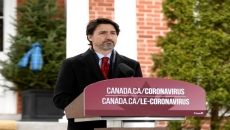
With Canada's two most populous provinces poised to outline plans for a gradual return to normalcy, Prime Minister Justin Trudeau said Monday that Ottawa will help guide, but not dictate, how provinces and territories should start easing restrictions. Ontario and Quebec together account for more than 80 per cent of the country's COVID-19 cases.    

Ottawa helping guide, but not dictating, provincial reopening plans: Trudeau

Crisis lines face volunteer, cash crunch even as COVID-19 drives surge in calls

Crisis lines face volunteer, cash crunch even as COVID-19 drives surge in calls
Despite a surge in demand due to COVID-19, many distress centres across Canada are dangerously close to folding thanks to major declines in both volunteers and revenue. Stephanie MacKendrick, CEO of Crisis Services Canada, which runs the only national suicide-specific helpline in Canada, says her organization relies on a network of approximately 100 community distress centres across the country to field calls from people.

Crisis lines face volunteer, cash crunch even as COVID-19 drives surge in calls

Conservatives gear up to grill government in modified return of House of Commons propose and oppose: Tories

Conservatives gear up to grill government in modified return of House of Commons propose and oppose: Tories
Conservative Leader Andrew Scheer laid out Monday the numerous lines of inquiry his party intends to follow this week as a modified version of a House of Commons sitting gets underway. They include the state of the nation's emergency supply stockpile, the mishmash of federal economic benefit programs that allow some to fall through the cracks and to what extent the minority Liberals are backstopping provincial efforts to reopen their economies, Scheer said.

Conservatives gear up to grill government in modified return of House of Commons propose and oppose: Tories

Learning to live with COVID-19 requires permanent fixes to vulnerable settings

Learning to live with COVID-19 requires permanent fixes to vulnerable settings
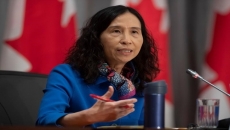
Canada's chief public health officer warned Monday there is still a lot we don't know about the virus that causes COVID-19, but said stopping this pandemic or preventing a future one will require more than just physical distancing and handwashing. Dr. Theresa Tam said we simply do not know yet whether someone who has had COVID-19 will be immune from getting it again, or how long that immunity will last.

Learning to live with COVID-19 requires permanent fixes to vulnerable settings