Monday, June 15, 2026
ADVT 
National

Permanent fishway to be built at Fraser landslide

Darpan News Desk The Canadian Press, 09 Dec, 2020 09:39 PM
  • Permanent fishway to be built at Fraser landslide

Fisheries and Oceans Canada says it has awarded a contract that would see a permanent fishway built to help fish migrate past a massive landslide on a remote stretch of British Columbia's Fraser River.

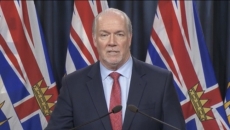
Minister Bernadette Jordan says the landslide response team has been in crisis modesince the discovery of the slide, whose volume she described as equivalent to a building 33 storeys high by 17 storeys wide.

The slide created a five-metre waterfall and prompted a range of efforts to help salmon migrate to spawning areas, including transporting fish by truck and helicopter, building a nature-like fishway and even using a pneumatic pump dubbed the "salmon cannon."

But Fisheries and Oceans says record-breaking high water levels in the Fraser River this year affected the migration of salmon that are already facing threats including habitat degradation and warming ocean waters.

The department says an analysis in July determined that a permanent fishway is the only reliable, long-term solution for getting fish past the slide site.

Ottawa has awarded Burnaby-based Peter Kiewit Sons a contract worth $176.3 million to design and build a fishway that's expected to be operational by the start of the 2022 Fraser River salmon migration.

The Fisheries Department says more than 160,000 salmon migrated past the slide and close to 10,000 were moved by the pump system and trucks this year, while 60,000 were helped over in 2019 and 245,000 swam past on their own.

It's believed the massive landslide north of Lillooet occurred in late 2018, but it wasn't discovered until June 2019, after fish had already begun arriving.

The decision to install a permanent fishway comes as the Committee on the Status of Endangered Wildlife in Canada assessed seven more southern B.C. Chinook salmon populations as threatened or endangered, adding to 12 that it has already classified under those categories.

The committee is recommending that chinook in the Lower Fraser River be listed as endangered on Canada's species at risk registry, meaning the species faces imminent extinction or extirpation from that area.

Chinook are a key food source for the endangered southern resident killer whales that frequent the Salish Sea between Vancouver Island and the B.C. mainland in the summertime.

The federal government decides whether to list a species on the registry after receiving a recommendation from the committee. Once listed, provisions under the Species at Risk Act apply to protect it.

A listing of endangered for chinook would mean a prohibition against harming the species or destroying its critical habitat.


 

MORE National ARTICLES

Nova Scotia shooting leaves many unanswered questions regarding communication with the public

Nova Scotia shooting leaves many unanswered questions regarding communication with the public
As of Wednesday, 23 people, including denturist Gabriel Wortman 51, were confirmed to have been killed in Canada’s worst-ever mass shooting. RCMP continues to investigate the weekend mass shooting by gunman Wortman while a series of official communications about the rampage have raised questions about effectiveness and clarity surrounding the incident. 

Nova Scotia shooting leaves many unanswered questions regarding communication with the public

Offers of COVID-19 financial aid from province not enough for Vancouver: mayor

Offers of COVID-19 financial aid from province not enough for Vancouver: mayor
Vancouver's mayor says the financial help being offered by the B.C. government is a "poison chalice" because of the terms it would impose on the city. Kennedy Stewart says borrowing money from the province would saddle Vancouver with a massive deficit that would result in deep service cuts or large property tax increases in the future.    

Offers of COVID-19 financial aid from province not enough for Vancouver: mayor

Horgan tells workers stay home if sick after COVID-19 outbreak at chicken plant

Horgan tells workers stay home if sick after COVID-19 outbreak at chicken plant
B.C. Premier John Horgan says people who are sick must stay away from work after an outbreak of COVID-19 at a chicken processing plant in Vancouver. Horgan said Wednesday workers should not go to work when they are sick because they fear losing wages, and that he was planning a meeting with Labour Minister Harry Bains and WorkSafe BC officials to discuss sick pay provisions.

Horgan tells workers stay home if sick after COVID-19 outbreak at chicken plant

Search for missing B.C. woman prompts homicide fears, second death

Search for missing B.C. woman prompts homicide fears, second death
Police are releasing more details about a British Columbia woman they fear may be the victim of a homicide. Metro Vancouver's Integrated Homicide Investigation Team says 45-year-old April Parisian was last heard from on March 28 and was declared missing earlier this month.

Search for missing B.C. woman prompts homicide fears, second death

Reports of hate crimes are up in Vancouver: police

Reports of hate crimes are up in Vancouver: police
An assault on a 92-year-old Asian man with dementia in Vancouver is being investigated as a hate crime and police say they have recently noticed an increase in reports of hate-motivated incidents. Vancouver police say the man has "severe dementia" and wandered into a convenience store on March 13 when another man yelled racist remarks that included comments about COVID-19.    

Reports of hate crimes are up in Vancouver: police

More signs COVID-19 is slowing in Canada; students to get federal help

More signs COVID-19 is slowing in Canada; students to get federal help
Chief Public Health Officer Dr. Theresa Tam said Canada was making progress in slowing the epidemic but warned against letting down its guard. The focus, Tam said, must be placed on stopping outbreaks in places like seniors homes and in other places where vulnerable populations live together in close quarters. How exactly Canada gets on the road to normalization will largely depend on the provinces, Prime Minister Justin Trudeau said on Wednesday. However, the closure of the Canada-U.S. border will stay in place until May 21st at least, he said.

More signs COVID-19 is slowing in Canada; students to get federal help