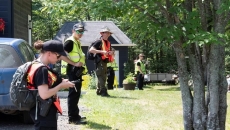
Two people face assault charges after being arrested Friday at a wharf in western Nova Scotia, where there were reports of ugly confrontations over a First Nation's commercial lobster fishing operation.
Some non-Indigenous fishermen say they believe the Indigenous business is illegal because the regular fishing season is now closed. But the Sipekne'katik First Nation says their people have a treaty right to fish at any time.
The Mounties said no one was injured at the wharf in Weymouth, and the two suspects were escorted from the scene. They were later released from custody and are expected to appear in court at a later date.
Images shared on social media show what appeared to be scores of fishermen gathered near the wharf.
The RCMP in Meteghan say they responded to complaints about mischief and threats on Thursday after three Indigenous fishing crews sailed out of the harbour in nearby Saulnierville to set lobster traps in St. Marys Bay.
Some Indigenous fishermen alleged that ropes securing some of their lobster traps had been cut.
RCMP spokeswoman Cpl. Jennifer Clarke said the Mounties had a boat on the water and a helicopter overhead.
"We will remain in Saulnierville to ensure public and police safety, and to keep the peace," Clarke said in a statement released Friday. "The RCMP will take the actions necessary should there be any criminal activities."
The federal Fisheries Department and a spokesman for the non-Indigenous fishermen did not respond to a request for comment.
Meanwhile, the national chief of the Assembly of First Nations, Perry Bellegarde, issued a brief statement on Facebook, saying the Mi'kmaq in Nova Scotia are fighting for their treaty rights.
"Non-Indigenous fishers and the Department of Fisheries and Oceans are trying to suppress these rights," Bellegarde said, calling on the federal government to support those rights.
Later in the day, the Assembly of Nova Scotia Mi'kmaw Chiefs declared a state of emergency because of the "political unrest" and violence. The assembly said a command centre will be established in an undisclosed location to support fishermen and their families.
"The Assembly will be co-ordinating assistance and support across organizations and service providers to protect the safety and security of Mi'kmaq effected by this political unrest," the group said in a statement.
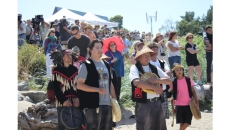
The ceremony Thursday in Saulnierville was held exactly 21 years after the Supreme Court of Canada affirmed the right of Indigenous groups in Eastern Canada to hunt and fish for a moderate livelihood.
On Sept. 17, 1999, the court decided Donald Marshall Jr. had a treaty right to fish for eels when and where he wanted — without a licence.
The Marshall decision also said the Mi'kmaq, Maliseet and Passamaquoddy bands in Eastern Canada could hunt, fish and gather to earn a "moderate livelihood."
However, the court followed up with a clarification two months later, saying the treaty right was subject to federal regulation.
Non-Indigenous fishermen in western Nova Scotia say that caveat is key to understanding why they oppose a self-regulated Indigenous lobster fishery that is not subject to federal regulations.
The chief of the Sipekne'katik First Nation, Michael Sack, has said his band has spent years drafting its lobster fishing management plan, which has its own set of conservation regulations.
Five Indigenous fishermen were granted band-sanctioned fishing licences on Thursday, with each one limited to using 50 traps.
The First Nation issued a statement Friday saying it has spent decades talking to various levels of government about how to define moderate living for Mi'kmaq people.
"We have shared Sipekne'katik's management plan with DFO following extensive community engagement on what a treaty-based fishery would entail," the statement said. "We aim to work with all levels of non-Indigenous governments and stakeholders to ensure our treaty and constitutional rights are upheld."
Federal Fisheries Minister Bernadette Jordan has appealed for "calm and understanding," but she has also made it clear that Ottawa believes there can be no commercial fishery outside the commercial season.
Nova Scotia's fisheries minister, Keith Colwell, has said the province will prosecute anyone who buys lobster caught out of season.