Thursday, June 18, 2026
ADVT 
National

Report on grocery pay finds cartel-like practices

Darpan News Desk The Canadian Press, 17 Jun, 2021 11:06 AM
  • Report on grocery pay finds cartel-like practices

Canada's competition laws should be changed to prohibit cartel-like practices and wage-fixing deals in the country's grocery sector, a new report by the House of Commons industry committee presented in the lower chamber on Wednesday said.

The report comes a year after Canada's big three grocers — Loblaw Companies Ltd., Metro Inc. and Sobeys parent company Empire Company Ltd. — all cut temporary pandemic-related pay bonuses within a day of each other last June.

The move prompted the committee to hold hearings on the issue and invite senior grocery executives to explain their decisions.

While the food retailers admitted to communicating with each other about ending their respective wage premiums of about $2 an hour, they denied co-ordinating the termination of the pay bumps.

Metro president and CEO Eric La Flèche said he reached out to his counterparts at Loblaw and Sobeys to gather information — not to obtain a tacit agreement on wages.

"The more information I have on what others are doing, how they are treating their employees and how much they are paying and for how long, is valid information that I tried to get," he told the committee last July.

But competing grocers communicating about wages at the executive level risks "a slippery slope towards cartel-like conduct," Matthew Boswell, commissioner of competition at the Competition Bureau, testified during the committee's hearings.

Yet the bureau lacks the power under the Competition Act to prosecute such behaviour and faces significant resource constraints, he said.

Canada’s competition legislation diverges from laws in the United States, where federal competition authorities can criminally prosecute wage-fixing agreements, Boswell told the committee.

The bi-partisan committee recommended Ottawa align Canadian competition legislation with American legislation in order to to criminally prosecute such agreements.

"Doing so would clarify competition-related obligations for businesses active in Canadian and American markets, and facilitate co-operation between competition authorities in Canada and the U.S.," the report said.


 

MORE National ARTICLES

B.C. brings rapid response teams to schools

B.C. brings rapid response teams to schools
The government says in a statement the teams will work with staff at schools, school districts and health authorities to review significant exposures to the virus.

B.C. brings rapid response teams to schools

PM should promise to avoid pandemic election: MPs

PM should promise to avoid pandemic election: MPs
The committee makes no similar call for opposition parties to promise not to trigger an election during the pandemic by voting non-confidence in the government.

PM should promise to avoid pandemic election: MPs

In-person gatherings important, says church lawyer

In-person gatherings important, says church lawyer
Chief Justice Christopher Hinkson said during a hearing on Tuesday people are still free to hold and express religious views and it's the safety of those who are gathering that's at issue.

In-person gatherings important, says church lawyer

One Arrested After Gasoline Poured On Tent, Occupants Threatened

One Arrested After Gasoline Poured On Tent, Occupants Threatened
The tent was occupied by a woman and her dog at the time of the incident. Patrol officers attended and located the suspect in Cecilia Ravine Park.

One Arrested After Gasoline Poured On Tent, Occupants Threatened

A look at the Oxford-AstraZeneca vaccine

A look at the Oxford-AstraZeneca vaccine
On the one hand, Health Canada says Oxford-AstraZeneca’s vaccine has been deemed safe for seniors and points to emerging real-world data that shows it can protect older citizens against symptomatic infection.

A look at the Oxford-AstraZeneca vaccine

5.6M in funding for drug-dispensing machines

5.6M in funding for drug-dispensing machines
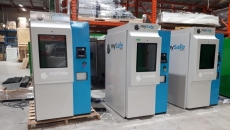
The machines, called MySafe, are similar to ATMs and allow drug users at risk of overdose to get hydromorphone pills dispensed to them after their palm has been scanned.

5.6M in funding for drug-dispensing machines