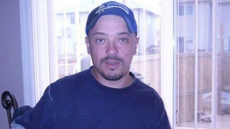
REGINA — A transgender man in Saskatchewan says he has dealt with discrimination and barriers to treatment while seeking gender reassignment, but he insists the journey is even more difficult for many of his peers.
"It's absurd," he said. "I knew that social transition was going to be a hard thing ... but the only person who has ever made me feel lesser, or made me feel like a freak in all of this, was a medical professional."
Adam, who asked that his last name not be used because he hasn't come out to his co-workers, said he began transitioning from female to male in 2010.
Transgender people in Saskatchewan — and indeed, across Canada — often have to navigate a complex system that seems set up against them.
The process for gender reassignment begins with an initial diagnosis of gender dysphoria and a recommendation for treatment by a "recognized authority." But Saskatchewan has no clinic that specializes in transgender issues, so people rely on services outside the province.
A government spokesman said until April 2014, a recommendation for treatment was only available from the Centre for Addiction and Mental Health in Toronto. But then a second option opened up for Saskatchewan's transgender population and now they can go to Edmonton.
"The initial assessment provided by the recognized authority is paid by Saskatchewan, and a positive recommendation is essential for the provision of additional coverage," Tyler McMurchy said in an email.
"Complete gender reassignment surgery is not available in Saskatchewan," he added.
Certain surgeries, such as a mastectomy or hysterectomy, are covered by provincial health insurance, but a number of surgeries that can only be performed out-of-province are not.
McMurchy said associated travel costs, accommodation and sustenance also aren't covered.
Adam, 27, said even the first steps in treatment, involving a diagnosis and hormone therapy, are a challenge.
"I lucked out and essentially got my start in Alberta," he said. He also has private insurance, which helps pay for his treatments.
But in his attempt to get a hysterectomy to remove his uterus, Adam said he encountered severe discrimination. He had been shopping for a surgeon in Saskatchewan willing to do the surgery, when he got a call back from one of the doctors he had reached out to.
"He said 'Having a hysterectomy isn't going to make you a man, no amount of surgery or hormones is ever going to make you a man.' That was my first negative experience with a health-care professional," Adam said. "I did end up finding someone to do the surgery."
Adam chose to go to San Francisco for a phalloplasty surgery, which involves the construction of a penis, and paid US $80,000 out-of-pocket.
"I can't even express just how right that made things," he said, adding that many transgender people look for treatment out of the country if they can afford it.
But Adam said post-surgery recovery is also a problem, as the province will pay for follow-up appointments, but it was up to him to find a surgeon to monitor him.
"If any doctor is not comfortable treating me, because they are not experienced, they don't have to," he said. "If I was in pain because I had a kidney stone that needed to get broken up, they would not have to treat me because they aren't comfortable with my urethra."
Adam is still searching for a Saskatchewan urologist willing to take him on as a patient.
"What is covered doesn't necessarily mean it's available," he said. "I didn't think doctors could just say 'No, we're not comfortable treating you.'"
For transgender people in Saskatchewan, a private online Facebook group remains the best resource, he said. People share the experiences they've had with health-care professionals to get an idea of where they can receive treatment in a respectful environment.
"In other provinces, it seems like there's a point of contact," Adam said. "You get in touch with a certain clinic, they have knowledge, they know doctors willing to provide treatment ... after a certain amount of time you are eligible for surgeries."
Jai Richards, a transgender man who is also a counsellor in Saskatoon, echoed Adam's concerns, and added that travelling to Toronto or Edmonton to qualify for treatment can add up.
He said Saskatchewan Health would cover a double mastectomy for him, but not the related surgery of chest contouring, which shapes the upper torso.
"I would be walking around with two scars on my chest and no nipples ... I ate the expense myself," he said.
He added that the hurdles to medical coverage prevent a lot of people from getting necessary surgeries, he said.
"I have a friend who transitioned 25 years ago but still hasn't been able to afford bottom surgery."
He added that with hormone therapy and surgery as the accepted treatment for gender dysphoria, the inability to transition can be detrimental to someone's mental health, leading to anxiety and depression.
He wants the system to cover all necessary surgeries and recovery costs, he said.
"People can feel really trapped," he said.