OTTAWA — The Senate committee on agriculture and forestry is calling for a comprehensive flood control plan for British Columbia's Fraser Valley following last year's catastrophic floods.
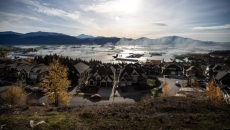
Last November, historic rainfall caused flooding of 15,000 hectares of land, affecting more than 1,000 farms and 2.5 million livestock, washing out highway and railway infrastructure, and causing an estimated $285 million in damage.
The committee said its study into the flooding and its impacts shows a flood control plan is "critical to protecting the vulnerable Fraser Valley region" from future, and potentially worse, disasters.
"Floods like those in southwest British Columbia in November 2021 will inevitably happen again and the damage they cause could be much worse," Sen. Robert Black, chairman of the committee, said in a news release.
"To protect Fraser Valley residents, farmers and their livelihoods, the federal government must invest in and help the B.C. government update the province’s outdated flood mitigation infrastructure."
The committee said the plan should include a timeline for dike upgrades and calls for the creation of a committee to examine flood mitigation measures, emergency preparedness and response strategies.
It should be developed by the federal and provincial governments in collaboration with other stakeholders, including Indigenous communities, so it reflects the various challenges that different communities face when hit by flooding, the committee said.
The report also calls for co-operation between the Canadian and United States governments to address transboundary water issues, including the Nooksack River, which overflowed in the U.S. and was a major contributor to the flooding in the Fraser Valley.
Sen. Paula Simons, deputy chair of the committee, told a news conference Thursday that in addition to last year, the Nooksack River flooded in 1990, 1995 and 2006.
"This is a long-standing issue that residents, First Nations and governments have been concerned about for many years," she said.
"The committee believes that if nothing changes, this situation will simply happen again and again. It's essential that Canadian and U.S. officials work together on measures to manage transboundary waters like the Nooksack River and limit the impact of future flooding events."
Simons said the need for major updates to dikes had been known for years but nothing had been done to address the situation. She cited a 2015 study that found 87 per cent of the dikes in the Lower Mainland of B.C. were "in less-than-fair condition" and 71 per cent were "expected to fail simply by overtopping" in the event of a flood.
"To be told that it's 70 to 80 per cent of the dikes (that) are not going to be equipped to do the job required of them is a pretty sobering realization," she said.
Simons said that though the committee is encouraged the B.C. and Washington state governments are working together to prevent and respond to future flooding of the Nooksack River, co-ordination with federal governments is also needed.
"It's not going to be an easy fix, but I think the disaster of last November is a very sharp, forceful reminder that we have to make our diplomacy as efficient as possible in this area, because this is something that's not one order of government and not one country can solve.