OTTAWA - The opening of Parliament is steeped in centuries-old traditions, but this year some new elements — including a renovated train station and an astronaut — are bringing a modern touch to the ceremonies.
The speech from the throne marks the beginning of every new Parliament, which comes after a general election, as is the case this year, or following a prorogation. It is read in the Senate by the Governor General, who this time around is Julie Payette, a former astronaut who is reading the speech for the first time since she was named to the vice-regal post in 2017.
The throne speech outlines the legislative priorities for the federal government, and so it was developed and written by the Liberals. But Payette is the one to read it because she represents Queen Elizabeth II in Canada. This tradition is rooted in the fact that the earliest parliaments were summoned by monarchs who needed money. The throne part of this tradition, however, is not a metaphor. Payette will sit in one while she speaks.
That throne is in the Senate, not the House of Commons, and there is a reason for that too.
The Parliament of Canada is modelled after the one in the United Kingdom. There, and throughout the Commonwealth, neither the Queen nor members of the House of Lords, which is what the British call their upper chamber, are permitted to enter the House of Commons.
It was not always that way.
King Charles I, all the way back in 1642, had a fraught relationship with parliament and tried to rule around it. One day, he appeared in the House of Commons — along with many soldiers — with a plan to arrest five MPs for treason. They had been spirited away and when the kind demanded they be turned over to him, the Speaker, William Lenthall, delivered a reply that made clear whose side he was on.
"May it please Your Majesty, I have neither eyes to see, nor tongue to speak in this place, but as the House is pleased to direct me, whose servant I am here, and I humbly beg Your Majesty's pardon that I cannot give any other answer than this to what Your Majesty is pleased to demand of me," he said.
The storming of Parliament by King Charles I was a big moment in the English Civil War, which did not end well for the monarch. He lost his head.
That fateful overreach is still commemorated on the day Canada opens a new Parliament.
The Usher of the Black Rod, who is the senior parliamentary protocol officer and personal attendant and messenger to the Governor General, or the Queen, heads from the Senate to the Commons and knocks on the door, summoning MPs to the Senate to hear the speech from the throne.
This used to be a simple walk down the hallway in Centre Block, but now he has further to go. With the main building of Parliament closed for at least a decade for renovations, the Senate is temporarily located in a renovated train station and the House of Commons is temporarily located in West Block. There is about three-quarters of a kilometre between them.
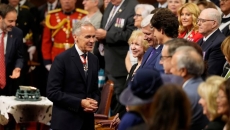
The MPs then head over to the Senate, led by the usher, the sergeant-at-arms, who is his counterpart in the Commons, and their newly elected Speaker, Liberal MP Anthony Rota, who will formally introduce himself and ask that the Crown recognize the rights and privileges of MPs.
The Speaker, until that cautiously rebellious reply by Lenthall, used to be considered an agent of the monarch, not a servant of the House of Commons.
That does not mean they were always treated well by their masters, who quite literally would kill the messenger if they delivered unwelcome news.
Seven Speakers were beheaded between 1394 and 1535, according to a history of the role on the website of the British parliament.
That is why the newly elected Speaker in the House of Commons pretends to be reluctant to take his or her seat in the chair, and is symbolically dragged down the aisle by the prime minister and the Opposition leader.