Friday, June 12, 2026
ADVT 
National

Survey examines hesitancy in early vaccine rollout

Darpan News Desk The Canadian Press, 31 Aug, 2021 03:29 PM
  • Survey examines hesitancy in early vaccine rollout

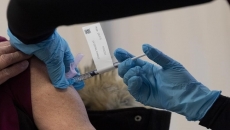
A national survey suggests the vast majority of Canadians planned to get vaccinated against COVID-19 when the country's rollout began, but intentions were lower among certain demographics, including residents of Alberta and racialized communities.

The survey, led by researchers at Toronto's St. Michael's Hospital, was published online Tuesday in The Lancet Regional Health —Americas.

The survey asked more than 14,500 Canadians online between December 2020 and February 2021 if they intended to get vaccinated once they were eligible, with researchers identifying differences in participants by age, education, ethnicity, and home province.

Nine per cent of respondents overall said they did not intend to get vaccinated, with hesitancy highest in Alberta at 16 per cent, and Manitoba and Saskatchewan, both at 14 per cent.

Fifteen per cent of respondents who identified as Indigenous and 12 per cent of those identifying as racialized said they did not intend to get vaccinated.

Men were more hesitant than women overall — 11 per cent versus eight — and participants aged 40 to 59 had the lowest vaccination intention, with about 12 per cent reporting no intention to get vaccinated.

The survey suggested that education also factored into hesitancy, with 14 per cent of participants with a college education or less saying they did not intend to get vaccinated, compared to five per cent of respondents with a bachelor's degree or higher.

The study did not indicate whether intent translated into action, but researchers say they plan to answer that in the coming months.

They noted that 18 per cent of eligible Canadians had not yet received a COVID-19 vaccine dose by Aug. 27 — nearly twice the rate expected in the survey.

Researchers said the findings should encourage policymakers to target vaccine campaigns on the most reluctant groups, as well as those who said they planned to get a shot but did not.

The study was a collaboration between the Centre for Global Health Research at Unity Health Toronto, the University of Toronto and the Angus Reid Forum. Funding was provided by an unrestricted grant from Pfizer Global Medical Grants and Unity Health Toronto.
MORE National ARTICLES

Air Canada lays off 1700 employees and reduces flight capacity by 25 percent

Air Canada lays off 1700 employees and reduces flight capacity by 25 percent
As a result of these system-wide changes, there will be a workforce reduction of approximately 1700 employees, in addition to the over 200 impacted employees at its Express carriers.

Air Canada lays off 1700 employees and reduces flight capacity by 25 percent

Hearing in high school stabbing delayed by illness

Hearing in high school stabbing delayed by illness
Gabriel Klein was convicted of second-degree murder and aggravated assault in March for the 2016 attack that killed 13-year-old Letisha Reimer and injured her friend.

Hearing in high school stabbing delayed by illness

Vancouver Police looking for witnesses after pedestrian injured in collision

Vancouver Police looking for witnesses after pedestrian injured in collision
Speed and alcohol are not contributing factors, and the driver remained on scene to talk to police.

Vancouver Police looking for witnesses after pedestrian injured in collision

Doctors say test hospital patients for COVID-19

Doctors say test hospital patients for COVID-19
Testing began in mid-November over three weeks for surgical patients and four weeks for patients who had been in emergency rooms.

Doctors say test hospital patients for COVID-19

B.C. care home declared outbreak too late: family

B.C. care home declared outbreak too late: family
Bains said that while she didn't know if the other woman had the virus, it alarmed her that residents were able to wander between rooms without staff immediately noticing.

B.C. care home declared outbreak too late: family

Second vaccine dose can be delayed briefly: panel

Second vaccine dose can be delayed briefly: panel
The two COVID-19 vaccines approved for use in Canada both require two doses, with Pfizer and BioNTech's vaccine label requiring two doses given 21 days apart, and Moderna's needing two doses 28 days apart.

Second vaccine dose can be delayed briefly: panel