Friday, June 19, 2026
ADVT 
National

Survey examines hesitancy in early vaccine rollout

Darpan News Desk The Canadian Press, 31 Aug, 2021 03:29 PM
  • Survey examines hesitancy in early vaccine rollout

A national survey suggests the vast majority of Canadians planned to get vaccinated against COVID-19 when the country's rollout began, but intentions were lower among certain demographics, including residents of Alberta and racialized communities.

The survey, led by researchers at Toronto's St. Michael's Hospital, was published online Tuesday in The Lancet Regional Health —Americas.

The survey asked more than 14,500 Canadians online between December 2020 and February 2021 if they intended to get vaccinated once they were eligible, with researchers identifying differences in participants by age, education, ethnicity, and home province.

Nine per cent of respondents overall said they did not intend to get vaccinated, with hesitancy highest in Alberta at 16 per cent, and Manitoba and Saskatchewan, both at 14 per cent.

Fifteen per cent of respondents who identified as Indigenous and 12 per cent of those identifying as racialized said they did not intend to get vaccinated.

Men were more hesitant than women overall — 11 per cent versus eight — and participants aged 40 to 59 had the lowest vaccination intention, with about 12 per cent reporting no intention to get vaccinated.

The survey suggested that education also factored into hesitancy, with 14 per cent of participants with a college education or less saying they did not intend to get vaccinated, compared to five per cent of respondents with a bachelor's degree or higher.

The study did not indicate whether intent translated into action, but researchers say they plan to answer that in the coming months.

They noted that 18 per cent of eligible Canadians had not yet received a COVID-19 vaccine dose by Aug. 27 — nearly twice the rate expected in the survey.

Researchers said the findings should encourage policymakers to target vaccine campaigns on the most reluctant groups, as well as those who said they planned to get a shot but did not.

The study was a collaboration between the Centre for Global Health Research at Unity Health Toronto, the University of Toronto and the Angus Reid Forum. Funding was provided by an unrestricted grant from Pfizer Global Medical Grants and Unity Health Toronto.
MORE National ARTICLES

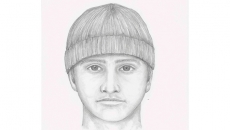
Surrey RCMP on the hunt for a South Asian suspect who assaulted a woman in the summer

Surrey RCMP on the hunt for a South Asian suspect who assaulted a woman in the summer
The suspect is described as a South Asian male, 25-years-old, with a round face, no facial hair, and wearing black jeans, a black wind breaker, navy blue socks and a black helmet.

Surrey RCMP on the hunt for a South Asian suspect who assaulted a woman in the summer

B.C. Greens fall short of full candidate slate

B.C. Greens fall short of full candidate slate
Elections BC says it will post finalized lists for candidates in all 87 electoral districts for the Oct. 24 vote as soon as possible.

B.C. Greens fall short of full candidate slate

LNG pipeline hearing resumes at B.C. Supreme Court

LNG pipeline hearing resumes at B.C. Supreme Court
Lawyers for the Office of the Wet'suwet'en are seeking an order quashing the decision to extend the certificate for Coastal GasLink's 670-kilometre pipeline project.

LNG pipeline hearing resumes at B.C. Supreme Court

Nunavut announces eighth possible case at mine

Nunavut announces eighth possible case at mine
On Monday, Dr. Michael Patterson announced seven presumptive positive cases at the Hope Bay mine, about 125 kilometers southwest of Cambridge Bay.

Nunavut announces eighth possible case at mine

Feds ease COVID-19 border restrictions

Feds ease COVID-19 border restrictions
Immigration Minister Marco Mendicino announced Friday that more family members of Canadian citizens and permanent residents will now be eligible to enter the country.

Feds ease COVID-19 border restrictions

COVID-19 surge divides local, provincial leaders

COVID-19 surge divides local, provincial leaders
Ottawa's medical officer of health warned the entire health-care system was on the verge of collapse if transmission was not contained, suggesting the escalating spike jeopardized the ability of schools to remain open.

COVID-19 surge divides local, provincial leaders