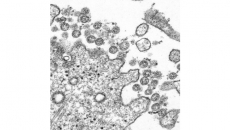
Almost two in three Canadians surveyed recently said they trust COVID-19 vaccines to be both safe and effective.
Proof Strategies conducts a survey every year to assess how much faith Canadians have in major institutions and authorities.
Bruce MacLellan, Proof's CEO, says trust in vaccines is not quite strong enough, based on health experts who suggest at least three-quarters of Canadians need to be vaccinated for good herd immunity against COVID-19 to take effect.
"It is concerning," said MacLellan.
The survey was conducted online with about 1,500 respondents between Jan. 8 and Jan. 20.
The polling industry's professional body, the Marketing Research and Intelligence Association, says online surveys cannot be assigned a margin of error as they are not random and therefore are not necessarily representative of the whole population.
Canada has approved two vaccines so far, one from Pfizer-BioNTech and a second from Moderna. Three others are under review; the federal government has bought two more, but neither of those is expected to be considered for approval until the fall.
More than 220,000 Canadians are now fully vaccinated with the two doses the current vaccines require, and almost 930,000 people have received single doses so far.
When the survey was taken, Canada was ramping up vaccinations, with more than 40,000 doses given out most days during that period. In the days since deliveries slowed to a crawl, and faith in the rollout plummeted.
At that time however, 64 per cent of people surveyed said they trusted the vaccines, a number that was relatively constant across the country. Younger people and low-income Canadians expressed less trust in the vaccines.
Eighty-six per cent of those over the age of 75 said they trusted the vaccines, compared with less than 60 per cent for millennials (between 25 and 44 years old) and Generation Z (between 18 and 24 years old.)
Almost seven in 10 people with incomes above $100,000 said they trusted the vaccines, compared to only half of those with low incomes.
The survey also reported that almost two-thirds of respondents trusted the federal and provincial public health doctors they see delivering updates on COVID-19 multiple times a week.
Canada's chief public health officer, Dr. Theresa Tam said Feb. 5 that Health Canada currently has data that suggests about 10 per cent of the population is not going to get vaccinated against COVID-19 and there is little that could change their minds. She said another 20 per cent or so don't currently want to be inoculated but could be persuaded.
Tam said some of the questions people have are relatively easy to answer, including some fear about how quickly the vaccines were developed, or questions about the data on how effective they are.
She noted there have been no serious adverse events after the vaccinations in Canada so far, and the more people who do get the shots safely, the more others may be convinced to follow suit.
"Look at our seniors," she said. "They’re getting vaccinated. The vaccine has so far been safe, with no safety signals, so I think that's actually a really good way of boosting vaccine confidence, is seeing other people get vaccinated."
Tam said people who turn to mainstream media for their information are more likely to trust the vaccines than those who rely more heavily on social media.
The Proof survey also found a year into the pandemic, Canadians' trust in doctors and scientists appears to have grown. In January 2020, the survey found about 76 per cent of respondents said they trusted doctors and 70 per cent had trust in scientists. In January 2021 that had grown to 81 per cent for doctors and 77 per cent for scientists.
MacLellan said it is noteworthy that a year ago, friends and family were the most trusted sources of information for those surveyed, but this year scientists and doctors have both exceeded them.
Politicians did not fare as well. A year ago 40 per cent of those surveyed said they trusted government, compared to 32 per cent this year. Prime Minister Justin Trudeau has seen a steady decline in trust over the five years he has been in office, with 46 per cent indicating trust in him in 2016, compared with 32 per cent this year.