VANCOUVER — When a tiny town in northeast British Columbia couldn't get federal funding for bicycle lanes, Greg Moore says it fudged the paperwork.
Officials applied to pave the roads again instead, and when the cash flowed from Ottawa the town made over its streets with wider shoulders to circuitously achieve its goal, said the mayor of Port Coquitlam, who was told about the quandary in confidence.
The anecdote illustrates how cities are at the mercy of Canada's higher-levels of government because of a lopsided fiscal and power dynamic, say some experts.
"You're always chasing their programs, which might not be best for your community," said Moore, who is also the chairman of Metro Vancouver, the regional government representing 23 local authorities.
"But there's a strong argument that local governments should be funded appropriately and allowed to make the decisions that are right for their community."
Providing infrastructure and services without adequate financial tools has been a major stress for municipalities of all sizes, and that's not the only obstacle they face, said Moore.
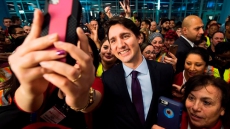
Mayors have used the change in the federal government to call for more autonomy for cities, which are straining under the weight of downloaded responsibilities from rental housing to daycare. Earlier this year, big-city mayors met with Prime Minister Justin Trudeau and urged Ottawa to directly fund building projects, bypassing the provinces altogether.
International urbanism consultant Brent Toderian said consensus is growing that Canadian cities are the key to national success, but they are not positioned to succeed.
"Cities are the engines of our economy, the overwhelming home for our populations, the centres for creativity, the solutions to sustainability," said Toderian, a former chief planner for Vancouver and president of the Council for Canadian Urbanism.
"Yet we treat them like a third-class citizen, at best."

Cities face barriers when it comes to delivering public facilities and services that are structural, financial and political, the experts say.
Canadian cities are dubbed "creatures of the province," referring to the 19th century constitutional legacy that granted their powers. The provinces dictate which tools they can use to generate revenue — in most cases only property taxes and user fees.
"It's very difficult for municipalities — under the current fiscal regime, but also in terms of the kinds of legal powers they have — to do the things that are really necessary," said Prof. Warren Magnusson, who specializes in urban government at the University of Victoria.
A prime example of obstructed municipal power is a failed transit plebiscite in the Vancouver area in 2015 that asked citizens to vote on a sales tax to fund rapid transit, more busses and a bridge replacement.
Toderian believes the "province threw the cities under the bus" by forcing the vote in a compressed time frame of 10 weeks. Voters snubbed the tax, despite numerous businesses, unions and environmental organizations advocating fiercely for its benefits.
Gordon Price, who directs The City Program at Simon Fraser University in Burnaby, B.C., said cities in Canada should be reimagined, but he doesn't have high expectations.
"Cities are cash cows for provinces, but they don't need to be nice to the cow," he said. "In fact, they can show contempt for the cow."
Shifting power has its limits, he said, because cities tend to only manage their own interests. Provinces would argue the only way to build infrastructure like roads and bridges is to think provincially.
Another cautionary tale comes from the United States, where cities like Detroit were allowed run deficits and went bankrupt, Price said.
"That doesn't tend to happen in Canada," he said. "But that's because of the discipline imposed by the senior government."

There are examples across the globe where cities are gaining greater independence, said Price, citing Norway where an equal level of services is guaranteed in urban areas, and Denmark and Sweden "where cities really do have significant more power."
The U.K. government has steadily devolved key powers to some cities in England, said Toderian.
He also highlighted the Ministry for Cities created in Australia by Prime Minister Malcolm Turnbull, who declared urban planning a matter of quality of life. The move at least recognizes the importance of urban regions, Price said.
In Canada, the Liberal party's recent budget announced plans to boost a funding formula so that Ottawa covers up to half the cost of public transit projects, and water and wastewater systems. Before its share was one-third.
Magnusson said the Liberals' promise to run deficits to fund new local infrastructure could signal that the government sees a need to shift the balance of power.
"Maybe things have gone too far in the direction we've been going in the last 30, 40 years," he said. "Some kind of course correction is required."