
Wednesday, May 13, 2026
ADVT 
National

Timeline of B.C.'s three-year drug decriminalization pilot project

Darpan News Desk The Canadian Press, 15 Jan, 2026 09:49 AM
  • Timeline of B.C.'s three-year drug decriminalization pilot project

British Columbia's three-year pilot project that decriminalized the possession of small amounts of illicit drugs for personal use is set to end on Jan. 31. 

Health Minister Josie Osbourne has announced B.C. will not be extending the program. Here are some of the key moments in its history.

May 31, 2022

Health Canada grants the B.C. government's request for an exemption from s. 56 of the federal Controlled Drugs and Substances Act.

Jan. 31, 2023

The three-year exemption is implemented in B.C. The change decriminalizes the personal possession of up to 2.5 grams cumulatively of opioids, crack and powdered cocaine, methamphetamine and MDMA for adults. Possession continues to be prohibited around schools, childcare facilities, airports and during the operation of motor vehicles.

Nov. 8, 2023

The Restricting Public Consumption of Illegal Substances Act receives Royal Assent in the B.C. legislature. The bill prohibits consumption of illegal substances in public spaces and authorizes police to seize them and/or direct people to stop. Three days later, the Harm Reduction Nurses Association asks B.C. Supreme Court to declare Bill 34 unconstitutional. The court later grants a temporary injunction, preventing the bill from going into effect.

Jan. 31, 2024

Mental Health and Addictions Minister Jennifer Whiteside releases a statement marking the one-year anniversary of decriminalization, saying ending the project won't save "a single life."

May 7, 2024

Health Canada grants an amendment that curtails B.C.'s exemption. Decriminalization is restricted to possession in private homes and places where homeless people are legally sheltering, as well as overdose prevention, drug checking and supervised consumption sites and health-care clinics providing outpatient addiction services.

Jan. 6, 2026

When asked about extending B.C.'s exemption that allows for decriminalization, Premier David Eby says the province is "not going back to the old policy of decriminalized public drug use in British Columbia." He says "it didn't work and we ended that."

Jan. 14, 2026

Health Minister Josie Osborne announces the province will not seek an extension of its exemption agreement with Health Canada. Osborne says the goal of the pilot project was to make it easier for people to come forward and seek help, but it "hasn't delivered the results" officials hoped for.

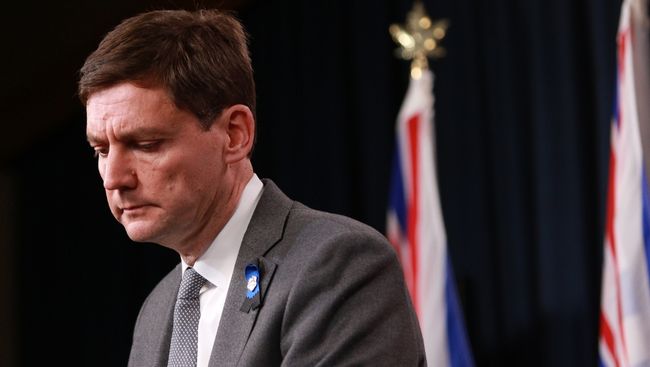
Picture Courtesy: THE CANADIAN PRESS/Chad Hipolito


MORE National ARTICLES

Feds give millions to B.C.'s STEMCELL Technologies and HTEC for facility construction

Feds give millions to B.C.'s STEMCELL Technologies and HTEC for facility construction
The Ministry of Innovation, Science and Industry says North Vancouver-based HTEC, a hydrogen energy firm, is getting $49 million toward a facility that turns "industrial byproduct hydrogen" into fuel. 

Feds give millions to B.C.'s STEMCELL Technologies and HTEC for facility construction

Mark Carney will maintain oil and gas emissions cap, environment minister says

Mark Carney will maintain oil and gas emissions cap, environment minister says
Environment Minister Terry Duguid says a Mark Carney government will maintain a cap on oil and gas production emissions. In an interview with The Canadian Press, Duguid says Canada wants the energy but not the pollution that comes with its production.

Mark Carney will maintain oil and gas emissions cap, environment minister says

In latest blow to Tesla, regulators recall nearly all Cybertrucks

In latest blow to Tesla, regulators recall nearly all Cybertrucks
The National Highway Traffic Safety Administration's recall, which covers more than 46,000 Cybertrucks, warned that an exterior panel that runs along the left and right sight of the windshield can detach while driving, creating a dangerous road hazard for other drivers, increasing the risk of a crash.

In latest blow to Tesla, regulators recall nearly all Cybertrucks

Federal government commits $187M to rebuild critical infrastructure in Jasper

Federal government commits $187M to rebuild critical infrastructure in Jasper
More financial support is on the way for fire-ravaged Jasper, Alta., as the federal government has announced $187 million in new funding for the town's rebuild. It is the largest funding package to be announced since a runaway wildfire ripped through Jasper National Park and destroyed a third of the town last July.

Federal government commits $187M to rebuild critical infrastructure in Jasper

Confused about Mark Carney's blind trust? Here's how they work

Confused about Mark Carney's blind trust? Here's how they work
Prime Minister Mark Carney's critics have been asking pointed questions lately about the assets in the former central banker's blind trust — a tool meant to allow politicians to avoid conflicts of interest. How do blind trusts work?

Confused about Mark Carney's blind trust? Here's how they work

B.C. Greens want answers about New Democrats' emergency powers legislation

B.C. Greens want answers about New Democrats' emergency powers legislation
Interim Leader Jeremy Valeriote said in a statement that while he understands the "urgency of the situation" given the ongoing trade strife with the United States, the proposed Bill 7 in its current form has "vague wording" and "could allow for sweeping economic decisions without clear limits or transparency."

B.C. Greens want answers about New Democrats' emergency powers legislation