
Wednesday, May 13, 2026
ADVT 
National

Timeline of B.C.'s three-year drug decriminalization pilot project

Darpan News Desk The Canadian Press, 15 Jan, 2026 09:49 AM
  • Timeline of B.C.'s three-year drug decriminalization pilot project

British Columbia's three-year pilot project that decriminalized the possession of small amounts of illicit drugs for personal use is set to end on Jan. 31. 

Health Minister Josie Osbourne has announced B.C. will not be extending the program. Here are some of the key moments in its history.

May 31, 2022

Health Canada grants the B.C. government's request for an exemption from s. 56 of the federal Controlled Drugs and Substances Act.

Jan. 31, 2023

The three-year exemption is implemented in B.C. The change decriminalizes the personal possession of up to 2.5 grams cumulatively of opioids, crack and powdered cocaine, methamphetamine and MDMA for adults. Possession continues to be prohibited around schools, childcare facilities, airports and during the operation of motor vehicles.

Nov. 8, 2023

The Restricting Public Consumption of Illegal Substances Act receives Royal Assent in the B.C. legislature. The bill prohibits consumption of illegal substances in public spaces and authorizes police to seize them and/or direct people to stop. Three days later, the Harm Reduction Nurses Association asks B.C. Supreme Court to declare Bill 34 unconstitutional. The court later grants a temporary injunction, preventing the bill from going into effect.

Jan. 31, 2024

Mental Health and Addictions Minister Jennifer Whiteside releases a statement marking the one-year anniversary of decriminalization, saying ending the project won't save "a single life."

May 7, 2024

Health Canada grants an amendment that curtails B.C.'s exemption. Decriminalization is restricted to possession in private homes and places where homeless people are legally sheltering, as well as overdose prevention, drug checking and supervised consumption sites and health-care clinics providing outpatient addiction services.

Jan. 6, 2026

When asked about extending B.C.'s exemption that allows for decriminalization, Premier David Eby says the province is "not going back to the old policy of decriminalized public drug use in British Columbia." He says "it didn't work and we ended that."

Jan. 14, 2026

Health Minister Josie Osborne announces the province will not seek an extension of its exemption agreement with Health Canada. Osborne says the goal of the pilot project was to make it easier for people to come forward and seek help, but it "hasn't delivered the results" officials hoped for.

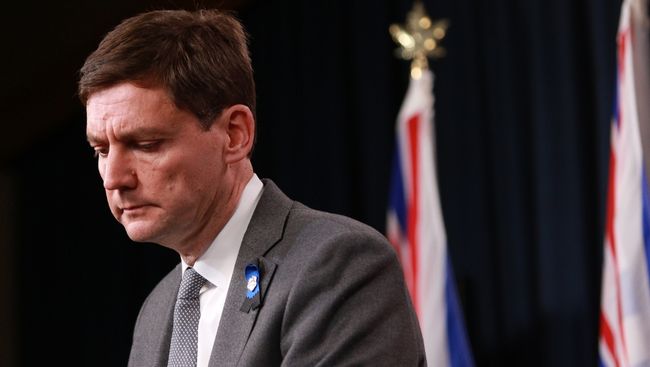
Picture Courtesy: THE CANADIAN PRESS/Chad Hipolito


MORE National ARTICLES

Commercial truck hits B.C. highway overpass, losing lumber load and snarling traffic

Commercial truck hits B.C. highway overpass, losing lumber load and snarling traffic
British Columbia's Highway Patrol says another commercial truck has hit an overpass in Metro Vancouver, causing no visible damage, but snarling traffic on Wednesday. Police say a load of lumber the tractor trailer was hauling along Highway 99 hit the Blundell Road overpass.

Commercial truck hits B.C. highway overpass, losing lumber load and snarling traffic

Consumers could find 'meaningful savings' as carbon price ends: Desjardins

Consumers could find 'meaningful savings' as carbon price ends: Desjardins
Canadians can expect to feel the absence of the consumer carbon price at the pumps immediately but it may take longer to notice a difference in the price of other goods, a new report released Wednesday suggests. The analysis by Desjardins Economics comes less than a week after Prime Minister Mark Carney and his new Liberal cabinet ordered that the consumer levy be set to zero on April 1.

Consumers could find 'meaningful savings' as carbon price ends: Desjardins

End of consumer carbon tax leaves $1.5-billion hole in B.C. budget

End of consumer carbon tax leaves $1.5-billion hole in B.C. budget
The budget released earlier this month shows the province was forecasting revenue of just over $2.5 billion from the tax in the 2024-25 fiscal year, while the estimated cost of the climate action tax credit was $995 million.

End of consumer carbon tax leaves $1.5-billion hole in B.C. budget

Ottawa caps non-sufficient funds fees at $10 starting March 2026

Ottawa caps non-sufficient funds fees at $10 starting March 2026
Ottawa has put in place new rules limiting the fees banks can levy on customers who don't have enough in their accounts to cover a cheque or other pre-authorized charges. The updates, included in an order-in-council last week, cap non-sufficient funds fees at $10 for personal deposit accounts, prohibit charging more than one NSF fee in a period of two business days, and prohibit charging an NSF fee when an account shortfall is under $10.

Ottawa caps non-sufficient funds fees at $10 starting March 2026

Federal government promises $2.55B in low-cost loans to build Toronto rental homes

Federal government promises $2.55B in low-cost loans to build Toronto rental homes
The federal government is promising billions in low-cost financing to help build thousands of rental homes in Toronto, including more than a thousand affordable units. Ottawa says it will provide $2.55 billion in financing through its Apartment Construction Loan Program, to be administered by the Canada Mortgage and Housing Corporation.

Federal government promises $2.55B in low-cost loans to build Toronto rental homes

Statistics Canada says population rose to 41,528,680 at Jan. 1 as growth slowed

Statistics Canada says population rose to 41,528,680 at Jan. 1 as growth slowed
Statistics Canada says the population grew to 41,528,680 people as of Jan. 1 as the pace of growth continued to slow after peaking in the third quarter of 2023. The total number of people was up 63,382 compared with Oct. 1, 2024, for a quarterly growth rate of 0.2 per cent.

Statistics Canada says population rose to 41,528,680 at Jan. 1 as growth slowed