Friday, May 15, 2026
ADVT 
National

Timeline of B.C.'s three-year drug decriminalization pilot project

Darpan News Desk The Canadian Press, 15 Jan, 2026 09:49 AM
  • Timeline of B.C.'s three-year drug decriminalization pilot project

British Columbia's three-year pilot project that decriminalized the possession of small amounts of illicit drugs for personal use is set to end on Jan. 31. 

Health Minister Josie Osbourne has announced B.C. will not be extending the program. Here are some of the key moments in its history.

May 31, 2022

Health Canada grants the B.C. government's request for an exemption from s. 56 of the federal Controlled Drugs and Substances Act.

Jan. 31, 2023

The three-year exemption is implemented in B.C. The change decriminalizes the personal possession of up to 2.5 grams cumulatively of opioids, crack and powdered cocaine, methamphetamine and MDMA for adults. Possession continues to be prohibited around schools, childcare facilities, airports and during the operation of motor vehicles.

Nov. 8, 2023

The Restricting Public Consumption of Illegal Substances Act receives Royal Assent in the B.C. legislature. The bill prohibits consumption of illegal substances in public spaces and authorizes police to seize them and/or direct people to stop. Three days later, the Harm Reduction Nurses Association asks B.C. Supreme Court to declare Bill 34 unconstitutional. The court later grants a temporary injunction, preventing the bill from going into effect.

Jan. 31, 2024

Mental Health and Addictions Minister Jennifer Whiteside releases a statement marking the one-year anniversary of decriminalization, saying ending the project won't save "a single life."

May 7, 2024

Health Canada grants an amendment that curtails B.C.'s exemption. Decriminalization is restricted to possession in private homes and places where homeless people are legally sheltering, as well as overdose prevention, drug checking and supervised consumption sites and health-care clinics providing outpatient addiction services.

Jan. 6, 2026

When asked about extending B.C.'s exemption that allows for decriminalization, Premier David Eby says the province is "not going back to the old policy of decriminalized public drug use in British Columbia." He says "it didn't work and we ended that."

Jan. 14, 2026

Health Minister Josie Osborne announces the province will not seek an extension of its exemption agreement with Health Canada. Osborne says the goal of the pilot project was to make it easier for people to come forward and seek help, but it "hasn't delivered the results" officials hoped for.

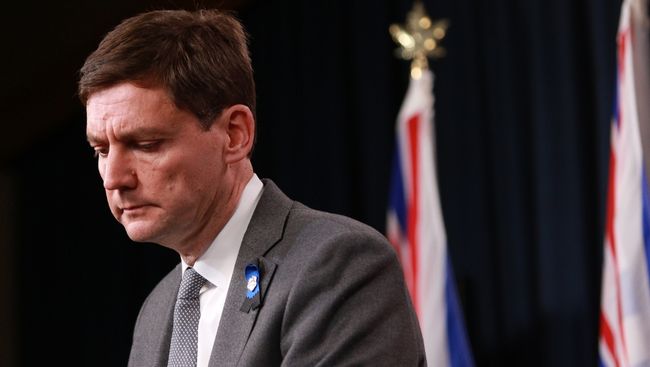
Picture Courtesy: THE CANADIAN PRESS/Chad Hipolito


MORE National ARTICLES

B.C. to get about $3.7 billion in tobacco lawsuit settlement

B.C. to get about $3.7 billion in tobacco lawsuit settlement
British Columbia Attorney General Niki Sharma says B.C.'s share of a landmark settlement for health damages from the big tobacco firms will be about $3.7 billion. It's part of a $32.5-billion Canadian settlement between JTI-Macdonald Corp., Rothmans, Benson & Hedges and Imperial Tobacco Canada Ltd. and their creditors after more than five years of negotiations.

B.C. to get about $3.7 billion in tobacco lawsuit settlement

B.C. poised to toll U.S. trucks driving to Alaska through province in tariff response

B.C. poised to toll U.S. trucks driving to Alaska through province in tariff response
British Columbia will introduce legislation in the coming days that would give it the ability to levy fees on commercial trucks travelling from the United States through the province to Alaska, Premier David Eby said.  The move against Alaska-bound trucks is part of a series of responses the province is planning after the "unprecedented attack" from the United States that put a 25 per cent tariff on many Canadian goods.

B.C. poised to toll U.S. trucks driving to Alaska through province in tariff response

Canada halts second tariff wave after Trump announces pause

Canada halts second tariff wave after Trump announces pause
Finance Minister Dominic LeBlanc says Canada has suspended a second wave of retaliatory tariffs after U.S. President Donald Trump signed an executive order to pause some duties.

Canada halts second tariff wave after Trump announces pause

Former Canadian Olympic athlete added to FBI's 10 most wanted fugitives list

Former Canadian Olympic athlete added to FBI's 10 most wanted fugitives list
Ryan James Wedding is wanted for allegedly leading an organized crime group that moved large shipments of cocaine from Colombia through Mexico and California to Canada and other locations in the United States.

Former Canadian Olympic athlete added to FBI's 10 most wanted fugitives list

Shots over the bow: Why provinces are using liquor leverage in trade war with U.S.

Shots over the bow: Why provinces are using liquor leverage in trade war with U.S.
What they all have in common is the "currently unavailable" designation, having been yanked from sale by British Columbia's government in retaliation for U.S. President Donald Trump's tariffs on Canadian imports. Calling time on U.S. alcohol has been a popular move among Canadian provincial and territorial governments looking for ways to fight back in the trade war. 

Shots over the bow: Why provinces are using liquor leverage in trade war with U.S.

Trudeau aiming to secure extension to 2031 for signature $10-a-day child-care program

Trudeau aiming to secure extension to 2031 for signature $10-a-day child-care program
The federal government is trying to secure extensions through to 2031 for its national $10-a-day child-care program ahead of an expected election. Prime Minister Justin Trudeau announced today that 11 provinces and territories have agreed to extend the deals that give those jurisdictions billions of dollars to cut child-care fees for families.

Trudeau aiming to secure extension to 2031 for signature $10-a-day child-care program