Friday, May 15, 2026
ADVT 
National

Timeline of B.C.'s three-year drug decriminalization pilot project

Darpan News Desk The Canadian Press, 15 Jan, 2026 09:49 AM
  • Timeline of B.C.'s three-year drug decriminalization pilot project

British Columbia's three-year pilot project that decriminalized the possession of small amounts of illicit drugs for personal use is set to end on Jan. 31. 

Health Minister Josie Osbourne has announced B.C. will not be extending the program. Here are some of the key moments in its history.

May 31, 2022

Health Canada grants the B.C. government's request for an exemption from s. 56 of the federal Controlled Drugs and Substances Act.

Jan. 31, 2023

The three-year exemption is implemented in B.C. The change decriminalizes the personal possession of up to 2.5 grams cumulatively of opioids, crack and powdered cocaine, methamphetamine and MDMA for adults. Possession continues to be prohibited around schools, childcare facilities, airports and during the operation of motor vehicles.

Nov. 8, 2023

The Restricting Public Consumption of Illegal Substances Act receives Royal Assent in the B.C. legislature. The bill prohibits consumption of illegal substances in public spaces and authorizes police to seize them and/or direct people to stop. Three days later, the Harm Reduction Nurses Association asks B.C. Supreme Court to declare Bill 34 unconstitutional. The court later grants a temporary injunction, preventing the bill from going into effect.

Jan. 31, 2024

Mental Health and Addictions Minister Jennifer Whiteside releases a statement marking the one-year anniversary of decriminalization, saying ending the project won't save "a single life."

May 7, 2024

Health Canada grants an amendment that curtails B.C.'s exemption. Decriminalization is restricted to possession in private homes and places where homeless people are legally sheltering, as well as overdose prevention, drug checking and supervised consumption sites and health-care clinics providing outpatient addiction services.

Jan. 6, 2026

When asked about extending B.C.'s exemption that allows for decriminalization, Premier David Eby says the province is "not going back to the old policy of decriminalized public drug use in British Columbia." He says "it didn't work and we ended that."

Jan. 14, 2026

Health Minister Josie Osborne announces the province will not seek an extension of its exemption agreement with Health Canada. Osborne says the goal of the pilot project was to make it easier for people to come forward and seek help, but it "hasn't delivered the results" officials hoped for.

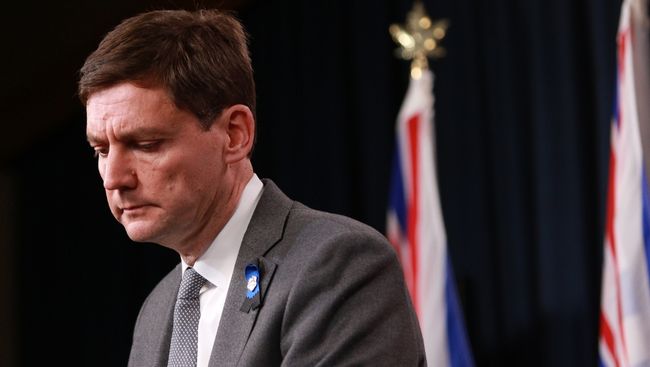
Picture Courtesy: THE CANADIAN PRESS/Chad Hipolito
 

MORE National ARTICLES

Truckers scramble for new routes as tariffs bring shipments to a halt

Truckers scramble for new routes as tariffs bring shipments to a halt
Trucking companies are halting shipments, mulling layoffs and scrambling for new routes as tariffs wreak havoc on cross-border trade. The lead-up to U.S. President Donald Trump's sweeping 25 per cent tariff on Canadian imports as well as retaliatory duties from Canada that took effect Tuesday prompted a surge in deliveries over the past two months as shippers raced to beat the deadline.

Truckers scramble for new routes as tariffs bring shipments to a halt

Here's the latest as the U.S. imposes tariffs on goods from Canada and Mexico

Here's the latest as the U.S. imposes tariffs on goods from Canada and Mexico
U.S. President Donald Trump has imposed tariffs on imports from Canada and Mexico — a 25 per cent across-the-board levy, with a lower 10 per cent charge on Canadian energy — triggering a continental trade war. Here is the latest news (all times eastern):

Here's the latest as the U.S. imposes tariffs on goods from Canada and Mexico

Trump announces one-month pause on Mexican tariffs, no move on Canada

Trump announces one-month pause on Mexican tariffs, no move on Canada
U.S. President Donald Trump says Mexico will get a one-month pause on tariffs for imports under the Canada-U.S.-Mexico Agreement on trade. In a social media post, Trump says he made the decision after speaking with Mexican President Claudia Sheinbaum today, adding Mexico has worked with the U.S. on border security.

Trump announces one-month pause on Mexican tariffs, no move on Canada

B.C. signs $670-million pharmacare agreement with federal government

B.C. signs $670-million pharmacare agreement with federal government
The British Columbia and federal governments have signed a four-year, $670-million pharmacare agreement, giving universal access to contraceptive and diabetes medications. The plan will support nearly 550,000 B.C. residents with diabetes and provide 1.3 million people with a range of contraceptives.

B.C. signs $670-million pharmacare agreement with federal government

Another earthquake felt on B.C.'s south coast, third in two weeks

Another earthquake felt on B.C.'s south coast, third in two weeks
Another earthquake has shaken Victoria, becoming at least the third felt in British Columbia's capital in less than two weeks. Earthquakes Canada says the magnitude 3.9 earthquake occurred about 58 kilometres south of Victoria, at 4:18 p.m. on Wednesday.

Another earthquake felt on B.C.'s south coast, third in two weeks

Eby says B.C. making contingency plans to reduce reliance on U.S. electricity

Eby says B.C. making contingency plans to reduce reliance on U.S. electricity
British Columbia Premier David Eby says the government is making contingency plans to reduce the province's reliance on electricity from the United States after the start of the continental trade war. The premier said B.C. had been forced into contingency planning after Ontario Premier Doug Ford threatened to cut off electricity it provides three border states, resulting in concerns the U.S. could respond in kind.

Eby says B.C. making contingency plans to reduce reliance on U.S. electricity