Sunday, June 28, 2026
ADVT 
National

Two in five Canadians know unvaxed people: poll

Darpan News Desk The Canadian Press, 13 Dec, 2021 11:39 AM
  • Two in five Canadians know unvaxed people: poll

OTTAWA - About 40 per cent of Canadians know a family member or friend who is not vaccinated against COVID-19, and most don’t raise the issue with them, a poll carried out this month suggests.

The survey conducted by Leger and commissioned by the Association for Canadian Studies suggests four in ten Canadians have a friend or family member who is not vaccinated. Seventy per cent of these don’t discuss the matter with them, with half of those saying they have given up trying to persuade them to get protective shots.

The Leger-ACS survey shows that for 35 per cent of those polled, “it is not an issue” and they don’t talk about it, adding they get along well with unvaccinated family and friends. A similar percentage have given up trying to convince people they know to get immunized.

About one in eight of of those surveyed said they argue with the unvaccinated about getting COVID-19 inoculations. Around one in ten no longer speak with unvaccinated people or avoid them, while another six per cent said they respect and support the personal choice of those who are unvaccinated.

The findings follow a poll conducted by Leger last month that suggested roughly 57 per cent of the vaccinated population would not invite an unvaccinated person into their homes.

Jack Jedwab, president and CEO of the Association for Canadian Studies, said some research shows taking a “hardline” stance with people who are not vaccinated does not tend to work, and a gentler persuasive approach is more effective.

“It’s better to take a softer approach. There’s not tremendous value in taking a hardline approach,” he said.

The poll of 1,500 people, conducted between Dec. 3 and 5, found respondents from Saskatchewan and Manitoba were most likely to have unvaccinated family and friends, followed by British Columbia. Respondents in rural areas were most likely to know someone who is unvaccinated than in towns or suburban areas.

Atlantic Canadian respondents were most likely to “defriend” unvaccinated family and friends, while Quebecers who answered the survey were most likely to try to convince others to get shots.

Respondents on the Prairies were most inclined to drop the subject and “say it's fine”, according to the poll findings.

 

MORE National ARTICLES

Those who knew Nova Scotia gunman shocked by rampage

Those who knew Nova Scotia gunman shocked by rampage
Neighbours and schoolmates of the man responsible for a killing rampage that left at least 19 people dead in northern Nova Scotia were attempting Monday to come to terms with the tragedy.  A 23 year member of the RCMP police force Const Heidi Stevenson was killed, a mother of two, and another officer is recovering from non life threating injuries. 

Those who knew Nova Scotia gunman shocked by rampage

COVID-19 prompts bus driver layoffs, service cuts for Metro Vancouver transit

COVID-19 prompts bus driver layoffs, service cuts for Metro Vancouver transit
There have been significant layoffs of bus drivers and deep service cuts on buses, SeaBus, SkyTrain and West Coast Express across Metro Vancouver. Nearly 1,500 bus drivers and other transit workers across Metro Vancouver are being laid off as TransLink faces plunging ridership during the COVID-19 pandemic.    

COVID-19 prompts bus driver layoffs, service cuts for Metro Vancouver transit

Demand will fuel B.C. real estate in 2021 after COVID recession: report

Demand will fuel B.C. real estate in 2021 after COVID recession: report
A report from the B.C. Real Estate Association says the 2020 COVID-driven recession will be deep, although it could be shorter than other Canadian economic downturns. The market intelligence report released Monday by the association says it expects home sales to sink 30 to 40 per cent for April 2020. 

Demand will fuel B.C. real estate in 2021 after COVID recession: report

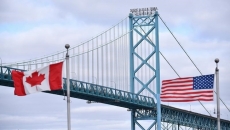
Prime Minister Justin Trudeau confirms border closure, which began on March 21 and was set to expire on Tuesday.

Prime Minister Justin Trudeau confirms border closure, which began on March 21 and was set to expire on Tuesday.
Canadian officials acknowledged some regions of the country could be closer to re-opening parts of the economy than others, but continued to stress a careful approach as the border closure with the hard-hit United States was extended for another 30 days during the COVID-19 crisis. Prime Minister Justin Trudeau confirmed the extension on Saturday for the closure restricting non-essential travel across the border, which began on March 21 and was set to expire on Tuesday.

Prime Minister Justin Trudeau confirms border closure, which began on March 21 and was set to expire on Tuesday.

Feds pledge $306M aid for Indigenous businesses suffering COVID-19 losses

Feds pledge $306M aid for Indigenous businesses suffering COVID-19 losses
Prime Minister Justin Trudeau says the government will provide $306 million in funding to help small and medium-sized Indigenous businesses suffering the economic effects of the COVID-19 pandemic. 

Feds pledge $306M aid for Indigenous businesses suffering COVID-19 losses

3 new COVID-19 deaths in B.C. for 81 total, says provincial health officer

3 new COVID-19 deaths in B.C. for 81 total, says provincial health officer
B.C's provincial health officer says three more people in the province have died after testing positive for COVID-19. Dr. Bonnie Henry says the latest deaths came from long-term care facilities and bring the province's total up to 81 deaths. The province has 29 new cases for a total of 1,647.

3 new COVID-19 deaths in B.C. for 81 total, says provincial health officer