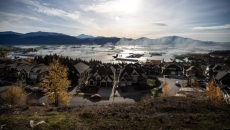
Two of the three fires making up a devastating wildfire complex that destroyed almost 200 homes around Lake Okanagan in the B.C. Interior are now under control.
But the BC Wildfire Service says the region's most destructive fire, the McDougall Creek blaze in West Kelowna, continues to defy suppression efforts.
#BCWildfire is anticipating increased fire behaviour on a number of incidents in the Northwest and Prince George fire centres due to a wind event beginning tonight through Saturday. This combined with hot and dry conditions will lead to significant rates of spread. pic.twitter.com/Q3Zo7sZ0ZT
— BC Wildfire Service (@BCGovFireInfo) September 1, 2023
The three fires make up the Grouse fire complex that forced thousands of people to evacuate and has been a key front in B.C.'s worst wildfire season on record since the McDougall Creek fire swept down on West Kelowna on Aug. 17, setting neighbourhoods ablaze.
The Lake Country and Clifton-McKinley fires on the east side of Lake Okanagan then sprang into life, threatening the City of Kelowna and properties to the north.
The Central Okanagan emergency operations centre says although those two fires are now under control, evacuation alerts remain in place, and residents need to be ready to leave at short notice.
Firefighters are meanwhile warning residents in northern B.C. that forecast high winds are likely to feed the growth of wildfires over the next two days.
The wildfire service says it is "anticipating increased fire behaviour" in the Northwest and Prince George fire centres — encompassing the northern half of the province — from Friday into Saturday.
Environment Canada has issued a weather advisory this morning stretching from B.C.'s Peace River region including Fort St. John and Dawson Creek to Fort Nelson and areas further to the northwest such as Cassiar and Watson Lake, Yukon.
The advisory says winds from the west and southwest are likely to reach 40 kilometres an hour over the next two days, and gusts may reach 60 kilometres an hour.
Environment Canada says the high winds will likely "worsen wildfire conditions" as well as contribute to deteriorating air quality as they drive smoke from nearby blazes.
In response, both the Prince George and Northwest fire centres have issued warnings for residents to be vigilant, as areas 40 to 80 kilometres downwind of active wildfires are at risk if flames start moving quickly.
Northern B.C. suffered from high temperatures and dry conditions earlier this week with parts of the region under days-long heat warnings from Environment Canada.
The wildfire service says those conditions are likely to contribute to more fire activity if winds bolster the wildfires in the region.
Further south, wet and cool weather has helped fire crews in the southern Interior of B.C. this week, with rainfall in the Fraser Canyon and Shuswap regions, as well as Central Okanagan, helping firefighters.
Officials say it has helped crews contain several major fires such as Kookipi Creek south of Lytton from further growth.
Provincial Emergency Management Minister Bowinn Ma on Thursday extended B.C.'s state of emergency until Sept. 14 and said drought conditions may last into next year.
There are currently more than 400 active wildfires burning in British Columbia, with about 188 listed as out-of-control.
About 4,200 people in the province remain on evacuation orders, with another 65,000 on alert to be ready to evacuate on short notice.