VICTORIA — Scientists at the University of Victoria are working to cement their lead in making so-called smart concrete that heals and seals cracks, greatly reducing potential infrastructure disasters and extending lifespans of buildings and structures.
Civil Engineering Prof. Rishi Gupta says his department is conducting research to develop material combinations that produce long-lasting, crack-free concrete and mixtures that can heal cracks.
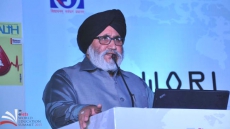
"In my world we talk about concrete, and concrete is the world's most used construction material," he said at a recent display of his research at the British Columbia's legislature.
He said the focus of his facility is to come up with a variety of mixtures that allow for crack-free concrete.
"If (the concrete) does decide to crack we are actually coming up with systems which are smart and have the ability to heal themselves."
Gupta said his research has two primary areas of focus when it comes to concrete: making it crack free and monitoring the life span of infrastructure built with concrete.
"It's about innovative and inventive thinking" #uvic VP Research #BCKDF funding announcement https://t.co/pCtc5df9FU pic.twitter.com/x8Ni1uSh5o
— UVic News (@uvicnews) April 4, 2016
"We are working with fibres that actually go into concrete," he said. "B.C. is one of the leaders in fibre-reinforced concrete."
Gupta said his department is testing the healing and sealing abilities of concrete as varying amounts of fibres are added to the mixture such as industrial waste like fly ash and wood cellulose.
"We actually have a patent that was very recently approved and we have the only technique in the world that can be used to measure how fast systems like these can seal themselves," he said. "We are able to predict what the life of concrete would be."
Gupta said the mixtures work on cracks and extend the life of concrete, which also benefits the environment.
"Concrete is associated with not being very sustainable because every tonne of cement produces about a tonne of carbon dioxide," he said. "If you can make your structure last longer, you've actually made the material more sustainable."
The university will also be testing two new tools that can measure the lifespan and the strength of concrete on buildings and infrastructure.
The electrical resistivity meter tests the strength of concrete through electrical resistance currents in minutes as opposed to hours and without drilling core samples from the structure, he said.
Conventional concrete strength measurements involve chloride permeability tests which take up to 10 hours for a single reading or drilling into the structure and removing a concrete sample.
Also being put to use is Canada's first Laser Scanning Vibrometer, a hand held infrared device that when pointed can determine the strength of a structure through its heat signals.
"If a structure was cracked for example you could see the thermal signature through this," Gupta said. "The use for that is you can be standing a couple hundred feet away from a bridge and you can actually monitor how the bridge is performing."

B.C.'s Technology Minister Amrik Virk said the UVic research could result in safer bridges and buildings around the world.
"Can you imagine concrete that heals itself?" he said. "The ability to look at aging infrastructure, not only in North America but around the world, where we could potentially apply a coating on concrete that's going to solve overpasses from falling down."
B.C.'s Knowledge Development Fund provided $120,000 to Gupta's research.