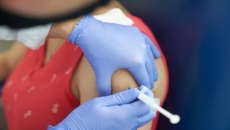
The messaging around the Oxford-AstraZeneca COVID-19 vaccine hit another roadblock Monday as Prince Edward Island suspended delivery of the jab to young adults.
P.E.I. was setting aside its supply of AstraZeneca for adults aged 18-29 working directly with the public, however officials said the vaccination appointments are on hold pending further information expected today from Health Canada and the National Advisory Committee on Immunization.
Experts had maintained the shot is safe and effective — with the benefit of preventing COVID outweighing potential risks — but P.E.I.'s decision to halt use of the vaccine is the latest stumbling block against AstraZeneca.
Days after the vaccine was first approved by Health Canada for all adults on Feb. 26, NACI said it did not recommend AstraZeneca for people over 65, citing not enough evidence from clinical trials to show whether the vaccine was effective in older populations. But NACI reversed its decision on March 16, saying real-world data suggests the shot was safe and effective among seniors.
Around the same time earlier this month, some European countries temporarily halted use of the vaccine due to reports of blood clots. The vaccination campaigns have since resumed in most of those countries after a review by the European Union's medical regulator.
However, Health Canada last week updated the product label on the vaccine to warn about blood clotting, sayingreports of those events are "very rare'' — and in Canada, nonexistent.
As the latest news out of P.E.I. continues to develop, here's what we know about the AstraZeneca vaccine:
HOW EFFECTIVE IS IT?
Data from clinical trials showed AstraZeneca was 62 per cent effective in preventing COVID infections, but it also prevented death and hospitalization in all participants who got the virus after receiving the vaccine.
Efficacy was a major talking point when AstraZeneca was first approved, with some comparing it to the 95 per cent efficacy shown in mRNA vaccine trials from Pfizer and Moderna. But experts have stressed that all the authorized vaccines offer excellent protection against severe disease.
Real-world data is emerging that may also suggest the efficacy of AstraZeneca's vaccine increases over a longer time interval between the first and second shot. Clinical trials used a four-week span between doses but some countries have been delaying second doses by several weeks. In Canada, many provinces have opted to delay the second dose by four months.
DOES IT WORK AGAINST THE NEW VARIANTS?
AstraZeneca's vaccine had some promising datalast month suggesting it works against the variant first detected in the U.K. Findings based on swabs taken from around 500 volunteers in trials between October and January showed a 74.6 per cent efficacy rate against that variant.
A group of experts on immunization working with the World Health Organization recommended the use of AstraZeneca's vaccine in February, even in countries where variants have emerged as dominant.
WHAT ABOUT THE BLOOD CLOT ISSUE?
Health Canada's updated label warning followed reports from Europe that AstraZeneca might cause a rare type of blood clot in the head, known as sinus vein thrombosis.
Health Canada's chief medical adviser Dr. Supriya Sharma said last week she agrees with European health authorities that the benefits of the vaccine outweigh any potential risks, and that all four vaccines approved for use in Canada were considered safe.
Sharma said Health Canada is keeping an eye on developments across the Atlantic, where researchers say they have identified a possible cause for the blood clots, but little information is available so far.
Germany's medical regulator said Monday it has received reports of 21 cases of rare blood clots in people who had recently received AstraZeneca's coronavirus vaccine.
The Paul Ehrlich Institute told The Associated Press that seven people affected by the blood clots have died.
Of the 21 cases, 19 were in women ages 20 to 63, while two were in men ages 36 and 57.
During the period covered by the reports, some 2.27 million first doses of the AstraZeneca vaccine were administered in Germany.
HOW DOES THE VACCINE WORK?
Unlike Pfizer-BioNTech and Moderna, which use messenger RNA (mRNA), the AstraZeneca vaccine is a non-replicating viral vector, using a weakened chimpanzee cold virus as a vessel.
Scientists stripped the genes from that virus, which isn't harmful to humans, and replaced them with the spike protein gene for SARS-CoV-2.
Once injected, the vaccine shows our bodies how to produce the immune response needed to ward off future infections from the COVID-19 virus.
Some may see outward signs of an immediate immune response to the vaccine — the body's way of preparing for what it perceives as an attack by the virus. This can cause side effects usually seen with other vaccines, including pain at the injection site, redness, swelling and even fever, but experts say that means the vaccine is working.
WHAT ARE THE ADVANTAGES TO THIS VACCINE?
AstraZeneca can be shipped and stored at regular refrigerator temperature, unlike Pfizer-BioNTech and Moderna, which need colder storage temperatures.
From a global vaccination standpoint, the low cost of AstraZeneca's vaccine — about US$4 per dose — gives it another advantage. AstraZeneca, which says it aims to manufacture up to three billion doses in 2021, has pledged to make their product available at cost around the world until at least July.