Sunday, June 21, 2026
ADVT 
National

Women grads more likely to access CERB: StatCan

Darpan News Desk The Canadian Press, 06 Jul, 2022 09:41 AM
  • Women grads more likely to access CERB: StatCan

OTTAWA - A new Statistics Canada study finds women post-secondary graduates were more likely to receive the Canada Emergency Response Benefit in 2020 than male graduates.

The study also finds that those who graduated in 2018 with a college-level certificate or diploma were more likely to access the benefit than the general working population.

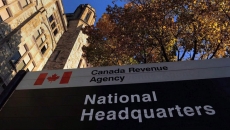
The federal government introduced the CERB in 2020 to provide financial support for Canadians who lost income due to COVID-19.

Statistics Canada compared the proportion of 2010 to 2018 graduates who received CERB based on educational and socio-demographic characteristics to the proportion of all workers who received the benefit.

The study says this group of graduates was of particular interest “because while they are younger and typically have less seniority, having a recent education qualification may have helped them keep their employment.”

Overall, 2010 to 2018 graduates were less likely to access the benefit than the general working population.

Of all workers, 35.2 per cent received CERB in 2020.

Recent graduates were more likely to have received CERB, with a third of 2018 graduates receiving the benefit compared to a fifth of 2010 graduates.

Those with more advanced post-secondary degrees were also less likely to access CERB, with only 13.3 per cent of 2018 graduates with a doctoral degree receiving the benefit.

Among 2018 graduates, those from college and university programs in visual and performing arts, as well as communication technologies, had the highest proportion of graduates receiving CERB, with over 50 per cent accessing the benefit.

Additionally, 2018 graduates with a college-level diploma or undergraduate degree in mathematics, computer and information sciences were the least likely to receive CERB in comparison to graduates from other fields.

Women weren’t just more likely to access the benefit among 2018 graduates — they were also more likely to receive it among the general working population.

MORE National ARTICLES

Risk of mad cow in Canada officially 'negligible'

Risk of mad cow in Canada officially 'negligible'
Canadian beef producers are finally able to turn the page on the mad cow era, the federal agriculture minister said Thursday after an international animal-health watchdog gave the industry a long-awaited all-clear.

Risk of mad cow in Canada officially 'negligible'

TMX begins tunnel construction in Burnaby, B.C.

TMX begins tunnel construction in Burnaby, B.C.
The company says in a news release the work on the tunnel connecting the Westridge Marine and Burnaby terminals began Wednesday.

TMX begins tunnel construction in Burnaby, B.C.

Doctors push for faster second doses

Doctors push for faster second doses
Almost 20.5 million Canadians have received at least their first dose as of Thursday, but fewer than two million of those have been fully vaccinated with both required doses.

Doctors push for faster second doses

Self-employed CERB recipients may get cash back

Self-employed CERB recipients may get cash back
For anyone whose net self-employment income was under $5,000, those conditions include having filed their 2019 and 2020 tax returns and having $5,000 or more in gross self-employment income in the 12 months before their application for benefits.

Self-employed CERB recipients may get cash back

Panel recommends end of COVID quarantine hotels

Panel recommends end of COVID quarantine hotels
An expert panel recommends the government no longer require travellers arriving by air into Canada quarantine for up to three days at a hotel.

Panel recommends end of COVID quarantine hotels

B.C. moves up second COVID vaccine shot to 8 weeks

B.C. moves up second COVID vaccine shot to 8 weeks
Provincial health officer Dr. Bonnie Henry says there is now sufficient Moderna and Pfizer-BioNTech vaccine to move up the interval for the booster shot to about eight weeks.

B.C. moves up second COVID vaccine shot to 8 weeks