Saturday, December 13, 2025
ADVT 
Tech

Indian-Origin Researchers Report Cybersecurity Risks In 3D Printing

Darpan News Desk IANS, 18 Jul, 2016 02:10 PM
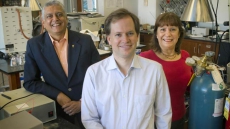
    A team comprising of Indian-origin researchers has found cybersecurity risks in 3D printing by examining two aspects -- printing orientation and insertion of fine defects.
     
    They found that since Computer-Aided Drafting (CAD) files -- used in the creation, modification, analysis, or optimisation of a design -- do not give instructions for printer head orientation, malefactors could alter the process without detection.
     
    Also, sub-millimetre defects that can appear between printed layers with exposure to fatigue and the elements were found to be undetectable by common industrial monitoring techniques, the researchers said.
     
    The finding, along with initial recommendations for remedies, was reported in the journal of the Minerals, Metals and Materials Society.
     
    "These are possible foci for attacks that could have devastating impact on users from the end product, and economic impact in the form of recalls and lawsuits," said Nikhil Gupta, an Associate Professor of Mechanical Engineering.
     
    The researchers reported that the orientation of the product during printing could make as much as a 25 per cent difference in its strength.
     
    Gupta explained that economic concerns also influence how a supplier prints a product. "Minus a clear directive from the design team, the best orientation for the printer is one that minimises the use of material and maximises the number of parts you can print in one operation," he said.
     
    According to Said Karri, a cybersecurity researcher, "With the growth of cloud-based and decentralised production environments, it is critical that all entities within the additive manufacturing supply chain be aware of the unique challenges presented to avoid significant risk to the reliability of the product."
     
    He pointed out that an attacker could hack into a printer that is connected to Internet to introduce internal defects as the component is being printed.

    MORE Tech ARTICLES

    Facebook's 'Like' Button Gets 'Angry' And 'Sad' As Friends, 7 Thinks To Know

    Facebook's 'Like' Button Gets 'Angry' And 'Sad' As Friends, 7 Thinks To Know
    Here are seven things to know about Facebook's latest feature, known as Reactions.

    Facebook's 'Like' Button Gets 'Angry' And 'Sad' As Friends, 7 Thinks To Know

    US Engineers Achieve Passive Wi-Fi At 10,000 Times Less Power

    US Engineers Achieve Passive Wi-Fi At 10,000 Times Less Power
    The new "Passive Wi-Fi" system also consumes 1,000 times less power than existing energy-efficient wireless communication platforms, such as Bluetooth Low Energy and Zigbee

    US Engineers Achieve Passive Wi-Fi At 10,000 Times Less Power

    La Loche High School To Welcome Students Back Friday With Added Security

    La Loche High School To Welcome Students Back Friday With Added Security
    The Northern Lights School Division says an RCMP school resource officer and three security staff will also be at the La Loche Community School when classes resume.

    La Loche High School To Welcome Students Back Friday With Added Security

    Chinese Phones Go Global After Pushing Aside Apple, Samsung

    Chinese Phones Go Global After Pushing Aside Apple, Samsung
    Move over, Apple and Samsung. The next big smartphone might be from little-known Chinese brands such as TCL and OPPO.

    Chinese Phones Go Global After Pushing Aside Apple, Samsung

    Facebook Updates Messenger App To Handle Several Accounts

    Facebook Updates Messenger App To Handle Several Accounts
    Facebook has redesigned its popular Messenger app so several people can use it on the same smartphone or tablet without relinquishing their privacy.

    Facebook Updates Messenger App To Handle Several Accounts

    Indian-Origin Scientist Krishnan Rajeshwar Devises Novel Materials For Solar Fuel Cells

    Indian-Origin Scientist Krishnan Rajeshwar Devises Novel Materials For Solar Fuel Cells
    An Indian-origin chemist from the University of Texas at Arlington (UTA) has developed new high-performing materials for cells that harness sunlight to split carbon dioxide and water into useable fuels like methanol and hydrogen gas.

    Indian-Origin Scientist Krishnan Rajeshwar Devises Novel Materials For Solar Fuel Cells