Sunday, December 14, 2025
ADVT 
Tech

Indian-Origin Researchers Report Cybersecurity Risks In 3D Printing

Darpan News Desk IANS, 18 Jul, 2016 02:10 PM
    A team comprising of Indian-origin researchers has found cybersecurity risks in 3D printing by examining two aspects -- printing orientation and insertion of fine defects.
     
    They found that since Computer-Aided Drafting (CAD) files -- used in the creation, modification, analysis, or optimisation of a design -- do not give instructions for printer head orientation, malefactors could alter the process without detection.
     
    Also, sub-millimetre defects that can appear between printed layers with exposure to fatigue and the elements were found to be undetectable by common industrial monitoring techniques, the researchers said.
     
    The finding, along with initial recommendations for remedies, was reported in the journal of the Minerals, Metals and Materials Society.
     
    "These are possible foci for attacks that could have devastating impact on users from the end product, and economic impact in the form of recalls and lawsuits," said Nikhil Gupta, an Associate Professor of Mechanical Engineering.
     
    The researchers reported that the orientation of the product during printing could make as much as a 25 per cent difference in its strength.
     
    Gupta explained that economic concerns also influence how a supplier prints a product. "Minus a clear directive from the design team, the best orientation for the printer is one that minimises the use of material and maximises the number of parts you can print in one operation," he said.
     
    According to Said Karri, a cybersecurity researcher, "With the growth of cloud-based and decentralised production environments, it is critical that all entities within the additive manufacturing supply chain be aware of the unique challenges presented to avoid significant risk to the reliability of the product."
     
    He pointed out that an attacker could hack into a printer that is connected to Internet to introduce internal defects as the component is being printed.

    MORE Tech ARTICLES

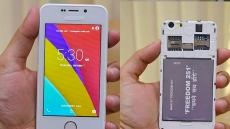
    Freedom 251: World's Cheapest 'Made In India' Smartphone Launched

    Freedom 251: World's Cheapest 'Made In India' Smartphone Launched
    Taking the world by surprise with the world's cheapest smartphone, a little known Noida-based start-up on Wednesday launched a Rs.251 (less than $4) "Made in India" smartphone that - if works well - will be a game changer.

    Freedom 251: World's Cheapest 'Made In India' Smartphone Launched

    Alibaba Buys Nearly 33 Million Shares Of Groupon

    Alibaba Buys Nearly 33 Million Shares Of Groupon
    Groupon Inc.'s stock jumped more than 40 per cent in afternoon trading Tuesday.

    Alibaba Buys Nearly 33 Million Shares Of Groupon

    Indian-Origin Engineer Discovers Ground Breaking 2D Semi-Conducting Material

    Indian-Origin Engineer Discovers Ground Breaking 2D Semi-Conducting Material
    A team led by an Indian-origin engineer from the University of Utah has discovered a new kind of 2D semi-conducting material for electronics that opens the door for much speedier computers and smartphones that consume a lot less power.

    Indian-Origin Engineer Discovers Ground Breaking 2D Semi-Conducting Material

    Young Adults Swipe Right On Tinder, But Is It Just A Game?

    Young Adults Swipe Right On Tinder, But Is It Just A Game?
    NEW YORK — Online dating services are now hip with young adults, but not always for dating.

    Young Adults Swipe Right On Tinder, But Is It Just A Game?

    Watch: Google Boss Asked 'What Do You Get Paid?' By UK Lawmakers

    Watch: Google Boss Asked 'What Do You Get Paid?' By UK Lawmakers
    A British parliamentary committee has grilled Google's president of European operations, questioning in blunt terms whether the Internet giant had paid its fair share of taxes.

    Watch: Google Boss Asked 'What Do You Get Paid?' By UK Lawmakers

    Magazine Publisher Time Inc. Buys What's Left Of MySpace

    Magazine Publisher Time Inc. Buys What's Left Of MySpace
    It does, and the company that owns the once-ubiquitous social network is being bought by Time Inc. to help the magazine publisher target ads.

    Magazine Publisher Time Inc. Buys What's Left Of MySpace