Wednesday, March 25, 2026
ADVT 
Tech

Kerala-Based Researcher Bypasses Apple's Ipad Activation Lock

Darpan News Desk IANS, 02 Dec, 2016 01:02 PM
    Hemanth Joseph, a Kerala-based security researcher, has identified a bug running in iOS 10.1 version of Apple's operating system that allowed him to bypass the activation lock on an iPad.
     
    The activation lock in Apple's iPhone or iPad is hard for someone other than owner of the device to hack and set it up as a new device. 
     
    Joseph bypassed activation lock in a locked iPad by discovering a weakness in the device setup process running iOS 10.1, Forbes reported on Friday. 
     
    When Joseph was asked to select a Wi-Fi network, he chose 'other network' and selected WPA2-enterprise as the type of network to connect to, that gave him three input fields to fill -- name, username and password. 
     
    Upon testing, he came to know that there is no character restriction in those fields and he typed thousands of characters than iOS can handle, expecting that it would cause the software to crash. 
     
    This caused the iPad to freeze and then he locked it by closing Apple's magnetic Smart Cover over the screen. After opening the cover, the device was at the same screen, but as few seconds passed by, it crashed to iOS home screen. 
     
     
    This made Joseph bypassed the activation lock and to have full access to the iPad.
     
    The bug discovered by Joseph was reportedly fixed in an iOS update last month. 
     
    According to Joseph's website, he is currently working as information security researcher at the firm Slash Secure and also serving as commander at Kerala Police Cyberdome.
     
    He is founder of India's first open security community for students called 0SecCon (www.0SecCon.com).
     
    Joseph has been listed Google's Hall of fame and received a bounty of $7500 for reporting a critical vulnerability in Google Cloud Platform.
     
    Earlier, researchers at US-based Vulnerability Lab discovered the iOS 10.1.1 bug. Like Joseph, the team began by overloading the Wi-Fi setup fields and employed a smart cover. Just like in Joseph's iPad scenario, the home screen appeared for an instant and then it's gone. 
    MORE Tech ARTICLES

    Instagram Won't Ban Breastfeeding Photos

    Instagram Won't Ban Breastfeeding Photos
    Under pressure from the online community, Instagram updated its community guidelines which now allow mothers to post such photos.

    Instagram Won't Ban Breastfeeding Photos

    There's An Android Robot Urinating On Apple Logo In Pakistan Maps And Google Is Very Sorry For It

    There's An Android Robot Urinating On Apple Logo In Pakistan Maps And Google Is Very Sorry For It
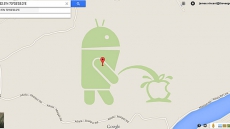
    The image was located in Pakistan near Rawalpindi and was added by a user to Google Maps through Map Maker -- a feature that allows users to add content and additional information to Google Maps.

    There's An Android Robot Urinating On Apple Logo In Pakistan Maps And Google Is Very Sorry For It

    Revealed: What Makes YouTube So Popular

    Revealed: What Makes YouTube So Popular
    The secret of YouTube's popularity lies in its flexibility that provides its users an opportunity to create their own alternate music videos, says a study.

    Revealed: What Makes YouTube So Popular

    Most Women Will Post Only Sixth Selfie On Facebook: Survey

    Most Women Will Post Only Sixth Selfie On Facebook: Survey
    "The sixth selfie is the one that women would use on an average, while men were happy with their image on the fourth try," showed the results 

    Most Women Will Post Only Sixth Selfie On Facebook: Survey

    First Selfie Stick Appeared In 1980s

    First Selfie Stick Appeared In 1980s
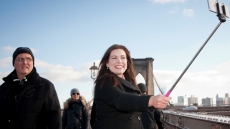
    Do you have any idea when the first selfie stick was invented? Well, it was invented in the 1980s by Hiroshi Ueda, who worked for the Minolta camera company at the time and was a keen photographer, 

    First Selfie Stick Appeared In 1980s

    Indian-Origin Scientist Develops First Self-powered Camera

    Indian-Origin Scientist Develops First Self-powered Camera
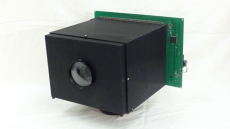
    Computer scientist Shree K. Nayar from the Columbia University has invented the world's first fully self-powered video camera that can produce an image each second, indefinitely, of a well-lit indoor scene.

    Indian-Origin Scientist Develops First Self-powered Camera