Saturday, December 20, 2025
ADVT 
Tech

Liquid Metal Batteries To Herald New Future

Darpan News Desk Darpan, 23 Sep, 2014 01:07 PM
    Researchers have improved a liquid battery system that could enable renewable energy resources to compete with conventional power plants.
     
    The battery uses two layers of molten metal, separated by a layer of molten salt that acts as the battery's electrolyte. Because each of the three materials have a different density, they naturally separate into layers, like oil floating on water.
     
    The original system, using magnesium for one of the battery's electrodes and antimony for the other required an operating temperature of 700 degrees celsius.
     
    But with the new formulation, with one electrode made of lithium and the other a mixture of lead and antimony, the battery can operate at temperatures of 450-500 degrees celsius.
     
    "When the new battery discharges, lithium atoms in the negative electrode give up an electron and travel through the electrolyte to the lead-antimony electrode. Charging pushes them back in the opposite direction, and the flow of current is enough to keep the metals liquefied," explained Donald Sadoway, an electrochemist at the Massachusetts Institute of Technology (MIT).
     
    The new batteries did well in tests of durability, showing no sign of corrosion after 1,800 hours of operation and maintaining 94 percent of their capacity after 450 complete charge-discharge cycles.
     
    Sadoway estimates that these batteries would keep 85 percent of their charge capacity after a decade of daily cycling.
     
    "There is no battery out there that can offer that level of performance," he noted.
     
    Sadoway says that a large-scale molten-metal unit might cost around $500 per kilowatt-hour of electricity produced.
     
    "But liquid electrodes do not degrade and there are no moving parts, so the maintenance costs would be very low," Sadoway pointed out.
     
    The paper was published in the journal Nature.

    MORE Tech ARTICLES

    Why not copy-print humans on other planets?

    Why not copy-print humans on other planets?
    What if, instead of sending humans to other planets, we made an exact copy on the site and colonised other planets to ensure survival of the human race for eons?

    Why not copy-print humans on other planets?

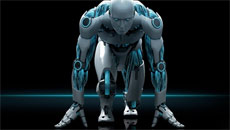
    This Korean sprinter robot can beat Usain Bolt!

    This Korean sprinter robot can beat Usain Bolt!
    South Korean scientists have taken inspiration from the prehistoric Velociraptor dinosaur to create one of the world's simplest and fastest robots - the Raptor.

    This Korean sprinter robot can beat Usain Bolt!

    Green tea daily reduces pancreatic cancer risk

    Green tea daily reduces pancreatic cancer risk
    The cup of your favourite green tea is full of health benefits and now researchers have found that an active compound in green tea also reduces the risk of pancreatic cancer.

    Green tea daily reduces pancreatic cancer risk

    Watchout! Too many photos won't sell your product online

    Watchout! Too many photos won't sell your product online
    If you wish to sell your old laptop online before buying a new tablet, restrain the urge to upload several photos as researchers have found that too many photos can confuse consumers and dent your chances of selling.

    Watchout! Too many photos won't sell your product online

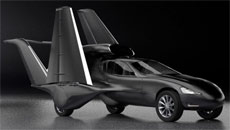
    Jet-propelled car to fly at 880 km per hour!

    Jet-propelled car to fly at 880 km per hour!
    Fasten your seat belts. A jet car that flies at 880 km per hour is being conceptualised that would fly you from New Delhi to Mumbai in less than two hours - and it may use a highway as a runway to take off!

    Jet-propelled car to fly at 880 km per hour!

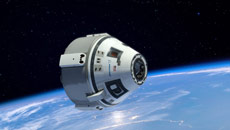
    New space taxi to transport astronauts to ISS

    New space taxi to transport astronauts to ISS
    Dragon V2, the new spaceship that would be able to carry astronauts to and from the International Space Station (ISS), was unveiled in California.

    New space taxi to transport astronauts to ISS