Wednesday, December 24, 2025
ADVT 
Tech

Liquid Metal Batteries To Herald New Future

Darpan News Desk Darpan, 23 Sep, 2014 01:07 PM
    Researchers have improved a liquid battery system that could enable renewable energy resources to compete with conventional power plants.
     
    The battery uses two layers of molten metal, separated by a layer of molten salt that acts as the battery's electrolyte. Because each of the three materials have a different density, they naturally separate into layers, like oil floating on water.
     
    The original system, using magnesium for one of the battery's electrodes and antimony for the other required an operating temperature of 700 degrees celsius.
     
    But with the new formulation, with one electrode made of lithium and the other a mixture of lead and antimony, the battery can operate at temperatures of 450-500 degrees celsius.
     
    "When the new battery discharges, lithium atoms in the negative electrode give up an electron and travel through the electrolyte to the lead-antimony electrode. Charging pushes them back in the opposite direction, and the flow of current is enough to keep the metals liquefied," explained Donald Sadoway, an electrochemist at the Massachusetts Institute of Technology (MIT).
     
    The new batteries did well in tests of durability, showing no sign of corrosion after 1,800 hours of operation and maintaining 94 percent of their capacity after 450 complete charge-discharge cycles.
     
    Sadoway estimates that these batteries would keep 85 percent of their charge capacity after a decade of daily cycling.
     
    "There is no battery out there that can offer that level of performance," he noted.
     
    Sadoway says that a large-scale molten-metal unit might cost around $500 per kilowatt-hour of electricity produced.
     
    "But liquid electrodes do not degrade and there are no moving parts, so the maintenance costs would be very low," Sadoway pointed out.
     
    The paper was published in the journal Nature.

    MORE Tech ARTICLES

    Is Instagram biased against fatter 'belfies'?

    Is Instagram biased against fatter 'belfies'?
    Forget selfies as the war has now moved to “belfies”. The online photo-video sharing website Instagram has recently been accused of censoring plump, underwear-clad bottom while continuing to allow skinnier, skimpier clothed bodies to appear.

    Is Instagram biased against fatter 'belfies'?

    Google's Next Big Thing: Home Security Cameras?

    Google's Next Big Thing: Home Security Cameras?
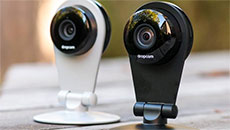
    The multinational corporation is reportedly planning to buy home security camera firm Dropcam.

    Google's Next Big Thing: Home Security Cameras?

    Soon, an app to curb food waste

    Soon, an app to curb food waste
    Giving a boost to the growing number of green gazettes, researchers have now developed an app that could help curb food waste which leads to not only loss of money but also natural resources.

    Soon, an app to curb food waste

    Tired at home? Come to office and relax

    Tired at home? Come to office and relax
    Know why some people find workplace a blessing in disguise and shudder at the thought of spending weekends at home?

    Tired at home? Come to office and relax

    Tech skills your ticket to overseas: LinkedIn

    Tech skills your ticket to overseas: LinkedIn
    According to a study by the professional networking site LinkedIn, skills in science, technology, engineering and maths (STEM) make up nearly half of the 10 abilities most commonly found among professionals who moved to other parts of the world to pursue career opportunities.

    Tech skills your ticket to overseas: LinkedIn

    A device that connects kids to real games

    A device that connects kids to real games
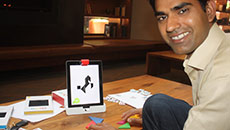
    Not happy with your kids being hooked to ipads or tablets playing video games? Turn to a new kind of gaming device, developed by an Indian-origin entrepreneur here, that uses the iPad but brings kids back into the real world of play.

    A device that connects kids to real games