Tuesday, December 23, 2025
ADVT 
Tech

Liquid Metal Batteries To Herald New Future

Darpan News Desk Darpan, 23 Sep, 2014 01:07 PM
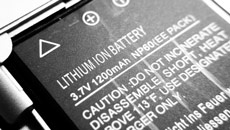
    Researchers have improved a liquid battery system that could enable renewable energy resources to compete with conventional power plants.
     
    The battery uses two layers of molten metal, separated by a layer of molten salt that acts as the battery's electrolyte. Because each of the three materials have a different density, they naturally separate into layers, like oil floating on water.
     
    The original system, using magnesium for one of the battery's electrodes and antimony for the other required an operating temperature of 700 degrees celsius.
     
    But with the new formulation, with one electrode made of lithium and the other a mixture of lead and antimony, the battery can operate at temperatures of 450-500 degrees celsius.
     
    "When the new battery discharges, lithium atoms in the negative electrode give up an electron and travel through the electrolyte to the lead-antimony electrode. Charging pushes them back in the opposite direction, and the flow of current is enough to keep the metals liquefied," explained Donald Sadoway, an electrochemist at the Massachusetts Institute of Technology (MIT).
     
    The new batteries did well in tests of durability, showing no sign of corrosion after 1,800 hours of operation and maintaining 94 percent of their capacity after 450 complete charge-discharge cycles.
     
    Sadoway estimates that these batteries would keep 85 percent of their charge capacity after a decade of daily cycling.
     
    "There is no battery out there that can offer that level of performance," he noted.
     
    Sadoway says that a large-scale molten-metal unit might cost around $500 per kilowatt-hour of electricity produced.
     
    "But liquid electrodes do not degrade and there are no moving parts, so the maintenance costs would be very low," Sadoway pointed out.
     
    The paper was published in the journal Nature.

    MORE Tech ARTICLES

    Want to know how to get a good raise? Read this!

    Want to know how to get a good raise? Read this!
    Have you received a less favourable appraisal from your boss this year? You are likely coming to office late. A study has found bosses to be favouring employees who, even though on flexible timings, arrived early.

    Want to know how to get a good raise? Read this!

    New technology may improve light-based cancer treatment

    New technology may improve light-based cancer treatment
    Researchers have developed a new technology that could bring photodynamic therapy (PDT), which uses lasers to activate special drugs to treat easily accessible tumours such as oral and skin cancer, into areas of the body which were previously inaccessible.

    New technology may improve light-based cancer treatment

    Handle this! Teenagers don't trust information via tweets

    Handle this! Teenagers don't trust information via tweets
    Are you among those who love tweeting but somewhat wary of information via tweets from others? Join the 'Millennial Generation' that has a “healthy mistrust” of the information they read on Twitter.

    Handle this! Teenagers don't trust information via tweets

    Secure your tablet with safer lithium-ion battery

    Secure your tablet with safer lithium-ion battery
    The convenient and deficient lithium-ion battery (LIB) that power your tablets and smartphones may soon become a lot safer as scientists have designed a kind of lithium battery component that is far less likely to catch fire and still promises effective performance.

    Secure your tablet with safer lithium-ion battery

    3D printed skin reveals how sharks swim fast

    3D printed skin reveals how sharks swim fast
    It may be a while before humans can wear sharkskin swimsuits, but researchers have now devised a way to print a shark-like skin to see how the bumpy skins of the sharks help them swim so fast.

    3D printed skin reveals how sharks swim fast

    Mobile phone data can help combat malaria: Study

    Mobile phone data can help combat malaria: Study
    Data from mobile phones that provide crucial information about movements of people within a country could be key to designing an effective malaria elimination programme, a promising study showed.

    Mobile phone data can help combat malaria: Study