Friday, December 19, 2025
ADVT 
Tech

New Google Glass-like device to minimise eye fatigue

Darpan News Desk Darpan, 29 May, 2014 01:27 PM
    Scanning your smart phone to find the nearest restaurant or directing Google Glass to show you a detailed map of the street is all fine but augmented reality (AR) is not good for your eyes in the long run.
     
    To address this, researchers have developed a Google Glass-like device that may lead to 3D augmented reality technology that minimises visual fatigue.
     
    The new device, developed by researchers at University of Arizona in Tucson and University of Connecticut in Storrs, makes augmented reality technology easier on the eyes for short-distance applications by superimposing a 3D image, rather than the standard 2D image, onto the 3D view of the real world.
     
    The superimposition of a 3D image onto a direct view of reality allows you to see the virtual image as if it were a real, 3D object in the physical space in front of you.
     
    “Minimising visual discomfort involved in wearing AR displays remains an unresolved challenge. This work is making a significant step forward in addressing this important issue,” said first author Hong Hua from University of Arizona.
     
    A lightweight, compact and high-performance Google Glass-like device - called an optical see-through head-mounted display (OST-HMD) - could potentially be “a transformative technology to redefine the way we perceive and interact with digital information”.
     
    For example, it could one day allow a doctor to see computed tomography (CT) images overlaid on a patient's abdomen during surgery or provide a new way to train soldiers by incorporating 3D virtual objects into real-life environments.
     
    AR goggles for long-distance viewing do not always cause eye strain; some of these eye-friendly designs are actively used for military applications.
     
    But short-distance designs - in which you would focus simultaneously on a 2D screen and a 3D world immediately around you - do cause visual discomfort, owing to the so-called accommodation-convergence mismatch problem.
     
    “The eyes are going back and forth between the screen and the three-dimensional scene away from the screen, causing conflicting depth perception cues and visual fatigue,” Hua explained.
     
    “In the new technology, there is no conflict in how your eyes focus, giving you a much more comfortable version of augmented reality,” Hua added in a paper published in the open-access journal Optics Express.

    MORE Tech ARTICLES

    Revealed: How Twitter shapes public opinion

    Revealed: How Twitter shapes public opinion
    Since public opinion levels off and evolves into an ordered state within a short time, small advantages of one opinion in the early stages can turn into a bigger advantage during the evolution of public opinion

    Revealed: How Twitter shapes public opinion

    Watch out! Cell phone addiction may kill parent-child bond

    Watch out! Cell phone addiction may kill parent-child bond
    Do you often play games, check emails or respond to office calls on your cell phone while with family on a dinner? This phone addiction can damage your emotional bonding with kids soon.

    Watch out! Cell phone addiction may kill parent-child bond

    What? Plant-powered FM radio is here

    What? Plant-powered FM radio is here
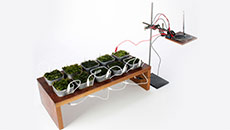
    Named Moss FM, the radio is designed by University of Cambridge biochemist Paolo Bombelli and London-based product designer Fabienne Felder.

    What? Plant-powered FM radio is here

    Incredible! Earth goes red for better health!

    Incredible! Earth goes red for better health!
    Taken by NASA's MErcury Surface, Space ENvironment, GEochemistry, and Ranging (MESSENGER) spacecraft, it shows fertile areas from South America 

    Incredible! Earth goes red for better health!

    Here's an iPhone app that paints your photos into masterpieces

    Here's an iPhone app that paints your photos into masterpieces
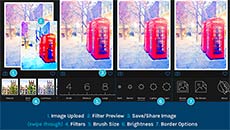
    The app now simulates the spreading and bleeding of the pigment onto the canvas - with dedicated properties for the virtual paper, the pigment, the brushes, the water and so on

    Here's an iPhone app that paints your photos into masterpieces

    3D-printed replica for a safe liver transplant created

    3D-printed replica for a safe liver transplant created
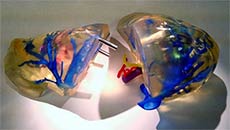
    The 3D-printed liver replicas, made of transparent material threaded with coloured arteries and veins, could help surgeons prevent complications while performing liver transplants or removing tumours, a path-breaking research shows.

    3D-printed replica for a safe liver transplant created