Saturday, December 20, 2025
ADVT 
Tech

New Google Glass-like device to minimise eye fatigue

Darpan News Desk Darpan, 29 May, 2014 01:27 PM
    Scanning your smart phone to find the nearest restaurant or directing Google Glass to show you a detailed map of the street is all fine but augmented reality (AR) is not good for your eyes in the long run.
     
    To address this, researchers have developed a Google Glass-like device that may lead to 3D augmented reality technology that minimises visual fatigue.
     
    The new device, developed by researchers at University of Arizona in Tucson and University of Connecticut in Storrs, makes augmented reality technology easier on the eyes for short-distance applications by superimposing a 3D image, rather than the standard 2D image, onto the 3D view of the real world.
     
    The superimposition of a 3D image onto a direct view of reality allows you to see the virtual image as if it were a real, 3D object in the physical space in front of you.
     
    “Minimising visual discomfort involved in wearing AR displays remains an unresolved challenge. This work is making a significant step forward in addressing this important issue,” said first author Hong Hua from University of Arizona.
     
    A lightweight, compact and high-performance Google Glass-like device - called an optical see-through head-mounted display (OST-HMD) - could potentially be “a transformative technology to redefine the way we perceive and interact with digital information”.
     
    For example, it could one day allow a doctor to see computed tomography (CT) images overlaid on a patient's abdomen during surgery or provide a new way to train soldiers by incorporating 3D virtual objects into real-life environments.
     
    AR goggles for long-distance viewing do not always cause eye strain; some of these eye-friendly designs are actively used for military applications.
     
    But short-distance designs - in which you would focus simultaneously on a 2D screen and a 3D world immediately around you - do cause visual discomfort, owing to the so-called accommodation-convergence mismatch problem.
     
    “The eyes are going back and forth between the screen and the three-dimensional scene away from the screen, causing conflicting depth perception cues and visual fatigue,” Hua explained.
     
    “In the new technology, there is no conflict in how your eyes focus, giving you a much more comfortable version of augmented reality,” Hua added in a paper published in the open-access journal Optics Express.
    MORE Tech ARTICLES

    Revealed: How Earth gets protection from space weather

    Revealed: How Earth gets protection from space weather
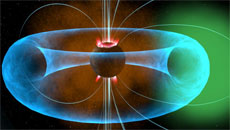
    The NASA scientists have discovered how dense particles near earth can send a plume up through space to help protect against incoming solar particles during certain space weather events.

    Revealed: How Earth gets protection from space weather

    Dream about a space trip? Click Here

    Dream about a space trip? Click Here
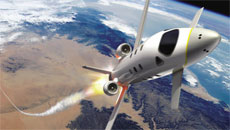
    Have an extra Rs.1.25 crore in your kitty? You can book a seat on a European plane that would take passengers to over 100 km in the sky -- enabling them to experience how being in space feels.

    Dream about a space trip? Click Here

    A giant leap towards discovering life beyond earth

    A giant leap towards discovering life beyond earth
    In what could be called a game changer in search of life outside our galaxy, astronomers have used a digital camera imaging technology to take a picture of a planet far from our solar system with an earth-based telescope.

    A giant leap towards discovering life beyond earth

    Sugar to Power Smart Phones for 10 days!

    Sugar to Power Smart Phones for 10 days!
    A bio-battery converts sugar into energy - much like our metabolism - decomposing sugar into carbon dioxide and water while releasing electrons.

    Sugar to Power Smart Phones for 10 days!

    WhatsApp founders in Forbes' global billionaires list

    WhatsApp founders in Forbes' global billionaires list
    Following Facebook's $19 billion acquisition of WhatsApp, the two founders of the popular mobile messaging service have now earned a new distinction - a place in the Forbes's list of global billionaires.

    WhatsApp founders in Forbes' global billionaires list

    Ancient virus revival poses threat to humans

    Ancient virus revival poses threat to humans
    A 30,000-year-old giant virus frozen in ice has been revived owing to global warming. Scientists now warn that melting ice around the world could uncover new biological threats to human or animal health

    Ancient virus revival poses threat to humans