Tuesday, December 16, 2025
ADVT 
Tech

Self-cooling solar cells to last longer

Darpan News Desk IANS, 23 Jul, 2014 07:36 AM
    What if a solar cell could keep itself cool even in the blistering heat of the sun?
     
    By adding a specially patterned layer of silica glass to the surface of ordinary solar cells, a team of researchers has found a way to let solar cells cool themselves by shedding unwanted thermal radiation.
     
    This paves the way for developing high-efficiency, long-lasting solar cells.
     
    For every one-degree Celsius increase in temperature, the efficiency of a solar cell declines by about half a percent.
     
    "That decline is very significant. The solar cell industry invests significant amounts of capital to generate improvements in efficiency," informed Aaswath Raman, a postdoctoral scholar at Stanford University.
     
    Under normal operating conditions, solar cells can easily reach temperatures of 55 degrees Celsius or more.
     
    Actively cooling solar cells by ventilation or coolants would be prohibitively expensive and at odds with the need to optimize exposure to the sun.
     
    The newly-proposed design embeds tiny pyramid- and cone-shaped structures on an incredibly thin layer of silica glass.
     
    With this, researchers found a way of redirecting unwanted heat - in the form of infrared radiation - from the surface of solar cells through the atmosphere and back into space.
     
    "Our new approach can lower the operating temperature of solar cells passively, improving energy conversion efficiency significantly and increasing the life expectancy of solar cells," explained Linxiao Zhu, a physicist at Stanford University.
     
    "These two benefits should enable the continued success and adoption of solar cell technology," added Shanhui Fan, an electrical engineering professor at Stanford.
     
    Silica is transparent to visible light, but it is also possible to fine-tune how it bends and refracts light of specific wavelengths.
     
    "A carefully designed layer of silica glass would not degrade the performance of the solar cell, but it would enhance radiation at the predetermined thermal wavelengths to send the solar cell's heat away more effectively," Fan concluded.
     
    The research was published in the journal Optica.
    MORE Tech ARTICLES

    What! $1500 Google Glass actually a $80 device?

    What! $1500 Google Glass actually a $80 device?
    Looking forward to spend $1,500 to buy your set of Google Glass soon? This information may shock you that it takes electronic components worth a mere $80 to develop one eyewear device!

    What! $1500 Google Glass actually a $80 device?

    Now, a new app for designers

    Now, a new app for designers
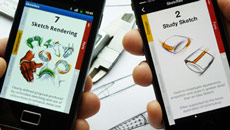
    Called iD Cards, the app helps design specialists communicate with each other by standardising the language used for 32 types of sketch, drawing, model and prototype.

    Now, a new app for designers

    Indian start-ups have huge advantage over other countries: Microsoft

    Indian start-ups have huge advantage over other countries: Microsoft
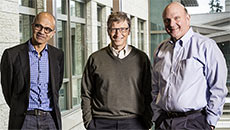
    India has some of the world's best developers and they have huge advantage over start-ups in other countries, believes Microsoft, engaged in developing, licensing and supporting a range of software products and services.

    Indian start-ups have huge advantage over other countries: Microsoft

    Here comes NASA suit for men on Mars

    Here comes NASA suit for men on Mars
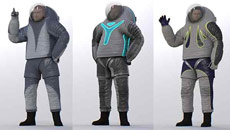
    With the focus being shifted to a manned mission for Mars in near future, NASA is developing technologies astronauts one day will use to live and work with on the red planet.

    Here comes NASA suit for men on Mars

    Move effortlessly in apps world with Facebook

    Move effortlessly in apps world with Facebook
    Billed as a game changer in the mobile industry, Facebook has unveiled a new free and open-source service that would make it easier for you to navigate from one app to another and back again.

    Move effortlessly in apps world with Facebook

    What you were waiting for, a self-driving car

    What you were waiting for, a self-driving car
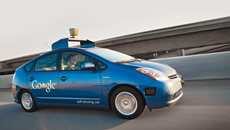
    “We have improved our software so it can detect hundreds of distinct objects simultaneously - pedestrians, buses, a stop sign held up by a crossing guard, or a cyclist making gestures that indicate a possible turn,” Chris Urmson, who leads Google’s self-driving car programme, wrote in a blog post.  

    What you were waiting for, a self-driving car