Friday, December 19, 2025
ADVT 
Health

Brain may produce nerve cells even after stroke

Darpan News Desk IANS, 12 Oct, 2014 11:13 AM
    Scientists have discovered a previously unknown mechanism through which the brain produces new nerve cells even after a stroke.
     
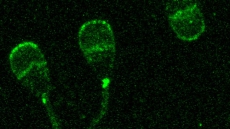
    Following an induced stroke in mice, brain support cells called astrocytes started to form nerve cells in the injured part of the brain.
     
    Using genetic methods to map the fate of the cells, the scientists demonstrated that astrocytes in the area formed immature nerve cells which then developed into mature nerve cells.
     
    "This is the first time that astrocytes have been shown to have the capacity to start a process that leads to the generation of new nerve cells after a stroke," said Zaal Kokaia, professor of experimental medical research at the Lund University in Sweden.
     
    A stroke is caused by a blood clot blocking a blood vessel in the brain, which leads to an interruption of blood flow and therefore a shortage of oxygen. 
     
    Many nerve cells die, resulting in motor, sensory and cognitive problems.
     
    During the study, scientists also identified the signalling mechanism that regulates the conversion of the astrocytes to nerve cells.
     
    In a healthy brain, this signalling mechanism is active and inhibits the conversion, and, consequently, the astrocytes do not generate nerve cells.
     
    Following a stroke, the signalling mechanism is suppressed and astrocytes start the process of generating new cells.
     
    "Interestingly, even when we blocked the signalling mechanism in mice not subjected to a stroke, the astrocytes formed new nerve cells," Kokaia added.
     
    "One of the major tasks now is to explore whether astrocytes are also converted to neurons in the human brain following damage or disease," said Olle Lindvall, senior professor of neurology at the Karolinska Institute in Sweden.
     
    The findings were published in the journal Science.
    MORE Health ARTICLES

    3D-printed organs for transplants a reality soon

    3D-printed organs for transplants a reality soon
     Producing tissues and organs via 3D printing has the potential to address the shortage of organ donations in near future, scientists hope....

    3D-printed organs for transplants a reality soon

    Eating tree nuts daily prolongs life

    Eating tree nuts daily prolongs life
    Include at least 50 grams of almonds, cashews, chestnuts, walnuts or pistachios in your diet to control blood fats (triglycerides) and sugars - two of the five...

    Eating tree nuts daily prolongs life

    Acupuncture boon for breast cancer patients

     Acupuncture can bring significant improvements in fatigue, anxiety and depression in as little as eight weeks for early stage breast cancer patients, a study shows...

    Acupuncture boon for breast cancer patients

    Most stem cell-based cosmetic surgeries fake'

    Most stem cell-based cosmetic surgeries fake'
    Next time you come across an advertisement offering cosmetic stem cell procedures not only to give your skin a glowing look but also to stop it from growing...

    Most stem cell-based cosmetic surgeries fake'

    'Killer sperm' stops cross-species mating

    'Killer sperm' stops cross-species mating
    In what could offer new insight into how the many species on the earth remain distinct from one another, researchers have found that mating with its...

    'Killer sperm' stops cross-species mating

    Sweetened beverages can impair memory

    Sweetened beverages can impair memory
    Limit your sugar-sweetened beverage intake if you are a teenager. An alarming study shows that daily consumption of beverages can impair your ability to learn and remember...

    Sweetened beverages can impair memory