Tuesday, December 23, 2025
ADVT 
Health

Brain may produce nerve cells even after stroke

Darpan News Desk IANS, 12 Oct, 2014 11:13 AM
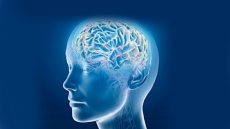
    Scientists have discovered a previously unknown mechanism through which the brain produces new nerve cells even after a stroke.
     
    Following an induced stroke in mice, brain support cells called astrocytes started to form nerve cells in the injured part of the brain.
     
    Using genetic methods to map the fate of the cells, the scientists demonstrated that astrocytes in the area formed immature nerve cells which then developed into mature nerve cells.
     
    "This is the first time that astrocytes have been shown to have the capacity to start a process that leads to the generation of new nerve cells after a stroke," said Zaal Kokaia, professor of experimental medical research at the Lund University in Sweden.
     
    A stroke is caused by a blood clot blocking a blood vessel in the brain, which leads to an interruption of blood flow and therefore a shortage of oxygen. 
     
    Many nerve cells die, resulting in motor, sensory and cognitive problems.
     
    During the study, scientists also identified the signalling mechanism that regulates the conversion of the astrocytes to nerve cells.
     
    In a healthy brain, this signalling mechanism is active and inhibits the conversion, and, consequently, the astrocytes do not generate nerve cells.
     
    Following a stroke, the signalling mechanism is suppressed and astrocytes start the process of generating new cells.
     
    "Interestingly, even when we blocked the signalling mechanism in mice not subjected to a stroke, the astrocytes formed new nerve cells," Kokaia added.
     
    "One of the major tasks now is to explore whether astrocytes are also converted to neurons in the human brain following damage or disease," said Olle Lindvall, senior professor of neurology at the Karolinska Institute in Sweden.
     
    The findings were published in the journal Science.

    MORE Health ARTICLES

    Revealed: How Chinese have faster eye movement

    Revealed: How Chinese have faster eye movement
    Ever wondered how quickly Chinese people move their eyes? It has nothing to do with the neurological behaviour or culture in people of Chinese origin.

    Revealed: How Chinese have faster eye movement

    Decoded: How You Decide Who Is More Popular

    Decoded: How You Decide Who Is More Popular
    Your brain knows for sure who attracts more eyeballs in your own circle as a new research has found how our brains recognise popular people. People track popularity largely through the brain region involved in anticipating rewards.

    Decoded: How You Decide Who Is More Popular

    How watching movies synchronises viewers' brains

    How watching movies synchronises viewers' brains
    Do you know that while watching a movie, your brain reacts to it immediately in a way similar to other people's brains? Researchers have succeeded in developing a method fast enough to observe immediate changes in the function of the brain even when watching a movie. 

    How watching movies synchronises viewers' brains

    Twitter, Facebook driving couples to break relationships!

    Twitter, Facebook driving couples to break relationships!
    Arguments over social media platforms among romantic partners are damaging relationships, ending in negative outcomes like emotional and physical cheating, breakup and divorce, a significant research reveals.

    Twitter, Facebook driving couples to break relationships!

    Have green tea to boost working memory

    Have green tea to boost working memory
     Have another cup of green tea after reading this, especially if you are in office. Researchers at University of Basel in Switzerland have found that green tea extract enhances the cognitive functions - in particular the working memory.

    Have green tea to boost working memory

    First Mars settlers to devour grasshoppers?

    First Mars settlers to devour grasshoppers?
    Even as scientists explore possibilities of human settlement on the red planet, speculations are now on as to what could be the diet of the first human settlers in Mars.

    First Mars settlers to devour grasshoppers?